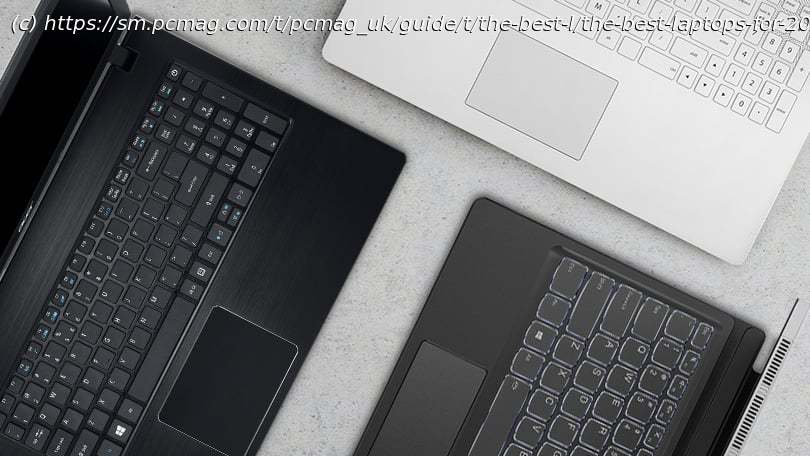
Whether you want a simple budget PC, a productivity workhorse, or a screamer of a gaming notebook, our experts have done the heavy lifting to help you find the right laptop for the job.
Here at PCMag, we’ve tested thousands of laptops since our lab’s founding more than 40 years ago. Our analysts and editors have more than a collective century of experience telling the good laptops from the great ones. We test more than 100 models every year to determine the best laptop overall. We also rank winners in various subcategories, such as gaming laptops, work laptops, budget laptops, Chromebooks, and MacBooks. We test all models for CPU and graphics performance using rigorous, repeatable benchmark tests, and we evaluate design, usability, connectivity, and—most important!—value. Our current best laptop for most people is the Dell 14 Plus (DB14250), a top-value midranger that lasts for 20 hours on a charge, but we have plenty more tested, vetted recommendations. Read on to see all our picks, compare their specs, and get down-to-earth buying advice for nailing down the best laptop for you.
With the venerable discontinued, we turn to the Dell 14 Plus for a similarly high-end experience at an approachable price. While just above $1,000 at its starting list price, you’ll more often than not find it for less—sometimes hundreds off. At that point, this portable laptop becomes a sharp-screened steal made sweeter by the latest connectivity and lengthy battery life.Why We Picked It
Design: Being in Dell’s new midrange („Plus“, formerly Inspiron) line, the 14 Plus is a decidedly plain laptop, but that’s not to say it’s low-quality. The Dell 14 Plus is nearly light enough to meet our standards for ultraportable laptops, and it comes in a full-metal build, which we’ve come to expect from systems at this level. Dell’s design also includes a decent webcam and speakers for video calls, and comfortable inputs for ease of use. It even has plenty of ports for new and old devices, including Thunderbolt 4.
Display: Dell’s display is sharp, saturated, and eye-friendly. It’s a 1600p IPS panel with an advanced 90Hz refresh rate but without touch controls, sticking to elevating the basics. While it’s not quite as bright as we’d like, image quality remains high, with decent color coverage and contrast. At its sale price, this display becomes quite a rare feature.
Performance: In terms of speed, this is a profoundly midrange system. It’s a decent laptop for homework, paying bills, and web browsing—but not your go-to video editing machine or a gaming rig. Remember: This is a top laptop for most people, not edge cases like multimedia production or playing PC games.
Battery life: This is the marquee feature for the Dell 14 Plus: a long-running 20 hours of battery life. Intel’s Core 200V processors were built with optimum efficiency in mind, and it shows in this battery-test result. Expect this laptop to last more than a full workday off the charger.
Value for money: While its list price to start isn’t extremely competitive, the Dell 14 Plus becomes an absolute steal when found on sale. We’ve seen it for as little as $699.99 from Dell’s own website and outside of a major shopping holiday, like Prime Day. That’s a serious value for what’s on offer here, in a decent price range for students and kids (or bargain hunters).Who It’s For
Casual computer users: With this level of performance capacity, the Dell 14 Plus will best serve mainstream audiences who just want to do basic computing. It’s a right-on machine for home finance management, web browsing, and even basic photo editing.
Students: Kids in school of almost all ages would benefit from a laptop like the Dell 14 Plus. It’s a relatively inexpensive investment with plenty of power for basic homework of almost any grade level. The high-resolution screen will make that experience easier, and its webcam and speakers will make for acceptable remote learning.
AI early adopters: It’s also important to mention that this is a Microsoft Copilot+ PC, meaning it has the AI processing hardware required to access the full suite of Copilot tools in Windows 11. So, this laptop has access to robust local AI features like chatbots, text editing and generation, and video call enhancements.
The best MacBook for most people continues to be the easiest call to make in this buying guide. Apple’s 2025 MacBook Air is budget-friendlier than before, returning to a three-digit starting price. Meanwhile, its M4 processor update preserves the core Mac experience and introduces advanced AI capabilities. Aside from gaining the MacBook Pro’s improved 12-megapixel Center Stage camera, nothing else has changed about the Air this year. You get the same sharp LCD screen, sublime keyboard, and large trackpad as before. The 13-inch MacBook Air remains a benchmark to which other ultraportable laptops aspire.Why We Picked It
Design: Apple’s laptops have led the design charge for 20 years, though the latest MacBook Air carries that torch without doing much new. This year’s model still measures just 0.44 inch thick and weighs a feathery 2.7 pounds. Of course, the laptop still has just two Thunderbolt 4 ports. While still an impressive exterior, this is perhaps the least exciting part of the 2025 MacBook Air update.
Display: Apple’s pride in its display technology shows in how much mileage it draws out of each revision. This year’s MacBook Air has the same 13.6-inch, 2,560-by-1,664-pixel, 16:10 LCD Liquid Retina screen. The panel hasn’t changed a bit with this model, so expect the screen to hit around 363 nits of brightness while covering 100% of the sRGB and 95% of the DCI-P3 color gamuts. True Tone also returns, adapting the screen’s color temperature to ambient light on the fly.
Performance: The MacBook Air’s new M4 processor still drives competitive speeds compared with laptops in its class, and it continues to punch above its weight in demanding tasks like Photoshop. Always look to a MacBook Pro for a dedicated content-creation machine, but the Air will easily handle the odd photo touch-up or video render. M4 also supports Apple’s second-generation ray-tracing techniques, so Mac gaming got a slight boost, too.
Battery life: While we saw a generational decline, Apple’s featherweight laptop line was still impressive in terms of battery life, at 19 hours and 56 minutes, in our rundown test. Nearly 20 hours will get you quite far, but some competitors outlasted it by several hours.
Value for money: This generation’s Air laptop is the most value-packed new MacBook in a while. Thanks to a $100 price cut, it has finally returned to a $999 starting price. Increasing the starting memory capacity to 16GB also makes upgrades to the storage, GPU, or memory more approachable.Who It’s For
Apple die-hards: If you already own an iPhone or an iPad and want to stay within Apple’s ecosystem, or you’ve been an Apple fan for some time, then this decision was already made for you. While Apple’s macOS was already deeply integrated with those devices, the Sequoia update brings full iPhone Mirroring, giving you complete digital access to your iPhone from your Mac desktop.
College students: It’s easy to deduce why you see so many MacBooks on college campuses. They’re reliable, sturdy, and robust computers with excellent inputs and versatile connection options. You’ll often hear of MacBook Air models lasting throughout an undergraduate’s tenure. While you have to get used to macOS if you’re not already familiar with it, some fields of study (particularly media, design, and the humanities) lean on Macs to get students through coursework.
It’s well known that bargain-priced laptops are often riddled with compromises, and while this Acer Aspire 3 isn’t exempt from those, we’ve ranked it as the for how it presents relatively few. We especially appreciate this notebook’s lengthy battery life, decent keyboard, and reliable performance for basic tasks. You won’t get a dazzling display or flashy design, but budget-strapped buyers or parents shopping for their young kids will be well served by this Aspire model.Why We Picked It
Design: This 15-inch Aspire model is a sub-$500 laptop, so you shouldn’t expect much design flair. It covers the essentials, including a keyboard that makes for fast typing paired with a numeric keypad that’s often missing from 15-inch models. The laptop also features rubber pads on the bottom of the base for added stability. Of course, what you’re after at this price is the basics.
Display: Likewise, Acer’s Aspire display covers the basics required by a screen at this price: full HD resolution and decent brightness for the price, which is helped by an anti-glare finish for improved legibility in bright settings. Of course, this laptop doesn’t cover 100% of any of the three color palettes or gamuts we test for, not that you should expect that this far south of 500 bucks.
Performance: Within its class, this Aspire model produced decent performance numbers in our benchmark tests. While it won no contests, it wasn’t completely blown out, either. We found the Aspire to get by just fine through basic computing tasks such as word processing and web browsing, but we wouldn’t recommend pushing it much further with multimedia content creation or gaming.
Battery life: This is a high point for the Aspire, which lasted longer than any of the laptops we compared it with in our review at 16 hours and 46 minutes. That’s likely thanks to its lower-power processor and relatively dim display when set to the 50% brightness we use for our battery rundown test. Regardless, this laptop is a marathon runner.
Value for money: Here’s where the Acer Aspire 3 excels—almost purely because of its bargain-bin price. With a list price just under $400, we’ve seen it dip below $300 since our review. You won’t find many 15-inch laptops with 16-hour battery life for that little, not to mention one with up-to-date Wi-Fi and reliable everyday performance.Who It’s For
Budget-strapped buyers: Naturally, this is a first stop for anyone who’s hard up for cash. Priced well south of $500 and sometimes seen for less than $300, the Acer Aspire 3 is about as low as Windows laptops go in terms of cost. However, it doesn’t short-shrift budget buyers, especially on battery life and up-to-date connectivity.
Jack or Jill’s first laptop: Due to its low price and, therefore, a lower level of investment in the event of accidental (i.e., careless) damage, this Aspire model is ideal as your kid’s first laptop, particularly for elementary school workloads. Your kiddos also won’t be punished for forgetting to charge the laptop with such long battery life.
Lenovo’s latest crack at making the possible led it to its ThinkPad brand. From there, the company crafted a thin-and-light machine that exudes premium style and named it the X9. While it doesn’t quite compete on value or performance, the ThinkPad X9 14 certainly rivals the MacBook Air in design. Bridging consumer and small-business needs, it’s a sturdy and reliable high-end alternative to the Air.Why We Picked It
Design: The 14-inch ThinkPad X9 shell is partly recycled aluminum and measures just 0.51 inch thick. Lenovo’s super-thin laptop weighs only 2.74 pounds, tying the MacBook Air in weight and just barely thicker. However, its underside „wedge“ hosting its ports allows for a fan-cooled processor inside, which is not a given among ultraportable laptops and allows for a higher power ceiling under sustained loads.
Display: Lenovo all but perfected its OLED display tuning with the ThinkPad X9, presenting an 1800p 14-inch screen whose only color-coverage miss was a „mere“ 98% rating for Adobe RGB. It’s also among the brightest laptop screens we’ve tested at 505 nits. Oh, and it’s a speedy 120Hz panel that can adjust the refresh rate automatically based on the content displayed.
Performance: Intel’s Core Ultra 200V „Lunar Lake“ processors prioritize efficiency, so set your expectations accordingly for raw output. The ThinkPad X9 chassis’s fan cooling helps it remain competitive, but this laptop won’t win any drag races. With that in mind, the X9 will easily cut through basic computing tasks while slowly sipping on that battery.
Battery life: Speaking of which, the ThinkPad X9 lasted a cool 19 hours and 31 minutes on our battery rundown test. This result is still impressive in 2025 and competitive with the MacBook Air, but ultraportable PC laptops have started to outlast the 20-hour mark at this point. If you’re dead set on breaking 20 hours, for whatever reason, then think twice; otherwise, the battery on this laptop is more than enough.
Value for money: This is the second area where the ThinkPad X9 doesn’t quite keep up with the MacBook Air; it starts at $1,239. We’d normally say the OLED screen has something to do with that, but we’ve seen OLED on a few under-$1,000 laptops. However, it doesn’t get much more premium in this price range for Windows laptops than the ThinkPad X9.Who It’s For
Frequent travelers: This is the kind of laptop that all but disappears in your backpack, thinner than most paperback books and lighter than some hardcovers. The ThinkPad X9 is also a long-lasting machine with fast charging that can get you back to 80% power in 60 minutes, fitting for someone always on the move.
Screen snobs: Anyone spoiled by their luxe smartphone screen will be pleased by this laptop’s 1800p OLED panel. The screen is sharp and colorful, refreshing at a snappy 120Hz and shining brightly at more than 500 nits. When we say Apple’s rivals are catching up to its Mac displays, we think of laptops like the ThinkPad X9.
The Framework’s latest 16-inch laptop builds upon what the original achieved and significantly elevates it. The system hasn’t undergone significant changes in chassis design, but the new components made available have significantly elevated its performance, particularly in gaming and content creation. Not only is it the overall desktop replacement to beat, earning our Editors‘ Choice award, but the Framework Laptop 16 is a dream machine for DIY types. Plus, if you’re not interested in building one, you can buy a pre-assembled model.Why We Picked It
Design: The 16-inch Framework design remains largely unchanged from the previous generation, which is just fine. Framework has made every consideration in its laptop design, allowing you to upgrade nearly every important part individually, including the screen. (You can even replace the bezels around it.) It’s not a luxurious-looking system, but it’s eminently practical, customizable, and consumer-friendly.
Display: Framework has significantly upgraded its screen technology to keep pace with the new components inside, adding Nvidia G-Sync for automated refresh rate management up to 165Hz. It’s a 1600p IPS panel that won’t compare with OLED, but it achieved super-competitive color coverage in our display testing, as well as nearly 490 nits of maximum brightness.
Performance: This laptop isn’t just a dazzling DIY desktop replacement; the Framework 16 proved to be one of the most potent 16-inchers we’ve tested recently. With a high-end AMD Ryzen AI 9 HX 370 processor, and a powerful Nvidia GeForce RTX 5070 graphics chip in the removable rear module, this laptop aced our benchmarks—even the gaming ones at 1600p.
Battery life: This is where the Framework 16 falls behind the competition, lasting barely more than 7 hours on our battery rundown test. While it’s far off the mark that competing systems hit, the screen’s high screen brightness at the 50% level we use for testing might have worked against the laptop. If you can work on the Framework 16 at less than 50% brightness, you can expect increased longevity.
Value for money: Value is the name of Framework’s game, and it plays that game better than any laptop maker in the industry. Framework’s dedication to DIY modular design enables individualized upgrades and repairs to nearly every component and part. This means you can live with the same Framework 16 indefinitely, upgrading parts piecemeal as they come. No more replacing your whole laptop for a better CPU.Who It’s For
Desktop replacement shoppers: This is the leading laptop for shoppers replacing an aging or broken desktop. Regardless of whether you’re into the Framework 16’s DIY design, you will be interested in this laptop’s screen quality and silicon performance. In both areas, the Framework 16 clashes with luxury systems that are nowhere near as easy to tweak or repair, instead requiring you to buy an entirely new laptop when it’s time for an upgrade.
DIY enthusiasts and PC builders: This is the ultimate laptop for people who enjoy building PCs and getting hands on with their hardware. Framework sells its new 16-incher in a DIY edition that comes with the parts you order completely unassembled—you can even skip getting a preloaded operating system and install your own (likely Linux). If you want to build a laptop nearly from scratch, this is as close as you’ll get.
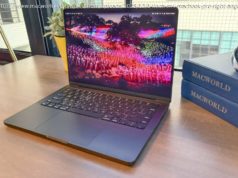
For the category, we consider several factors, including raw performance, display features, and portability. Apple’s latest 14-inch MacBook Pro nails all of the criteria with its new M5 processor. While we’re getting further away from the last MacBook Pro redesign every year, this model is by no means outdated, nearly qualifying as an ultraportable with power rivaling some of the most potent laptops of its size in key content creation functions. For that, it earned our Editors‘ Choice award for compact content creation laptops.Why We Picked It
Design: Apple’s 14-inch MacBook Pro design has remained essentially unchanged for several years, but the current version addresses so many fan concerns that it leaves little to be desired. The all-aluminum build could benefit from an update to its USB-C ports to Thunderbolt 5, currently still on Thunderbolt 4. However, the M5 chip’s power delivery limitations might be at play here, as it lacks the additional cores you’ll find in its Pro and Max variants.
Display: The 3,024-by-1,964-pixel Liquid Retina XDR display returns, this time with a clever trick to boost the brightness of its mini LEDs to 1,000 nits for content in standard dynamic range and up to 1,600 nits in high dynamic range. Apple’s display still rocks our color gamut coverage tests, and it would be a boon to any commute-bound photo or video editor.
Performance: This is where Apple focused its attention on with this update: the new M5 processor. This chip introduces a new architectural feature that integrates an AI-accelerating coprocessor with each of the system-on-chip’s (SoC) graphics processing cores. The performance benefits are twofold: faster GPU-based AI task processing and even faster graphics processing, aided by new machine learning processes like artificial frame generation. The M5’s productivity speeds lead the charts, too, making for an all-around superchip.
Battery life: While the MacBook Pro lasts 4 hours less this year than last year’s model in our battery rundown, it still falls within Apple’s 24-hour promise, and that’s more than you need from such a high-power laptop. Expect to get through most, if not all, of a workday on this Mac’s battery, especially if you plug in for high-intensity output periods, such as project exporting.
Value for money: While Apple’s MacBook Pro laptops have always been expensive, many competitors have also started charging more for their products, which has given Apple room to make big waves with relatively small price reductions. The MacBook Pro’s starting price remains unchanged with the M5 upgrade, and it competes well within its class at this price. Of course, Apple’s storage and memory upgrade pricing at checkout continues its legacy of excess.Who It’s For
Creators on the go: Apple’s newest MacBook Pro is a great fit for anyone who works in media or digital design who needs to get work done remotely or while commuting to the office. (Frequent fliers have also always had the pro Mac laptop top of mind.) If you need to get deadline-driven creative work done on the move without sacrificing power, battery life, or your office studio’s superior displays, the MacBook Pro is the answer—and it’s worth getting used to macOS for.
Sideline computer gamers: This machine’s M5’s graphics boost makes it a good fit for gamers who are Mac loyalists. Apple has been hot on improving its reputation among PC gamers for years, and its massive improvements to graphics processing via AI accelerators give the MacBook Pro M5 a tremendous upgrade. Multi-frame generation is finally available on Mac games, which should dramatically change the conversation as developers adapt to how Apple’s GPUs apply the technology. High-power Macs won’t ever replace gaming PCs, but that doesn’t mean they can’t handle games well enough for the mainstream.
For most people, the MSI Raider 18 HX AI breaks the price ceiling and keeps soaring into the stratosphere, but that’s what it takes to be the best of the best in terms of power and premium parts. The latest 18-inch Raider earned our Editors‘ Choice award for big-screen gaming laptops, the best in its class that we’ve tested so far in this hardware generation. We love it for its breathtaking 4K mini-LED display, Thunderbolt 5 support, Wi-Fi 7 radio, and PCI Express 5.0 storage—and that’s before even getting to the top-end CPU and GPU combo.Why We Picked It
Design: The Raider is all about size and stature. With a giant 18-inch screen and weighing a ponderous 7.94 pounds, this laptop isn’t designed to go much of anywhere. Instead, it’s a desktop replacement through and through. This large design allows for several ports, including Thunderbolt 5, as well as substantial cooling to keep its top-end components from overheating during play.
Display: This is one of the stars of MSI’s show: the 18-inch mini-LED screen with a super-sharp 3,840-by-2,400-pixel resolution and speedy 120Hz refresh rate. It’s a regular Rolls-Royce of gaming displays. The screen includes Nvidia G-Sync so that the screen redraws and the GPU frame rate will always match, at up to 120 frames per second.
Performance: Surprising no one, the Raider is an absolute beast at any task you throw at it, short of super-specific workstation applications. It more than doubled the baseline in the PCMark 10 test for general productivity, set the record for our HandBrake video encoding benchmark, and posted extremely competitive frame rates in our gaming benchmarks.
Battery life: You don’t come to a laptop like this expecting high efficiency. Despite its size and power profile, the Raider lasted a few hours longer than some competing 18-inchers (and even a few 16-inch laptops) in our battery rundown video-playback test. And you can just forget about gaming on the battery—keep this laptop on your desk as much as possible, plugged in.
Value for money: A laptop this expensive requires a different approach to evaluating its value than most other kinds of laptops. Rather than comparing it with other laptops, compare it instead with the cost of a comparable gaming desktop setup. Including the top-end screen and high-power components, you’re not paying too much more than it would cost to build such a desktop setup. Regardless, however, this is an expensive machine for deep-pocketed enthusiasts only.Who It’s For
Power-hungry gamers: This laptop’s primary audience is gamers who want peak power from their semi-mobile PC gaming system. The Raider aced all of our performance benchmarks, gaming or otherwise, pairing super-potent parts with a top-notch cooling system to run at maximum output.