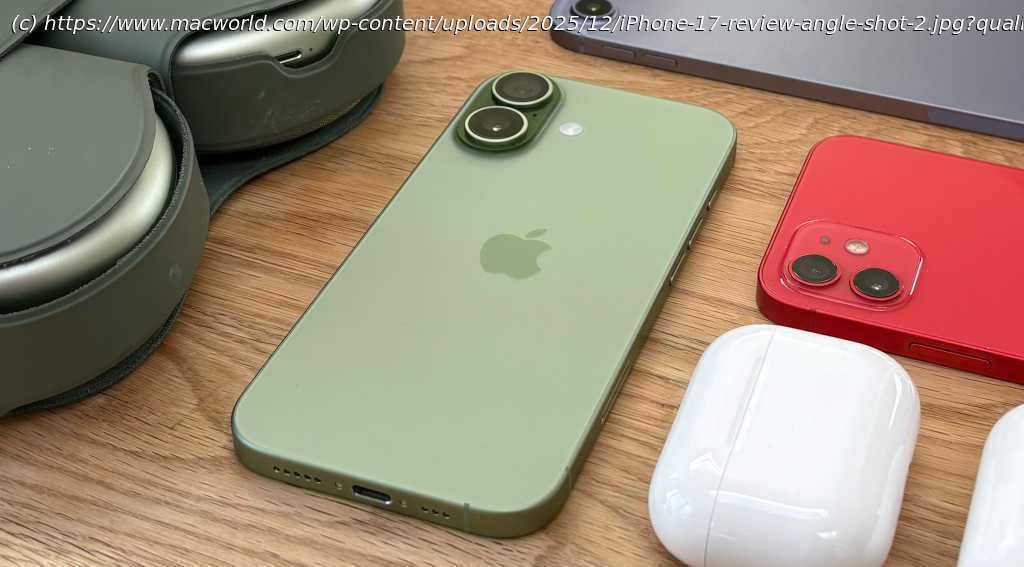
There are lots of reasons why your iPhone might have slowed down. Here’s how to speed it up again.
Have you ever wondered if your iPhone is getting slower, or if it’s just your imagination? Have you ever wished there was some way to speed it up? If the answer to either question is yes, then you’re not alone.
iPhones absolutely do get slower with age. The issue is often caused by a lot of junk files and not enough free space, as well as outdated software and unnecessary processes running in the background. So before splashing out on an expensive new device, it’s worth doing your best to solve those issues.
Can you make your iPhone run faster? Yes. Whatever has made your phone slow down, there’s a solution. And in this article we show how to get it back up to speed.Step 1: Update iOS
At time of writing Apple’s current operating system for the iPhone is iOS 26. From time to time there will be small ‘point’ updates (iOS 26.0.1, iOS 26.1 and so on) while the next major new version (iOS 27) will be here in September 2026.
Updating to the latest version of iOS will often fix issues with your iPhone, because it will give you access to the latest patches and fixes for known problems. It’s almost always a good idea to install the latest point update for this reason. If you’re on iOS 26.1 and iOS 26.1.1 becomes available, grab it. It might make your iPhone a little faster, and it’s extremely unlikely to make it any slower.
Larger updates (iOS 27, iOS 28, and so on) are a more complicated case. They don’t just add patches; they also add visual tweaks and new features, all of which are designed for the latest hardware and can be overwhelming for older models. They may also take up more space on your device, which is a whole other problem we discuss later in this article.
Apple is supposed to address this by only allowing iPhones which are capable of handling an update to install it: you’ll find the list of supported devices for each version of iOS in this article. The ultra-cautious approach would be to only install a yearly update if your iPhone is comfortably inside the compatible zone. iOS 26, for instance, is supported by the iPhone 11 and later, but that doesn’t mean the iPhone 11 will deliver optimal performance. The safe bet would be to stay on the previous version (iOS 18; there was a change to the numbering system!) unless you’ve got an iPhone 12 or later.Step 2: Restart your iPhone
A common first piece of advice is to close down unused apps–and if it comforts you to do so, swipe up from the bottom of the screen (or double-press the Home button, if you’re using an older device that still has one) and swipe upwards on non-essential apps to close them. But this strategy has long been debunked, by Daring Fireball, Apple itself, and many others.
Instead, let’s restart the iPhone completely. Press volume up, then volume down, then press and hold the power button on the righthand side. (If there are two buttons on the right of your iPhone, press the upper one. The lower one will be Camera Control.) You’ll then see the Power Off slider; swipe across this to restart your iPhone.
(Again, if you’ve got an older model with a Home button, the method is a little different. You simply have to press and hold the power button on the top or righthand edge until the Power Off slider appears.)
Once your iPhone has finished shutting down, which will take 10 seconds or so, start it up again by pressing and holding the power/sleep button for about 5 seconds. You’ll see the Apple icon, then the iPhone will restart.
You shouldn’t have to do this very often, but when you do it’ll clear out the memory and can often fix unruly apps. The occasional power cycle helps keep iOS ticking over.Step 3: Kill automatic background processes
The next step is to turn on Low Data Mode. This means apps won’t use data in the background, there won’t be any automatic app downloads, and emails won’t be automatically retrieved. As well as saving you data, this can also speed up your iPhone and improve battery life.
To turn on Low Data Mode, open the Settings app and select Cellular > Cellular Data Options and tap the toggle labeled Low Data Mode. (You may also have to tap Data Mode before you get to the toggle, depending on your data plan. And readers in the U.K. will instead follow the Settings path Mobile Service > Mobile Data Options > [Data Mode] > Low Data Mode.)
You can also turn off these data-hogging processes in Wi-Fi. Open Settings and select Wi-Fi. Tap the i next to the network you wish to limit, and choose Low Data Mode.Step 4: Turn down the graphics
Dialling down the fancy visual effects can help to improve performance.
Start by turning off Motion. Open Settings and go to Accessibility > Motion and tap the toggle next to Reduce Motion. This turns off the parallax effect on icons. Some people have complained that this effect makes them feel seasick, so you might even find the phone easier to use in this setting (although it will probably take some time to get used to). And of course, it will also use less power.
Next you can reduce the see-through background effects which can also slow things down. In Settings, select Accessibility > Display & Text Size and then turn on Reduce Transparency.
Similarly, if you’re running iOS 26 or later, you may want to tone down Liquid Glass, whose visual effects can make the interface confusing as well as increasing the drain on your phone’s processor and memory.