From laggy screens to awkward controls, these infotainment systems from American, European, and Asian carmakers proved clumsy, frustrating, and even hazardous.
Since the infotainment display’s debut in the 1986 Buick Riviera, the technology has grown from an afterthought displaying radio stations and CD information to the centerpiece of a car’s interior with navigation, music, weather, and many other capabilities.
Today, infotainment innovations are a mixed bag. Some are pretty good, while others are just average. In some cases, the tech has been downright terrible, either because automakers are trying to be too clever or an experiment proved an ineffective overreach. Currently, automakers are busy stuffing the biggest possible displays into their vehicles, with mixed reactions from the general public.
Regardless, Consumer Reports has noted on multiple occasions that the infotainment is a common pain point. I once owned a 2019 Honda Accord that refused to connect to Android Auto, and it was bad enough that I eventually sold it. In any case, here are some infotainment systems that we’re not terribly fond of, and why they’re so bad. Any infotainment with no physical controls
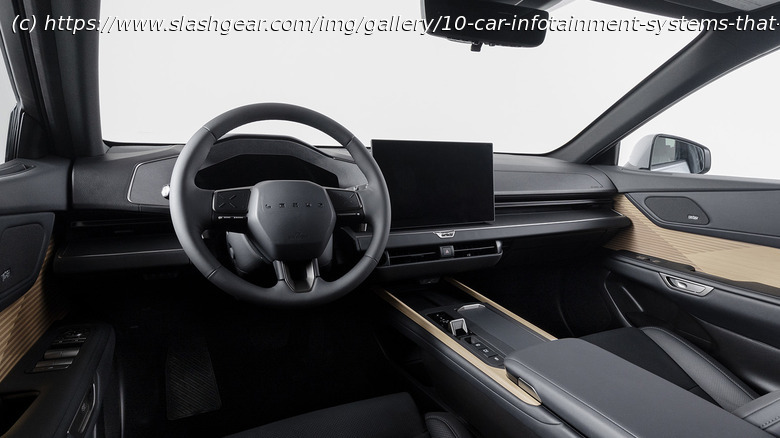
A common online complaint is the infotainment display that dominates the entire center stack. This definitely looks cool in press images and showroom floors, but real-world complaints have stacked up for years. The biggest issue is that having everything controlled from one screen requires a lot of menu fumbling while you’re driving, which is distracting and dangerous. This issue is compounded if the system is underpowered, laggy, and hard to read.
There are some notable examples of good infotainment displays that are ruined by this experience. BMW’s iDrive is arguably the best example. The automaker has promised some wild stuff for iDrive over the years, but many current models house everything in the screen for a cleaner dashboard look. Tesla arguably popularized the practice, and similar styles are still being adopted by automakers like Mazda, which now puts a massive screen in its 2026 Mazda CX-5.
In cars with physical controls, the AC button may look different, but it’s usually in the same general area and performs the same task. On any given infotainment-only setup, you have to go two or three menus deep to find the same button, especially if you use Android Auto or Apple CarPlay.Most multi-screen infotainment layouts
The multi-screen infotainment layout was a trend that mercifully ended nearly as fast as it started. It was championed by Honda and its luxury brand, Acura, in the mid-2010s and picked up by Infiniti in the latter half of the decade. The system has its benefits. In our review of the 2016 Honda Accord, we noted that there were some good notes on a dual-screen infotainment display. The bottom screen would be used for control, and the upper screen for things like music and navigation. Seems simple, right?
The problem was inconsistency. Some Honda and Acura models still didn’t have Android Auto or Apple CarPlay, so folks who used phone mounts for Google Maps had no use for the upper screen at all. Additionally, since the driver now had two screens to pay attention to instead of one, it was often panned for causing even more distractions. Infiniti seems to have done it slightly better, but the same issue remained.
This tech has its fans, but ultimately, it led to a cluttered and disjointed experience that would be usurped by larger screens in later model years. Honda and Acura both just use larger displays with physical HVAC controls these days, which has gone over well. Infiniti still uses two screens, but modern implementations seem to be more coherent.The old Jeep Uconnect
Old infotainment systems left much to be desired. They were ahead of their time, and technology had not caught up enough to make these things fun to use. A great example of this is the Uconnect system found in Jeeps and other Stellantis products. The auto giant has been using Uconnect since 2005, and the latest version, Uconnect 5, was launched in 2020. In general, most agree that Uconnect has improved from its early years and that those early years were pretty rough.
Early models were plagued with all sorts of problems, including slow interfaces, connection issues with cell phones, and confusing menus. Stellantis attempted to improve the system with later versions of Uconnect, but just couldn’t get the formula right. In 2017, I test drove a Jeep Cherokee with Uconnect 3, and while I didn’t find it entirely terrible, it lacked modern features like Android Auto, and had a weird assortment of HVAC controls in the infotainment menu despite also having physical controls. On the plus side, it could engage those controls when I remotely started the thing, which was cool.
Compound all of the above with the fact that some people’s systems just flat stopped working once Stellantis shut down 3G support, and you have a series of infotainment systems that would be better lost to history.Volkswagen MIB1, MIB2, MIB3, and MIB4
When it comes to disappointing infotainment displays, few have mastered the art as well as Volkswagen. The company was quick to move everything to the infotainment display, starting with the launch of its MIB II system in 2015, and continuing through the third and fourth iterations of the system. As the system evolved, Volkswagen seemed to want the most futuristic setup possible, but didn’t look before they leapt.