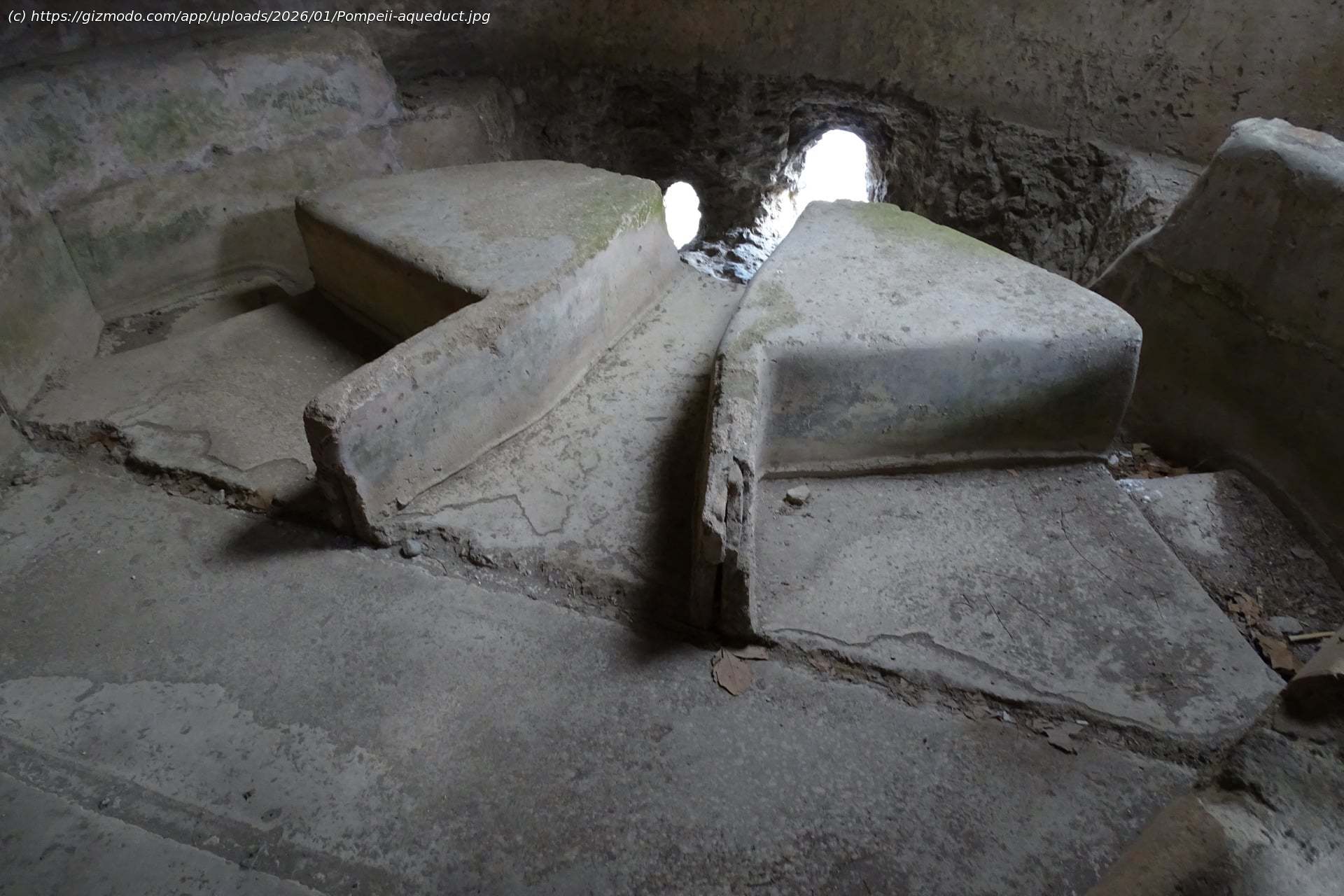
Mount Vesuvius preserved the ancient city’s water system, including evidence of filth.
Right after their famous roads and imposing gladiatorial arenas, the ancient Romans are perhaps best known for their public baths and enduring aqueducts. New research sheds light on these structures in one of their most iconic sites: Pompeii.
In the first century CE, one of the most infamous ancient tragedies immortalized the Roman city of Pompeii. Among many things, it preserved some of its residents in their final moments—down to the weave of their clothing—as well as the city’s water system. In a study published today in the journal PNAS, researchers investigated the ancient city’s water supply via geochemical analysis and archaeological due diligence. Differences in the calcium carbonate deposits found in the water-bearing structures reveal the origin of the water and shed light on Pompeii’s bathing culture.Crusty remains
“Carbonate incrustations [were] deposited in various components of the city’s hydraulic infrastructure, including the aqueduct, its water towers, the well shafts, and pools of the public baths,” the researchers, including the University of Mainz’s Gül Sürmelihindi, wrote in the paper.