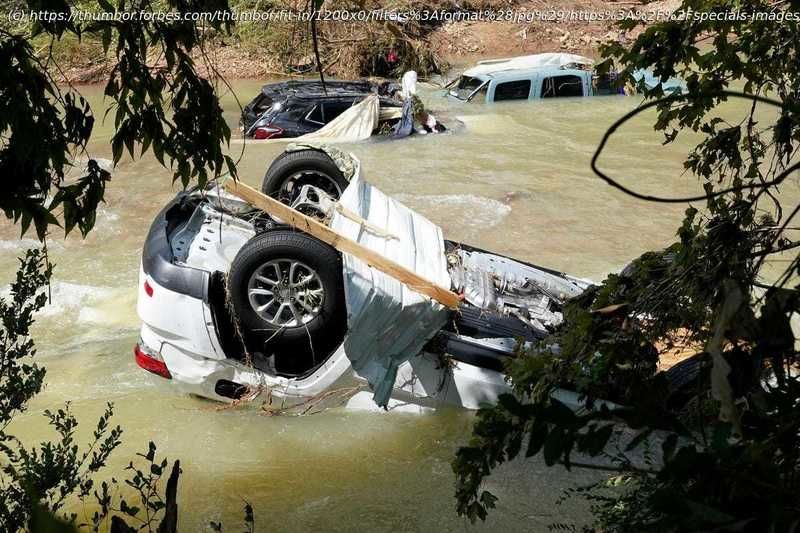
While attention was focused on Hurricane Henri, catastrophic flooding devastated parts of the South. Here’s why you may not have known.
This weekend a rare weather situation was happening. A hurricane (Henri) was threatening one of the most populated regions in the United States. At the same time, a catastrophic weather event was unfolding in Tennessee and North Carolina. Deadly flooding killed several people, and many others are still reported missing. As a scientist and former President of the American Meteorological Society, I have lamented for years that flooding creates several challenges at the intersection of meteorology and risk communication. Here are three of them. The first challenge is that the lead up to a flooding event is not as “telegenic” or “social-media buzzworthy” as a hurricane or tornadic storms. Beyond Weather Twitter and 24-hour weather networks, there is probably not much public buzz in a weather event described by an upper level shortwave, high instability, and top percentile precipitable water. These conditions certainly caught the attention of the National Weather Service – Nashville, which was warning about the impending flood event in its messaging Saturday evening. “Hurricane Henri Approaches Long Island and the metropolitan New York City” is a bit more accessible. Ironically, I feel the rainfall associated with Tropical Storm/Hurricane Henri may have caught many people by surprise too. A training band over New Jersey and New York has been particularly problematic. I honestly worry that the public mental model for a “bad hurricane” is shaped by their perception of the wind speeds and where the track is located. A point that I made in my Forbes article last Friday is that messaging for storms like Henri needs to be anchored in impacts across the cone of uncertainty and not so focused on singular tracks or whether it is a “strong Tropical Storm/weak Hurricane.