Delegations from the United States and Russia held a working dinner in Geneva on January 9 ahead of a week of high-stakes diplomacy in three European ci
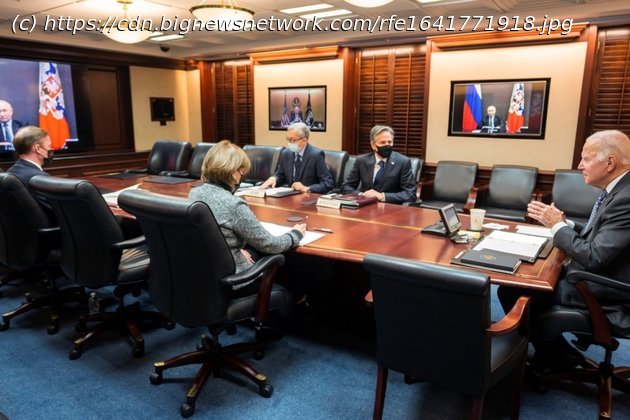
Delegations from the United States and Russia held a working dinner in Geneva on January 9, ahead of a week of high-stakes diplomacy in three European cities prompted by Moscow’s demands for a security deal and its threatening military buildup near Ukraine. U.S. Deputy Secretary of State Wendy Sherman, the head of the U.S. delegation, and her team met with Russian Deputy Foreign Minister Sergei Ryabkov and other Russian officials for two hours over dinner in the Swiss diplomatic hub. The senior diplomats « discussed the bilateral topics both sides would address » at the main talks on January 10, State Department spokesperson Ned Price said in a statement. The dinner-time talks are a prelude to the so-called Strategic and Security Dialogue (SSD), a U.S.-Russia working group established last year to focus on arms control. U.S.-Russia bilateral talks will be followed by a meeting of the NATO-Russia Council in Brussels and separate multilateral talks under the framework of the Organization for Cooperation and Security in Europe (OSCE) in Vienna later this week. The State Department said only certain bilateral issues would be discussed in Geneva but the United States « will not discuss European security without our European Allies and partners, » in a reference to Russia’s demands from the United States and NATO for security guarantees. « The Deputy Secretary underscored that discussion of certain subjects would be reserved for the NATO-Russia Council meeting in Brussels on January 12 and the OSCE Permanent Council meeting in Vienna on January 13, » the State Department said. Sherman « stressed the United States’ commitment to the international principles of sovereignty, territorial integrity, and the freedom of sovereign nations to choose their own alliances,’ the statement said, in a reference to Ukraine and its aspirations of joining NATO. Sherman « affirmed that the United States would welcome genuine progress through diplomacy, » it added. SEE ALSO: Blinken Blasts Kremlin For Instigating Crisis Over Ukraine But Says Diplomatic Solution ‘Still Possible’ Leaving the dinner, Ryabkov told reporters the sides discussed substantive issues and the talks were going to be « difficult. » ‘They cannot be easy. They will be business-like. I think we won’t waste our time tomorrow, » he said. The string of high-level diplomacy comes amid a standoff over a Russian military buildup near Ukraine’s border that the West fears could signal Moscow is preparing a new incursion into Ukraine. Russia annexed Ukraine’s Crimea peninsula in 2014 and has backed separatists battling government forces in eastern Ukraine. The crisis prompted U.S. President Joe Biden and his Russian counterpart Vladimir Putin to hold two phone calls in December, accompanied by a flurry of diplomacy involving officials from the United States, its European allies and Ukraine, and Russia that culminates in the three meetings this week. Putin has issued a series of demands, including guarantees that NATO will not further expand eastward to former Soviet states like Ukraine and Georgia. The Kremlin also wants the alliance to rollback troop and weapons deployments in Eastern Europe. Ahead of the talks in Geneva, Ryabkov laid out Russia’s three demands: no further NATO expansion, no missiles on Russia’s borders, and for NATO no longer to have military exercises, intelligence operations, or infrastructure outside of its 1997 borders. « The Russian side came here with a clear position that contains a number of elements that, to my mind, are understandable and have been so clearly formulated – including at a high level – that deviating from our approaches simply is not possible,’ Ryabkov said. U.S. officials have said some Russian demands are non-starters, while others are open to discussion. SEE ALSO: NATO Chief: No Compromise On Core Principles As Alliance Prepares For Talks With Russia Earlier on January 9, Secretary of State Antony Blinken said that talks with Moscow would not make progress as long as Russia has a ‘gun to Ukraine’s head.’ ‘There’s a path of dialogue and diplomacy to try to resolve some of these differences and avoid a confrontation,’ Blinken told CNN. ‘The other path is confrontation and massive consequences for Russia if it renews its aggression on Ukraine. We are about to test the proposition about which path President Putin is prepared to take.’ U.S. administration officials have said they might be able to find some common ground with Russia on broader arms control, missile deployments, military exercises, or similar issues. A senior White House official told reporters in Washington on January 8 that ‘there will be no firm commitments made in these talks. » But the official, speaking on condition of anonymity, said the talks could ‘at least explore the possibility of making progress with the Russians.’ ‘We won’t know until we get to these conversations… whether Russia is prepared to negotiate seriously and in good faith,’ the official said. ‘We’re going into these meetings with a sense of realism, not a sense of optimism.’ The White House official also said the United States is open to talking about curtailing possible offensive missile deployments in Ukraine and limiting U.S. and NATO military exercises in Eastern Europe. Washington is also ready to discuss the possibility of reciprocal restrictions by both sides on the size and scope of military exercises, including strategic bombers close to each other’s territory and ground-based exercises. But the official stressed that any agreements would have to be reciprocal and contingent on Russia removing threats to Ukraine. In another interview on January 9, Blinken reiterated Russia would face severe sanctions and other repercussion from the United States and its allies if Moscow were to further invade Ukraine. Threating Ukraine would also lead to NATO bolstering forces in Eastern Europe, something Moscow is keen to avoid. « If Russia commits renewed aggression against Ukraine, I think it’s a very fair prospect that NATO will reinforce its positions along its eastern flank, the countries that border Russia, » he told ABC. With reporting by Reuters, AP, AFP, Interfax, and RIA Novosti Copyright (c) 2018. RFE/RL, Inc. Republished with the permission of Radio Free Europe/Radio Liberty, Washington DC 20036