Since 2019, my hometown has slowly transformed into a brutal, unrecognizable place. Then came Omicron.
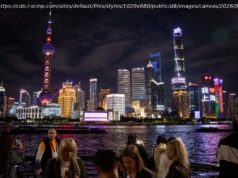
Every time I think about Hong Kong, I inevitably return to the water — the masked couples making out in cars facing the smoggy sunset by Stonecutters Bridge; the tourists jostling before the postcard-perfect view of the harbor from Avenue of Stars at Tsim Sha Tsui; the tranquil walks along the reservoirs at the country parks surrounding the city. In the last few decades, Hong Kong has frequently been referred to as a global financial center, but the city first gained significance as a major port in the early 20th century; its fate has always been intimately tied to its waters. I know that were I to ever leave, they would be what I would miss most. I was born not long before the handover in 1997, when Hong Kong was to cease to become a British colony and be handed to China. The event had triggered an emigration wave: There were whispers of how Hong Kong would change, and many left because they did not want to be under Communist rule. But change came slow, and borders remained free. Within a decade, Hong Kong had developed a regular protest calendar, with thousands marching through a dense network of skyscrapers in the financial district on set days every year to voice discontent and commemorate anniversaries. Over time, the city became, for the post-handover generation, less a place of transition, a stepping-stone for better lives abroad, but a place worth fighting for. After the national security law passed in June 2020, friends began leaving Hong Kong every few weeks. One by one, they disappeared from the camera reel on my phone, leaving me with things they couldn’t take with them: an oven, a Sodastream, a sous-vide machine, a stone diffuser, and five bottles of ground cinnamon. From 2020 through 2021, it was reported that 116,000 residents had left, often departing for countries like Britain and Canada, which, amidst the turmoil, announced residency schemes for Hong Kongers. Every other day on social media, someone pens a eulogy for the city. They were leaving; there was no way to plan for a future in this place, where every day brought about an unexpected change to the existing set of rules. Hong Kong had “become a place that could no longer tolerate truth,” pollster and moderate commentator Chung Kim Wah said earlier this year. He was born and raised here, but he craved broader skies and fresher air where he would no longer have to worry about shifting red lines. In late February, local news outlets published photographs of horrifying scenes in public hospitals: corpses sitting in gray bags next to living patients in an overcrowded emergency ward, senior citizens lying underneath outdoor tents on a freezing night in February. Afterwards, I spoke to Jasper, a young nurse in Kowloon who asked to go by this name to speak without repercussions. Jasper works in a public hospital that serves an aging population; this devastation, she says, is the direct result of both the government’s overconfidence in its healthcare system and of the strategy it chose to tackle the outbreak. Under the city’s elimination strategy, strict rules were put in place such that anyone who tested positive could be sent to hospitals or isolation facilities. As a result, rather than staying at home to recover, many COVID patients experiencing mild symptoms initially flocked to the hospitals and quickly crippled the system. By mid-February, only weeks after Omicron hit Hong Kong, the waiting rooms of Jasper’s hospital were so inundated that beds were spilling into the corridors. In the emergency rooms, four nurses could be looking after more than a hundred patients per shift. Days or even weeks later, Jasper said, when patients were finally transferred to the isolation wards, their conditions could have deteriorated. It would only be a matter of time before they passed away. Amid the crisis, residents in Hong Kong were forced to confront the realities of what it meant to live in a place where nobody in charge was popularly elected by the people. Over in China, the Communist government had implemented a zero-COVID policy, prioritizing lockdowns and restrictions rather than mitigation, and Hong Kong followed suit. During the outbreak, almost everyone I knew lived not in fear of catching COVID, but of the arbitrariness they may be subjected to should authorities find out they caught the illness, or came in close contact with someone who did. Health officers would sometimes appear on your doorstep to inform you that your building had been locked down for mandatory testing; should you test positive, you would have to undergo quarantine at an isolation facility, which Hong Kong residents have described as a “madhouse.” A Hong Kong woman told a local news outlet that despite two negative rapid tests, she was not told when she could leave; some in quarantine attempted suicide inside the facilities, according to local media reports. The uncertainty and severity of the measures made me feel like the city was collectively being punished. Meanwhile, in the hospitals, resources were spent on bringing in mainland Chinese health-care staff, who had different qualifications and were unfamiliar with local medical equipment, and primitive isolation facilities were hastily constructed by a state-owned Chinese company, the first of which was a 3,900-bed facility in Tsing Yi with shared squat toilets. It was part of what ultimately became a public-relations campaign about the support China was offering to Hong Kong, and further blurred the fading borders between the two places. Business advisers who rarely uttered a word against the government began urging Hong Kong’s leader to revise its pandemic policies, which were leading to a talent drain and further undermining the city’s global competitiveness. “Mixed messages from different government officials are not helping and are causing a lot of panic,” Allan Zeman, nightlife mogul and chairman of Lan Kwai Fong Group, said in a Bloomberg interview. In a survey in January, 44 percent of the members of the American Chamber of Commerce said they were planning to leave Hong Kong because of the strict pandemic rules, while a quarter of companies were considering relocation. In another survey in March by a European counterpart, almost half of the companies said they may exit the city. The political crackdown had already prompted artists, journalists, and prominent NGOs such as Amnesty International to leave Hong Kong; now, even global banks are mulling a move. By April, the outbreak had begun to subside, but the government’s response to it had left the residents of Hong Kong shaken. Something was fundamentally broken: If Hong Kong could botch the handling of a pandemic outbreak it had two years to prepare for, what does that say about future governance? Hong Kong used to be a city that understood its capitalism depended upon appearances; ever since the national security law was enacted, however, it no longer cared about the mask slipping. Two days after Jasper and I spoke, a former cop announced his intention to run for chief executive. He has since been chosen by a tightly controlled election committee as the next leader of the city. In the early days of the pandemic, I watched as people around the world debated what a return to normalcy meant. When the Omicron variant finally reached Hong Kong, the devastation was doubly felt, because the residents of the city had not known what a normal day was since June 2019, when the protests began. As the national security law altered the terrain of what was permitted, and the government flip-flopped on pandemic plans such as whether or not to conduct mass testing every few days, Hong Kong became an unpredictable, unlivable city. It wasn’t only that we could not see our future a few years down the line — say, whether we could raise our children in this city under a climate of fear. Now, we didn’t even know what was in store the next day. The Hong Kong government ultimately relented on its “dynamic zero” COVID policy, deviating from China’s approach. But up until that moment, there was a stark possibility that the government would never listen. During that time, when the government banned dining out at 6 p.m., I retreated into isolation and ate pancakes for dinner, numb but grateful that I was at least at home and not in quarantine. I felt like I had not come up for air in three years. For those who remain in Hong Kong, the question of whether or not to go constantly hangs over them. “The pandemic has made me more determined to leave,” Jasper, the nurse, told me. “But it’s not the right time; until then, I’ll continue to work in the isolation wards, perhaps in preparation for the next wave.” At the same time, she told me, she’ll begin to prepare for her overseas nursing qualification. Over the past year, Peter had grown to accept living in a state where was unable to plan for the future: He knew that eventually he would be forced to self-censor and that his job would become untenable. It was growing increasingly difficult to navigate the media landscape, he said, where there were few platforms left on which to publish, and the threat of the national security law loomed over them. He was hanging on until he no longer could. I sometimes think that the curse of this generation of Hong Kongers — those who are not already behind bars — is survivor’s guilt. How selfish is that, to want our lives to change or even improve, when there are so many in prison for rioting and political charges, when so many have died during the pandemic, when there are those who are forcibly exiled and will never see the waters of Hong Kong again? Years ago, before the 2019 protests, my friends and I stayed because we thought there were things we could still change about the city; then, after the protests ended and the national security law was implemented in 2020, we stayed in hopes of holding down the fort, of slowing the rate of political deterioration. These days, we stay only until circumstances no longer allow us to work or survive in this place. I know by now that my reasons won’t be professional or even political, but personal: When the day comes that my support system is uprooted and scattered, it would be time for me to go, too. That the arrival of this day feels now like a certainty makes each hour I still have left in this place, either around the dinner table pouring another drink for a friend, or on a long, contemplative walk by the water, feel like stolen time. Peter has spoken about this with his friends in jail. “They told me, ‘If leaving Hong Kong is for your own personal development and happiness, then I’ll be happy for you,’” he says. Ho, in particular, told Peter not to feel that he owed them anything because they were on the inside. Now, he, too, is planning to leave Hong Kong this year. Peter didn’t have a British National Overseas visa and could not benefit from Britain’s visa scheme, so he and his wife are going to Canada (it was easy, he explained, to move their two cats there — there was no quarantine for animals, and they were allowed into cabins). For now, he’ll continue to write letters to his friends, many of whom have little idea when they will ever regain freedom. In New York City, I ate my first real bagel — whitefish salad, larger than the size of my palm — and met up with scores of old friends. They told me it was sometimes difficult to keep in touch with friends back home, because they felt awkward talking about their new lives. News about Peter’s plans to move had reached them, and they were surprised: They thought he’d never leave. One evening, we were at dinner in the East Village, exchanging the latest gossip among the activist circles in the city and abroad, when I was struck by an odd wave of nostalgia: This was something we used to do in Hong Kong, only three years ago.
“Why don’t you just leave?” one friend asked me, and I could give no real answer. The Hong Kongers who are forced to leave now are the ones who may find the city closed to them forever. Unlike the emigration wave three decades ago, borders were no longer free for everyone: Because of the protest charges and the national security law, many people now face the possibility of arrest if they re-enter the city. It wasn’t leaving Hong Kong that was difficult; it was the thought of never coming back. By June, even though the pandemic outbreak had subsided and the streets are flooded once more with the boisterous sounds of the city, we only need to open the pages of the newspaper to see that another protester has been sent to prison for rioting over events in 2019. The crackdown continues to further extend its reach to every corner of society: Among those arrested recently is the 90-year-old Cardinal Joseph Zen, over his involvement in a fund that offered support to protesters. After three decades in one place, I had become convinced that I was tethered to this city, first out of responsibility and then, guilt. These days, I’m sure what my attachment to Hong Kong is anymore. It used to be the people who made this place home for me, but in the months before leaving for New York, I had attended a dozen farewell dinners and made trips to the airport to exchange tearful good-byes with friends emigrating from the city. During the peak of COVID, these good-byes would be the only noise echoing through the empty halls of the Hong Kong International Airport. Wavincity, a local urban soundscape recording project, recently released two clips of field recordings of these moments at the departure terminal. The sounds they captured are quiet and unassuming but melancholic: the quick footsteps of children, the clang of suitcase wheels, airport announcements in the background, soft voices that say, “Come, let’s take a photograph” and “Thank you for coming to see us off today.”
Right here, at this airport, were the last sounds they would hear from this city, and the final time they could call it home. They’d be gathering around a table for the warmth of company, in a faraway land, but there would always be someone missing. Maybe Hong Kong had been a dystopia, but it had been their dystopia. From then on, the city would be thought of in the past tense.