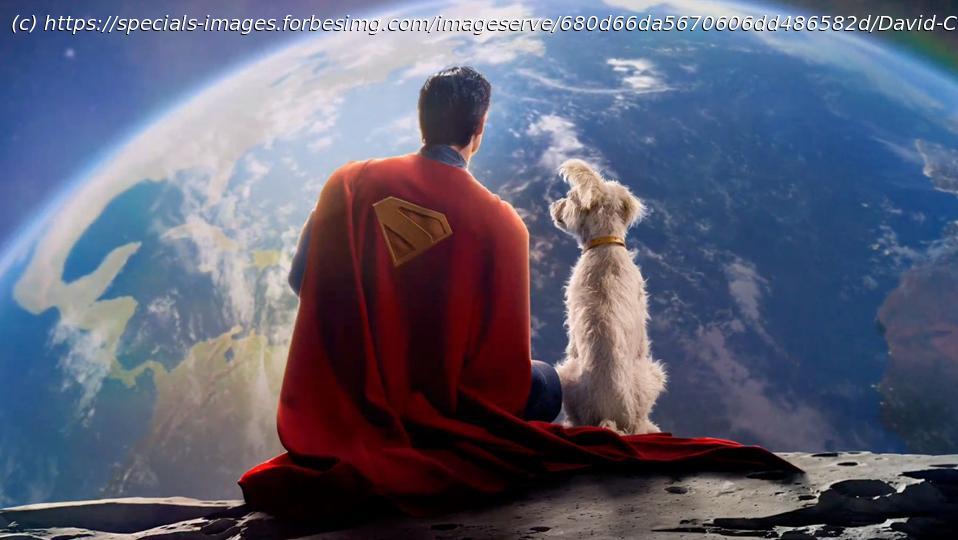
Superman flies back into theaters this summer. With so much riding on success, it’s a good thing all signs are positive — and if things go wrong, there are backup plans.
This summer, you will believe a man can fly again. And again. And again. Superman returns to the big screen on July 11th this summer in writer-director (and DC Studios co-CEO) James Gunn’s reboot that will define DC’s future on the big screen.Superman In Cinema – The Donner Era
Gunn’s film is Superman’s eighth solo feature film and the character’s twelfth live-action movie appearance, counting 1951’s hour-long Superman and the Mole Men starring George Reeves in what was essentially a low-budget cinematic pilot launching The Adventures of Superman TV series a year later. Reeves’ Superman was actually quite faithful to the depiction and persona in the early Superman comic strips, while his Clark was less cowardly and more of an intrepid reporter like Lois – they competed, and it was part of their friendly repertoire.
The 1978 one that started it all, Superman: The Movie, offered a comics-accurate adaptation of the character in all of his earnest corny charm. Christopher Reeve was born to the play the role if anyone was, making Clark Kent and his costumed alter ego two distinct performances that could’ve been played by different actors. Reeve’s Clark put on a bumbling and cowardly display, in line with much of the early comic strip stories, but only gradually incorporated more of the investigative reporter elements.
Gene Hackman’s Lex Luthor is an evil mad scientist with plans for destruction and domination, armed with Kryptonite and a subterranean lair shared. Superman stops crime, saves people from disasters, rescues kittens from trees, and demonstrates all of his famous powers in what were then eye-popping visual effects promoted as making you believe a man could fly. And in 1978, it did.
Superman II continued the approach of the first film, with superhuman villains threatening the world and Lex Luthor once again with his grubby fingers in the mix. Superman, however, is feeling disenchanted with his role as Earth’s protector at the expense of his own personal happiness – namely, a love life with Lois Lane. The extended fight sequence in the middle of Metropolis offered even more dramatic action spectacle than the first film, and firmly established superhero cinema as a modern force to be reconned with.
But Superman III, for all of its charm – and there’s much charm to be found, from Reeve’s never less than 100% effort and performance to one of the coolest scenes in any Superman movie when Clark Kent does battle with his own cape-wearing identity. Still, the plot and production values were weak and the film relied heavily on camp and a comedic turn by Richard Pryor.
Superman IV was the worst of the bunch, by a wide margin. Terrible visual effects, bad plot, ridiculous villain, a cast who mostly sleepwalk through their roles – with the exception again of Reeve, who commits to the role fully and sells the themes about disarmament even while the movie falls apart around him.Superman Returns
Superman Returns was a worthy if flawed sequel to the first two Superman films, ignoring the third and fourth movie completely. Brandon Routh was a great Superman and could’ve made the role his own if given the time. Alas, the film’s choice not to have Superman fight anybody, the love triangle and dominance of relationship drama, and the addition of a son were controversial choices among different corners of the audience and fandom. Routh’s Clark and Superman were treated as mostly the same person, frankly, and Clark had only a few hints of Reeve’s more comically bumbling persona, yet also lacked any notable distinctions as a character from his costumed alias.
So it was that after five films across 28 years, Superman’s next appearance would finally be a reboot for new generations.
Man of Steel in 2013 introduced a very different type of Superman in Henry Cavill, with a grounded deconstructive approach similar to the popular billion dollar Dark Knight Batman trilogy from director Christopher Nolan. Nolan’s “grandfathering” of Man of Steel and David Goyer’s script brought the same sensibilities the pair brought to Batman Begins, and combined with Zack Snyder’s directing it established a mythic scale and counterpoint to Marvel Studio’s MCU approach (which had just scored $1.5 billion with The Avengers a year prior).
The desaturated colors, somber tone, and questioning of Superman’s place in the world – indeed, questioning whether humanity deserves him or is ready for him – were unexpected approaches and combinations at a time when Marvel’s more mainstream and colorful, family-friendly approach had made superhero cinema the dominant force at the box office.
Still, Man of Steel shared a great deal in common with Superman and Superman II.
The origin story begins on Krypton and brings Kal-El to Earth, young Clark sets off in the world to find his purpose, and he discovers his origins via hologram of his father in a Kryptonian structure in the Arctic, all mirroring the 1978 film.
Then comes the arrival of General Zod and his two primary compatriots – a warrior woman and a silent hulking brute – who do battle with Superman around the city, causing much destruction and threatening the life of Lois Lane and her Daily Planet coworkers. Now add in Superman losing his powers temporarily when Zod’s crew first arrives and needing to regain his powers via help from his father, Superman’s flight high over Earth as he zooms toward the camera, and a few other homages.
(Maybe even at least consider that the theatrical version of Superman II seemed to suggest Superman killed Zod, Ursa, and Non, dropping them down into the freezing shafts of his Fortress of Solitude and then seen flying away with Lois in his arms. Deleted footage showed the trio of villains taken into custody. Interestingly, the theatrical film also implied Superman left Lex Luthor stranded in the Arctic as well.)
Cavill’s Clark was an interesting throwback to George Reeves’ intrepid reporter, lacking the bumbling personality and other aspects that perhaps drew more attention to Clark than if he just acted like a regular guy who was trying to be good at his job – few people would expect Superman to spend most of his life wearing glasses and a suit so that he could be a newspaper reporter of no notable personal distinction other than good local reporting. It’s actually maybe the smartest play.
So Man of Steel was at once a nod to everything audiences generally knew and had seen from Superman on the big screen, but all of it modernized and made more serious, with upgraded visual effects to turn every super-powered event into an operatic and often destructive force. Viewers mostly liked or loved it, contrary to how its reputation is perceived these days – it earned an A- Cinemascore from audiences, and while considered “Rotten” by site standards it still enjoys majority-positive reviews from critics at 57%.
Whatever flaws it had, it seemed audiences were intrigued enough and entertained enough to want to see more of this new Superman. Again, the proximity to The Dark Knight Trilogy and some of the same creative team members created the sense we could get a Superman trilogy comparable to the magic they worked with Batman.
Instead of standalone Superman movies like Nolan’s Batman series, however, Man of Steel quickly evolved into a shared-universe setup. The most obvious choice, and one not just rumored but indeed investigated by Warner at the time, was to use The Dark Knight series and Man of Steel as part of the same new DC shared universe of films. But Nolan balked, and the studio agreed to honor a promise not to use his Batman again.The Death Of Superman
With a new Caped Crusader installed, Man of Steel’s sequel became 2016’s Batman v Superman. And now the deconstruction dominated the proceedings, something many of us loved but which most audiences felt was just too much too fast. Superman’s death at the end of the film, after only his second cinematic appearance, was a big surprise and upset many fans. Superman’s entire purpose was questioned in the film, not just by society and by other heroes like Batman (who sought to literally murder Superman), but even by Lois Lane and ultimately Superman himself.
Notice that this is one of the few films – Superman III being the other – in which the character’s life and work as Clark gets as much attention and screen time (and is more important to the story, if you think about it) than his costumed heroics and battles.
While Batman v Superman scored $874 million at the worldwide box office, it was short of the $1 billion threshold Warner Bros. was chasing and shy of the roughly $900 million that would’ve been enough to avoid panic and to make more modest course-corrections. Instead, leadership already convinced nobody cared about Superman (because they didn’t, apparently) wanted to veer even further away from the original plans and sequels, upending a planned Justice League trilogy of team-up films at the first signs of box office trouble.
But the trouble started before Batman v Superman was even released, because the same leadership reacting so badly to the film’s results were the ones who demanded cuts to reduce Superman’s screen time and gutting the emotional and informational reasons for the film’s central conflict. The extended version of the film reveals how much Superman’s own arc and story were gutted, and how much the reasoning for society’s backlash against him took place.
The next time Cavill’s Superman appeared on screen in the DCEU was the Frankenstein’s monster of Justice League in 2017, a box office failure that was the beginning of the end for the shared DC universe, even though most people didn’t fully realize it at the time. Only Aquaman with a fantastic $1 billion run managed to avoid the curse, as the next nine DCEU films in a row each grossed less than $450 million worldwide – indeed, six of them grossed less than $300 million, so bad was the mainstream worldwide rejection.