The National Ignition Facility (NIF), based at the US Department of Energy’s Lawrence Livermore National Laboratory, has steadily increased the amount of energy produced in its fusion.
Forward-looking: While the path to practical fusion energy remains long, the recent advances at the National Ignition Facility have emboldened researchers. The facility’s ongoing progress is a testament to decades of persistence – and a sign that the age of controlled fusion ignition is no longer a distant dream.
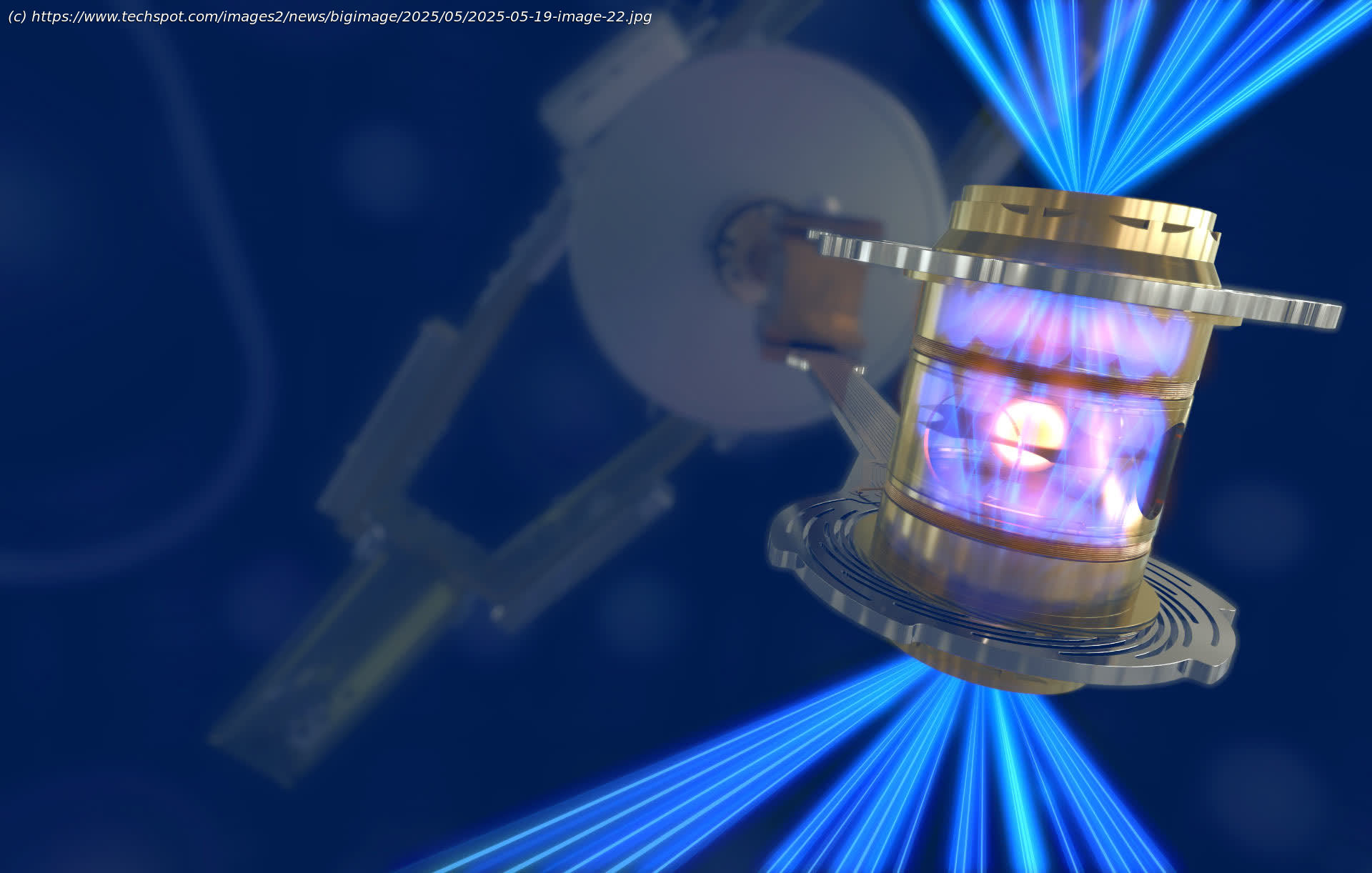
The National Ignition Facility (NIF), based at the US Department of Energy’s Lawrence Livermore National Laboratory, has steadily increased the amount of energy produced in its fusion experiments, according to information obtained by TechCrunch. The facility, which made headlines in 2022 for achieving the world’s first net-positive fusion reaction, has since pushed the boundaries of what’s possible in controlled nuclear fusion.
A source with direct knowledge of the experiments told the publication that recent tests at NIF have generated energy yields of 5.2 megajoules and, more recently, an impressive 8.6 megajoules. These figures represent a significant leap from the facility’s landmark experiment in December 2022, when researchers produced 3.15 megajoules of energy from a single fusion shot.
That initial breakthrough was the first time a controlled fusion reaction released more energy than was delivered to the fuel pellet, a milestone that fusion scientists had pursued for decades.
Despite these advances, the energy produced in each experiment remains far short of the amount needed to power the NIF’s laser system, let alone supply electricity to the wider grid.