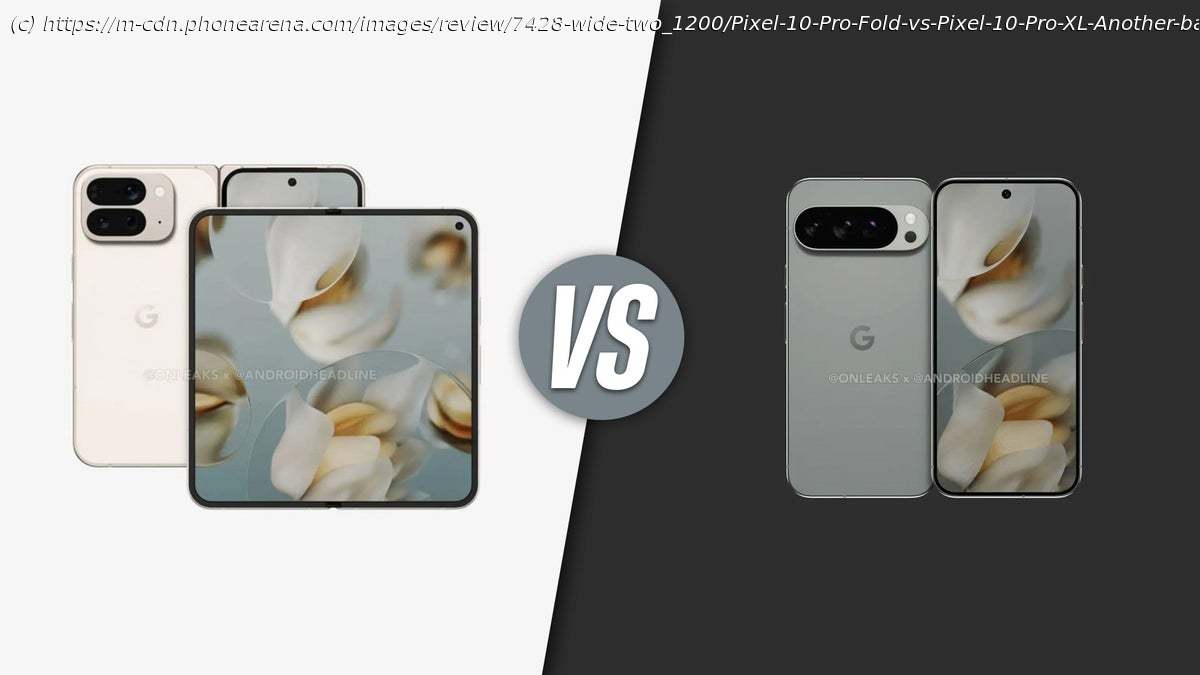
Here’s another iteration of the old question, to fold or not to fold. Starring the Google Pixel 10 Pro Fold and the Google Pixel 10 Pro XL
The Google Pixel 10 series is right around the corner, and there are a slew of interesting updates in store for us. The second iteration of the new Pixel Pro XL model is particularly interesting, and given the price tag, it begs an interesting question.
Should you go down the foldable route and get the Pixel 10 Pro Fold or stick to the conventional form factor and opt for the top model in the lineup, the Pixel 10 Pro XL? In this preliminary comparison we’ll try to answer this exact question.
Google Pixel 10 Pro Fold vs Google Pixel 10 Pro XL expected differences:
*rumoredTable of Contents:
Read more:
There are no huge changes to the design when it comes to both the Pixel 10 Pro Fold and the Pixel 10 Pro XL. These devices follow the path charted by their respective predecessors. That being said, they are conceptually different from one another – one has two displays and folds in half, while the other employs a more conventional candy bar design.
The result is two phones that differ in size and weight. The Pixel 10 Pro XL is lighter, although not by much, while the Pixel 10 Pro Fold is thicker folded and also narrower. The camera bump is also different between the two, the 10 Pro Fold uses the same square-ish camera housing as its predecessor, while the 10 Pro XL model opts for the evolved camera bar – a long horizontal camera bump.
*rumored
In terms of building materials and colors, we don’t expect major differences between the two. Granted, the Pixel 10 Pro Fold can’t use tempered glass over its main folding screen, but other than that, we expect the same glass-aluminum sandwich from both devices.
An interesting upgrade is the alleged IP68 water and dust protection on the Pixel 10 Pro Fold. This will help with durability for sure and bring those two phones close together when it comes to protection from the elements.
*rumored
The colors will most likely be identical on these two, but we’re hearing different names for the hues (as you can see in the table above). There might be nuances and shades but the more plausible scenario is that Google will use the same color scheme.
Display Differences
Another big difference, inherited from the design of these two, lies in the display department.