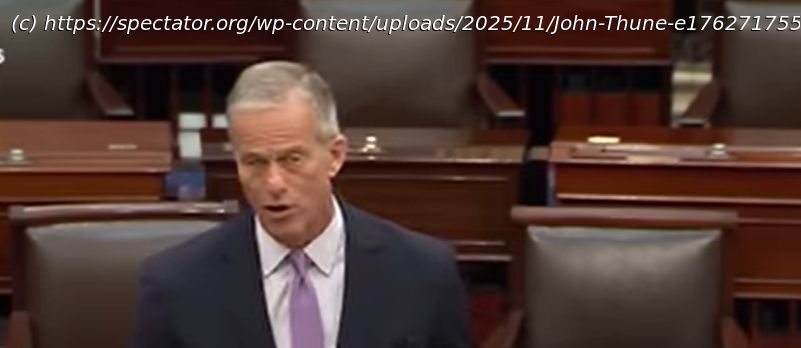
President Trump is right in his a call for the Senate to eliminate the filibuster — the procedural rule requiring.It’s not in the Constitution, and Dems will kill it anyway to pack courts and grant statehood to Washington DC.
President Trump is right in his a call for the Senate to eliminate the filibuster — the procedural rule requiring a 60-vote supermajority to advance most legislation. Critics decry this as a power grab that erodes democratic norms, but a closer examination reveals Trump’s stance as both pragmatic and prescient.
Of course, this isn’t without risks. A simple-majority Senate could swing back against Republicans in future cycles.
The filibuster, far from a sacred constitutional safeguard, is a historical accident that has outlived its utility. By ending it now, Republicans re-open the government, enact critical reforms like nationwide voter ID, and preempt inevitable Democratic aggression that could permanently tilt the balance of power.
To understand why the filibuster must go, one must first dispel the myth of its foundational status. The framers of the Constitution envisioned a Senate where simple majorities would suffice for most business, fostering efficient governance in a young republic. James Madison, in Federalist No. 22, warned against mechanisms that could allow minorities to obstruct the majority will, arguing that such rules would lead to “tedious delays; continual negotiation and intrigue; contemptible compromises of the public good.” Indeed, the Constitution specifies supermajorities only for exceptional cases: overriding vetoes, ratifying treaties, convicting impeached officials, and amending the document itself. Nowhere does it mention or mandate a filibuster.
The filibuster’s origins are far more mundane and unintended. It emerged in the early 19th century not through deliberate design but via a clerical oversight. In 1806, Vice President Aaron Burr, presiding over the Senate, suggested streamlining the chamber’s rules by eliminating the “previous question” motion — a tool that had allowed senators to end debate and force a vote. The Senate adopted this change without much fanfare, inadvertently creating a loophole where debate could theoretically continue indefinitely unless all senators agreed to stop.