Arctic geography drives U.S. homeland defense as Cold War lessons reveal Greenland’s critical role in missile detection and security infrastructure.
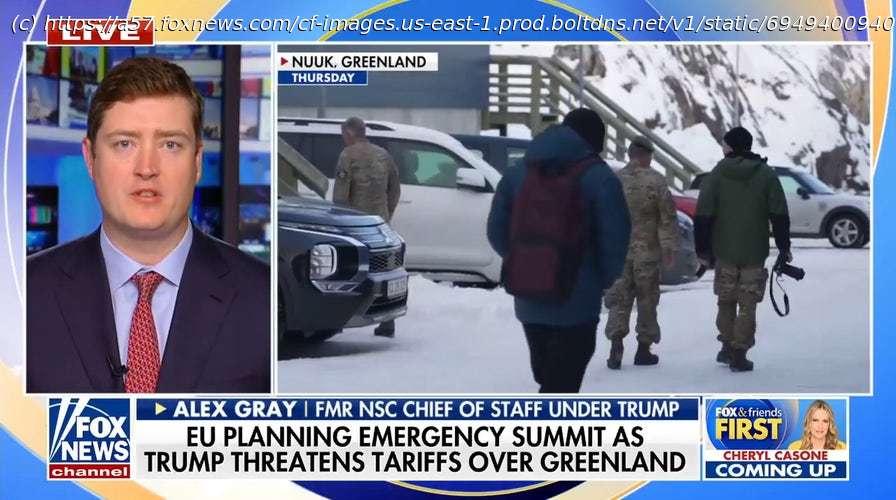
President Donald Trump’s announcement that the United States will impose a 10 percent import tariff on eight European countries opposing U.S. control of Greenland has forced a long-ignored Arctic debate into the open. Several European governments responded with immediate objections, while skepticism at home followed just as quickly.
Critics warn that tariffs risk alienating allies and straining NATO. Polling shows widespread public unease with any move that sounds like American domination of Greenland. Those concerns are real, but they do not change the strategic facts. Dismissing Greenland as optional ignores a central lesson of modern history: the Arctic has never been peripheral to the defense of the American homeland.
Washington confronted a similar — and far more dangerous — strategic dilemma during the Cold War.
During that period, U.S. defense planners did not view the Arctic as a distant theater. They treated it as the most direct avenue of attack against North America. Soviet bombers and missiles followed the shortest routes over the Pole, forcing Washington to confront an unavoidable geographic reality.
Because missiles and bombers traveled over polar paths, Arctic geography drove American defense planning. In cooperation with Canada and with Denmark’s consent in Greenland, the United States constructed an unprecedented early-warning system across the high north. The Pinetree Line, the Mid-Canada Line and the Distant Early Warning (DEW) Line together formed more than sixty radar stations stretching from Alaska across the Canadian Arctic toward Greenland. When intercontinental ballistic missiles replaced bombers as the primary threat, Washington adapted again, fielding the Ballistic Missile Early Warning System at Thule in Greenland, Clear in Alaska and Fylingdales in the United Kingdom — designed to provide decision-makers with critical warning time in a nuclear crisis.
Those Cold War lessons still apply because missile flight paths, warning timelines and homeland defense remain shaped by Arctic geography.
Some analysts argue that existing defenses — particularly those at Fort Greely, Alaska — reduce the need for strategic positioning in Greenland.