With the AI giants devouring the market for memory chips, PC prices are set to skyrocket. Here’s what I think laptop shoppers need to know right now.
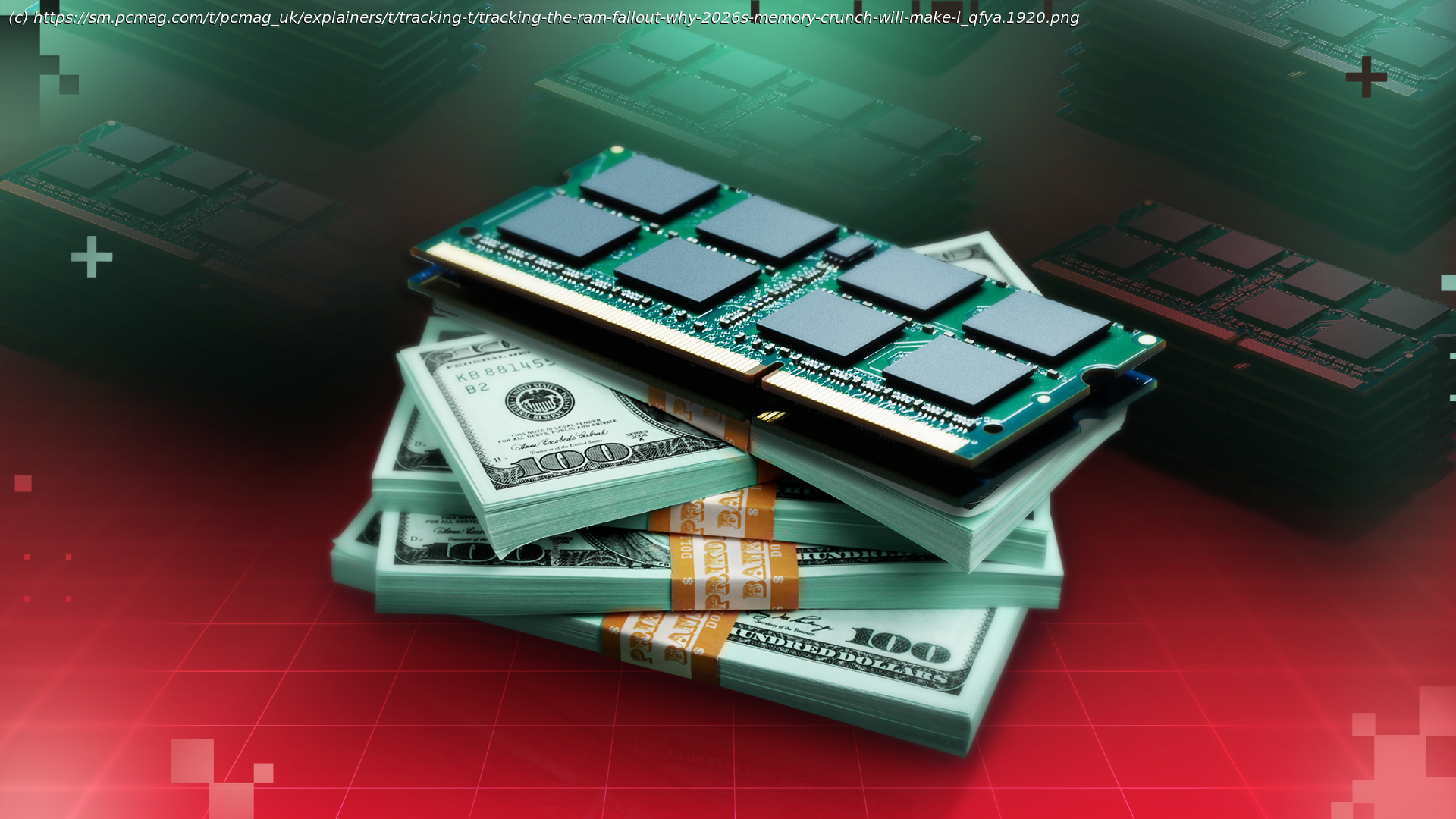
It’s no secret that prices for PC main system memory—formally known as random-access memory, or RAM—have spiraled out of control. In the last couple of months, prices for modules of DDR5 RAM (the latest standard) have skyrocketed, doubling and then some. A 64GB kit of desktop memory has quickly become more expensive than a Sony PlayStation 5, and some larger kits now cost more than a high-end desktop GPU. The bonkers price rises are starting to bleed into older memory types, too, like DDR4 and DDR3.
These price hikes will affect every product that relies on memory or storage—but I want to focus on laptops right now. Laptops don’t use the same physical modules that desktops do, but the underlying memory chips are the same and susceptible to the same price pressures. As one of PCMag’s leading laptop experts, I can tell you: it’s about to get rocky for anyone who needs a new PC this year.Why Is RAM So Expensive Right Now?
Let’s first understand why RAM prices have surged so much, and will continue to. The simple answer is overwhelming demand from the AI-compute giants.
Massive banks of memory are critical to peak AI performance, making memory chips essential to meeting the soaring need for AI power. The data centers that power ChatGPT and other AI tools are gobbling up a massive chunk of the available memory-manufacturing bandwidth. AI applications don’t necessarily demand the exact same kinds of memory that PCs do, but the relevant memory factories, or fabs—these days, largely concentrated among three big players, Micron, Samsung, and SK Hynix—have only so much capacity.
This year, AI-centric memory is projected to consume 70% of global memory hardware production, according to TrendForce, a Taiwan-based industry analysis and consulting company focused on the semiconductor industry. That leaves only so much capacity for consumer stuff.
To meet that AI data-center hunger, major memory-chip makers are shifting some of their manufacturing capacity to stacked-design high-bandwidth memory (HBM) and server-grade DDR5, further cutting the supply of chips destined for consumers and consumer-grade machines. How big a shift is this? For example, American memory giant Micron has exited the direct-to-consumer memory market entirely, shutting down its longtime Crucial sub-brand familiar to many upgraders and home PC builders. It will still provide memory to commercial PC makers, but the crunch affects them, too.
A starved supply, with no drop in demand, means prices have gone through the roof—and they’re expected to stay high for a year or more, as AI software giants such as OpenAI and AI-hardware titans such as Nvidia try to lock in supply pricing, contracting huge numbers of yet-to-be-made wafers and chips.