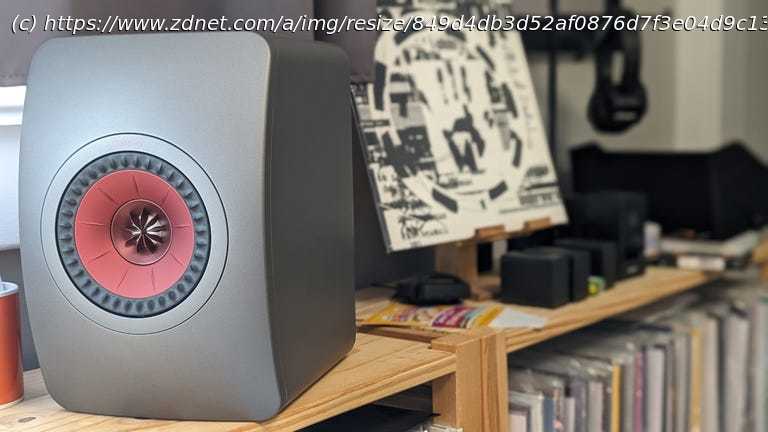
There are many factors that go into producing high-quality sound through speakers and headphones. One way to improve that sound is with the equalizer.
These speakers sound as good as they look.
Equalizers let you fine-tune specific frequencies to balance sound.
They help fix issues with your speakers or room acoustics.
You can easily boost clear tones while cutting out noise.
I remember it like it was yesterday: sitting in my car, cranking up Van Halen’s 5150, and spending the entire album fiddling with the 10-band EQ I’d installed to get the best sound possible.
You don’t see a lot of physical equalizers these days, which is sad because they were always so cool to have. Instead, most everything is software-driven now. And that’s fine. It may not be « audiophile-level fine », but at least it’s something.
For those who didn’t spend their youth trying to tweak every knob and button on a stereo rack to get the best sound possible from their speakers, you might be wondering, « What is this EQ of which he speaks? »
Let me explain.What’s the frequency…
One way sound is measured is in terms of periodic vibrations, measured in hertz (Hz), which is the property of sound that determines pitch. Humans have a finite range of frequencies they can hear, specifically, 20 to 20,000 Hz. Those frequencies are broken into octaves which are:
16 – 32 Hz – the lowest notes humans can hear.
32 – 512 – the frequencies of rhythm (lower and upper bass notes)
512 – 2,048 – the range where the human voice is located
2,048 – 8,192 – the range where labial and fricative sounds are
8,192 – 16,384 – the range of brilliance, bells, cymbals, and sibilance
16,384 – 32,786 – nebulous sounds passing the upper range of human hearing
How does that work out in a way that’s better understandable? To break frequency down into the simplest terms, you have:
Lows – the first two entries in the list above
Mids – the third and fourth entries in the list above
Highs – the final three entries in the list above
An equalizer allows you to raise or lower the levels of specific frequencies, and different EQs offer different amounts of adjustment.