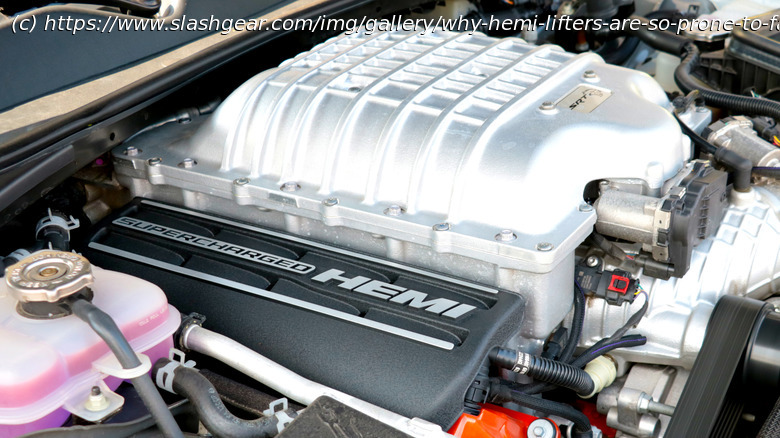
While HEMI engines have a reputation for toughness and durability, there is one common weak spot in the design: HEMI lifters fail a whole lot. Why?
Engines are incredibly complex. They are made out of thousands of different parts, exposed to high temperatures, and have lots of moving parts. This leaves many potential pain points an engine can suffer from. BMW’s N47 engine is prone to timing chain issues. Ford’s 5.4L V8 is often regarded as the worst engine Ford ever put in a truck due to its spark plugs blowing out the sides of the cylinder heads.
In the case of HEMI engines, they are prone to lifter failure — and here is why that is. According to various technical analyses, many owner reports and repair-shop investigations of HEMI engines, lifter-roller bearing failures seem to primarily be linked to insufficient lubrication. Moreover, these can also be caused by bearing system design flaws that can damage the camshaft lobes, and eventually seize the engine.
Some sources also state lack of general maintenance, metal fatigue over the years, VVT issues with post-2008 engines, and excessive idling as potential contributors to the problem. Ultimately, many things can contribute to lifter issues, and it seems the problem is more nuanced than sometimes believed. Regardless, in order to keep your HEMI as safe from lifter failures as possible, here are a few options worth considering.Deep dive into potential causes of HEMI lifter failures
According to Sky, a former Chrysler/Dodge/Jeep technician behind the Reignited – Cycle & Automotive YouTube channel, HEMI lifter failures may stem from how the Multi-Displacement System (MDS) system controls the flow of oil.