The Creator production designer James Clyne explains what went into the startling robots, weaponry, and AI in Gareth Edwards’ gorgeous sci-fi movie.
The Creator doesn’t look like anything else out in theaters right now. While it obviously expands on visual precedents from films like Apocalypse Now, Blade Runner, and Akira, the latest sci-fi action movie from Rogue One director Gareth Edwards feels equally indebted to the mood and spirit of our contemporary reality, thanks in no small part to Edwards’ decision to film on site across eight different countries, including Nepal, Cambodia, and Thailand.
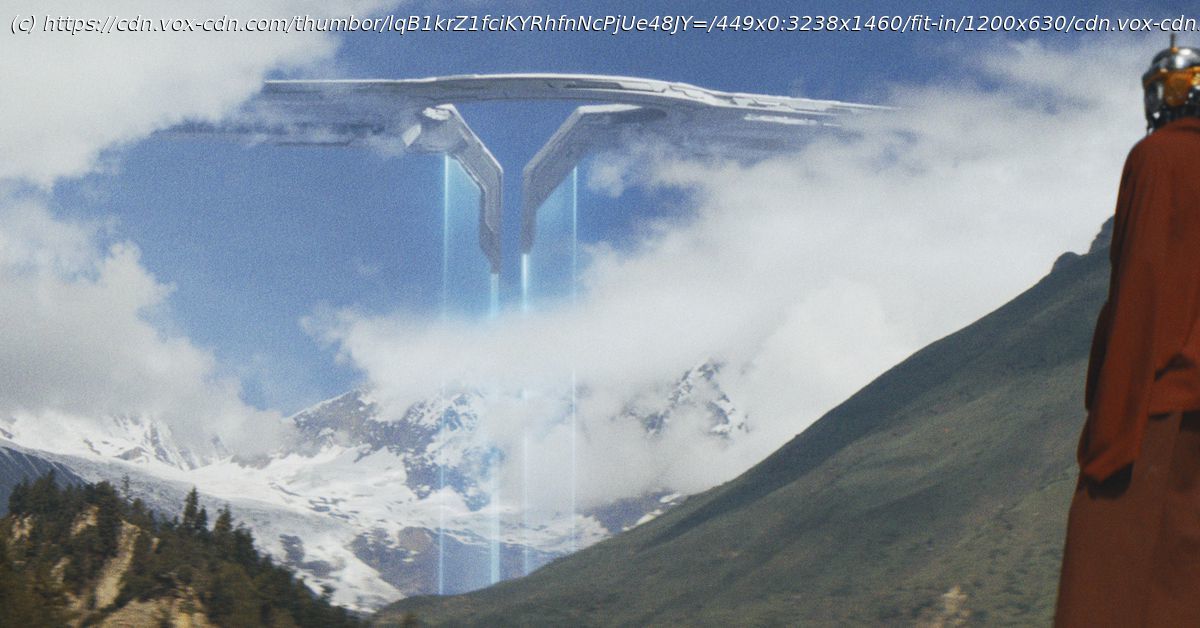
The film stands apart from its contemporaries in its pronounced emphasis on strong art direction, grounded in an emphasis on tactile retrofuturism. It’s evident in everything from the costumes and robot designs to the ominous jagged silhouette of NOMAD, the low-orbit nuclear warship that hovers in the sky throughout the majority of The Creator.
Via Zoom, Polygon spoke to The Creator’s production designer, James Clyne, to talk about how he and Edwards honed in on The Creator’s unique aesthetic. We discussed the importance of graphic design in worldbuilding, and how the 1982 movie Pink Floyd – The Wall inadvertently inspired NOMAD’s design.
Polygon: What was it like working with Gareth Edwards on the aesthetic of The Creator? What were your visual and philosophical guiding principles for how this particular universe should look and feel?
James Clyne: That’s a big question. I mean Gareth, on so many levels, he’s very hands-on with his filmmaking. He likes to operate the camera, he likes to be involved on every level, and that includes art and creating what this world could be. So a lot of our initial discussions were just influences, what were we influenced by. We’re kind of the same age. We grew up in the ’80s with all these great sci-fi movies like Total Recall and Blade Runner. But then we’re also influenced by movies like Apocalypse Now.
There was one specific movie that stuck out — Baraka. In a way, we looked at that movie and thought, What if Baraka was made 60 years from now, and we were able to watch it today? What would that look like? What does that mean, what does that feel like? Because Baraka is such a great documentary of today’s culture, of humanity, where we are and where we’ve been and where we’re going. And Gareth has a bit of a documentarian sensibility, in that he wants to just go into a location and shoot it as is. That’s what we did a lot in the film, just go into these real locations in Southeast Asia and shoot beautiful photography.
So that was one thing we knew we wanted the movie grounded on, these very exotic natural locations. And then we asked what kind of world we wanted to build on top of that, which was another big discussion. Because it was Southeast Asia, we were influenced by Japanese culture of the ’90s and how they built their technology. Walkmans, televisions, and stereo equipment, they all had this very tactile look. We’re so used to iPads and iPhones — a sheet of glass laminated onto a metal backing. We just thought that wasn’t going to be the most cinematic thing.
So we thought, What would a Walkman look like 60 years from now? How do we keep it tactile, with real buttons and real LED displays, but make it our own kind of future? What if that technology from the ’90s just went in a different direction, and we still used very tactile equipment? That plays into everything from the costume design and props to the vehicle designs all the way up to the design of NOMAD itself.