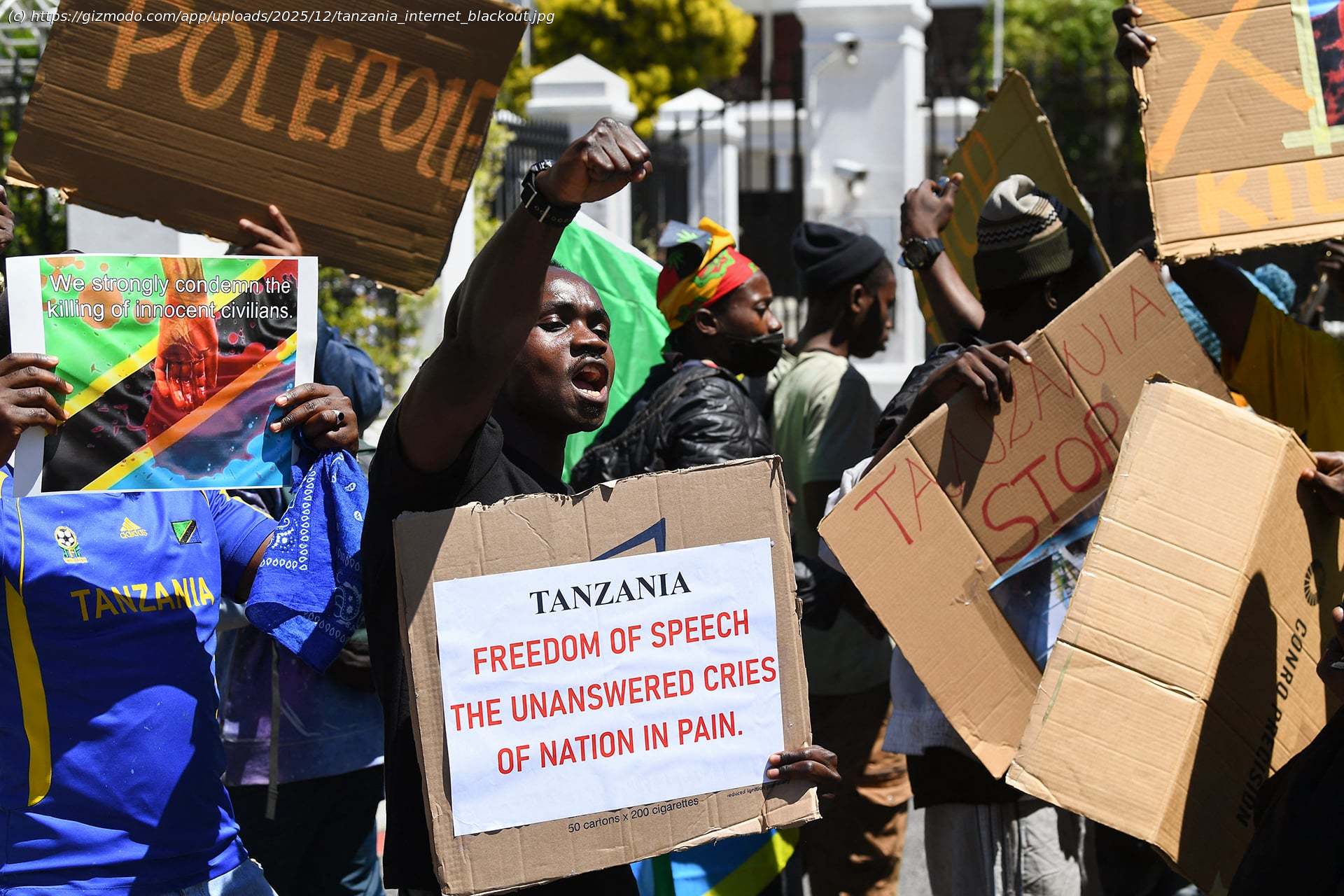
From protests to elections, governments are increasingly pulling the internet plug on entire populations. Connectivity is slowly becoming a tool of control, not a guarantee.
For two days in September, Afghanistan had no internet. No satellite failed; no cable was cut. This was a deliberate outage, mandated by the Taliban government. It followed a more localized shutdown two weeks prior, reportedly instituted “to prevent immoral activities.” No additional explanation was given. The timing couldn’t have been worse: communities still reeling from a major earthquake lost emergency communications, flights were grounded, and banking was interrupted.
Afghanistan’s blackout is part of a wider pattern. Just since the end of September, there were also major nationwide internet shutdowns in Tanzania and Cameroon, and significant regional shutdowns in Pakistan and Nigeria. In all cases but one, authorities offered no official justification or acknowledgment, leaving millions unable to access information, contact loved ones, or express themselves through moments of crisis, elections, and protests.
The frequency of deliberate internet shutdowns has skyrocketed since the first notable example in Egypt in 2011. Together with our colleagues at the digital rights organisation Access Now and the #KeepItOn coalition, we’ve tracked 296 deliberate internet shutdowns in 54 countries in 2024, and at least 244 more in 2025 so far.
This is more than an inconvenience. The internet has become an essential piece of infrastructure, affecting how we live, work, and get our information. It’s also a major enabler of human rights, and turning off the internet can worsen or conceal a spectrum of abuses. These shutdowns silence societies, and they’re getting more and more common.
Shutdowns can be local or national, partial or total. In total blackouts, like Afghanistan or Tanzania, nothing works. But shutdowns are often targeted more granularly. Cellphone internet could be blocked, but not broadband. Specific news sites, social media platforms, and messaging systems could be blocked, leaving overall network access unaffected—as when Brazil shut off X (formerly Twitter) in 2024. Sometimes bandwidth is just throttled, making everything slower and unreliable.
Sometimes, internet shutdowns are used in political or military operations. In recent years, Russia and Ukraine have shut off parts of each other’s internet, and Israel has repeatedly shut off Palestinians’ internet in Gaza. Shutdowns of this type happened 25 times in 2024, affecting people in 13 countries.
Reasons for the shutdowns are as varied as the countries that perpetrate them.