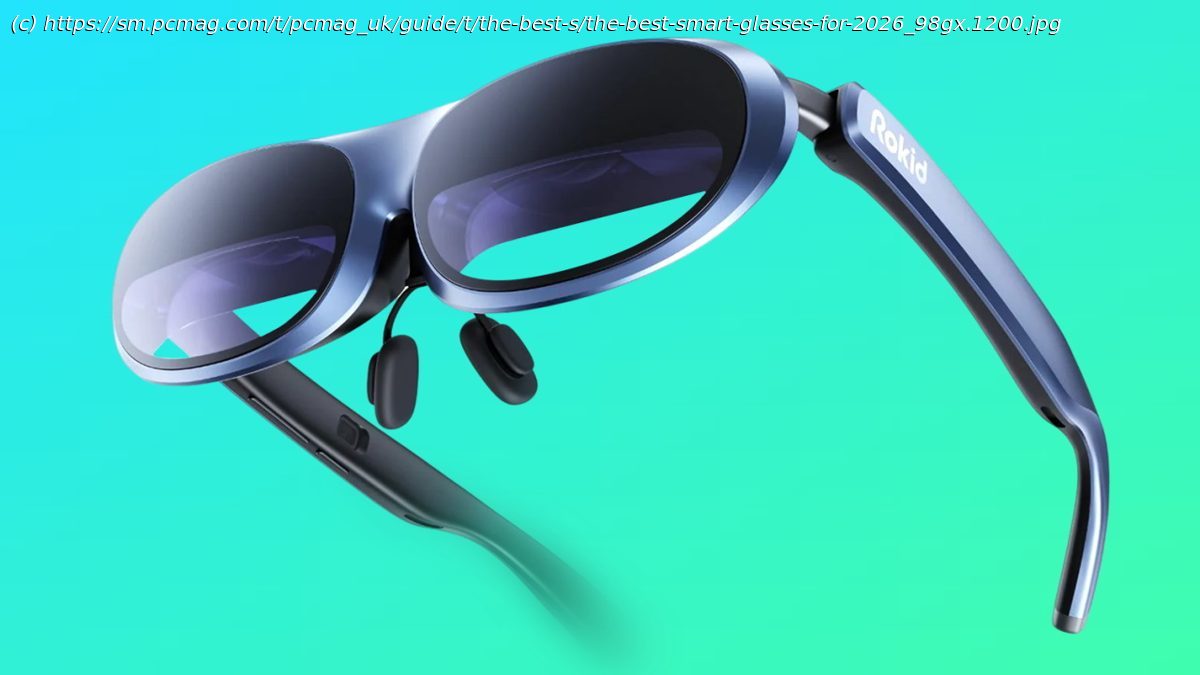
Upgrade your eyewear with glasses that can function as cameras, headphones, and AR displays. We’ve tested all the major models and have everything you need to know to pick the right smart glasses for you.
With technology such as cameras, displays, and sensors built into their frames, smart glasses can provide augmented reality (AR) views, AI assistants, and Instagrammable snapshots directly on your face. I’ve been covering smart glasses since they first hit the market and have seen them evolve from basic phone-tethered wearable displays into wireless mixed-reality marvels. They’re still developing, and glasses that can unobtrusively show a map of your surroundings and translate languages are inching forward. The XReal One Pro is currently the most advanced pair of smart glasses available, with the widest field of view. Meanwhile, the RayNeo Air 3s Pro is the most affordable AR model we recommend, and both have earned our Editors‘ Choice award. Read on for details of all of the best smart glasses we’ve tested, followed by everything you need to know to find the right pair for you.Why We Picked It
The XReal One Pro is the most high-tech pair of video-focused AR glasses that I’ve tested, with one aspect that puts it over the top. Its field of view is a massive 57 degrees, offering a much bigger picture in front of your eyes than the other smart glasses on this list. It also has several built-in tricks missing from similar smart glasses, like built-in three-degrees-of-freedom (3DOF) head tracking that keeps the projected picture in a fixed location so you can turn your head and look around it. Be aware that it doesn’t have diopter adjustments, though, so if you’re nearsighted you’ll need to spend extra on prescription lens inserts. Who It’s For
Power users: If you need a lot of space to get work done, the XReal One Pro can provide it when other smart glasses can’t. Built-in head tracking gives it a big advantage, enabling the use of display resolutions higher than its native 1,920 by 1,080. Widescreen mode lets you connect it to a computer and use it as a big 3,840-by-1,920 screen, and you can physically move your head left and right to see the full desktop. It’s like having an ultrawide monitor (or two regular monitors) strapped to your face. That’s a lot of space to work in.
Theater fans seeking immersion: Head tracking also gives the glasses a big boon for movie watching. Because it can anchor the virtual display in place and keep it there even as you move your head, it can give the impression of sitting in a theater and actually watching a physical screen. With a few very specific exceptions that require additional software or accessories, other smart glasses don’t offer this effect and simply keep the picture locked directly in front of your eyes, so it moves when you move your head. The view does cut off at the edge, so it isn’t quite the complete eye-filling experience you would get from a VR headset, but it’s by far the most immersive way to watch a movie on smart glasses. Why We Picked It
The RayNeo Air 3s Pro isn’t the fanciest or brightest pair of AR video smart glasses, but it’s one of the best values. Its 1080p picture and 46-degree field of view offer a sharp, clean picture with bright and incredibly vibrant colors. As a trade-off for the price, it lacks some features like built-in head tracking, dimmable lenses, and diopter adjustments.Who It’s For
Everyday users who don’t require corrective lenses: The Air 3s Pro is a top value pick for AR smart glasses, as long as its lack of head tracking and dimmable lenses aren’t deal-breakers. Not having focus dials can throw a wrench in the experience if you’re nearsighted, though. If you require vision correction, prepare to spend at least another $80 on prescription lens inserts.
Budget-focused travelers: For working away from your desk or watching videos on a flight, these are the most affordable smart glasses you’ll find. You don’t need a ton of extras if you just want a good-looking private display you can take anywhere.Why We Picked It
Oakley’s take on smart glasses is a lot like Ray-Ban’s, as both leverage Meta’s technology. Like the Ray-Ban Meta (Gen 2) smart glasses, the Oakley Meta HSTN features a 12MP camera for capturing content from your point of view, as well as Meta AI to answer your questions. Both pairs supposedly have the same battery life and speakers, but the Oakley Meta HSTN sounds a little better, with less audio leakage, than the second-gen Ray-Ban Meta, and lasted slightly longer between charges in our testing. We prefer the style of the Ray-Bans, but the Oakley Meta HSTN is functionally superior by the thinnest of margins. Who It’s For
Music fans: While no open-ear speakers offer much low-end bass resonance, these Oakleys make mid- and high-frequency music sound pristine, with clear separation. They produce decently loud audio and minimize sound leakage.
People with small children or pets: All of the Meta smart glasses make it easy to capture impromptu moments, but these have the best battery life of the bunch, so you’re that much more likely to be wearing them when a special moment strikes. Why We Picked It
Like the Oakleys, these Ray-Ban smart glasses utilize Meta’s technology to let you to take photos, shoot videos, listen to music, and make calls. They provide easy access to Meta AI, which can use visual data from the glasses‘ 12MP camera to help answer your questions. Who It’s For
Fashion fanatics: These Ray-Bans have a timeless style with unobtrusive tech cleverly baked into the design. If you want to add smarts to your frames while accessorizing your look, these are the smart glasses for you.
Social media gurus: If you’re looking for a fun new way to share your social media activities, especially on Meta’s platforms like Facebook or Instagram, these are the smart glasses to consider. They make it easy to shoot POV videos without having to hold your phone, and the integrated Meta AI assistant can provide real-time information about your surroundings.