However, Amazon says it’s incorporating new anti-reflective tech and working with astronomers to address their concerns.
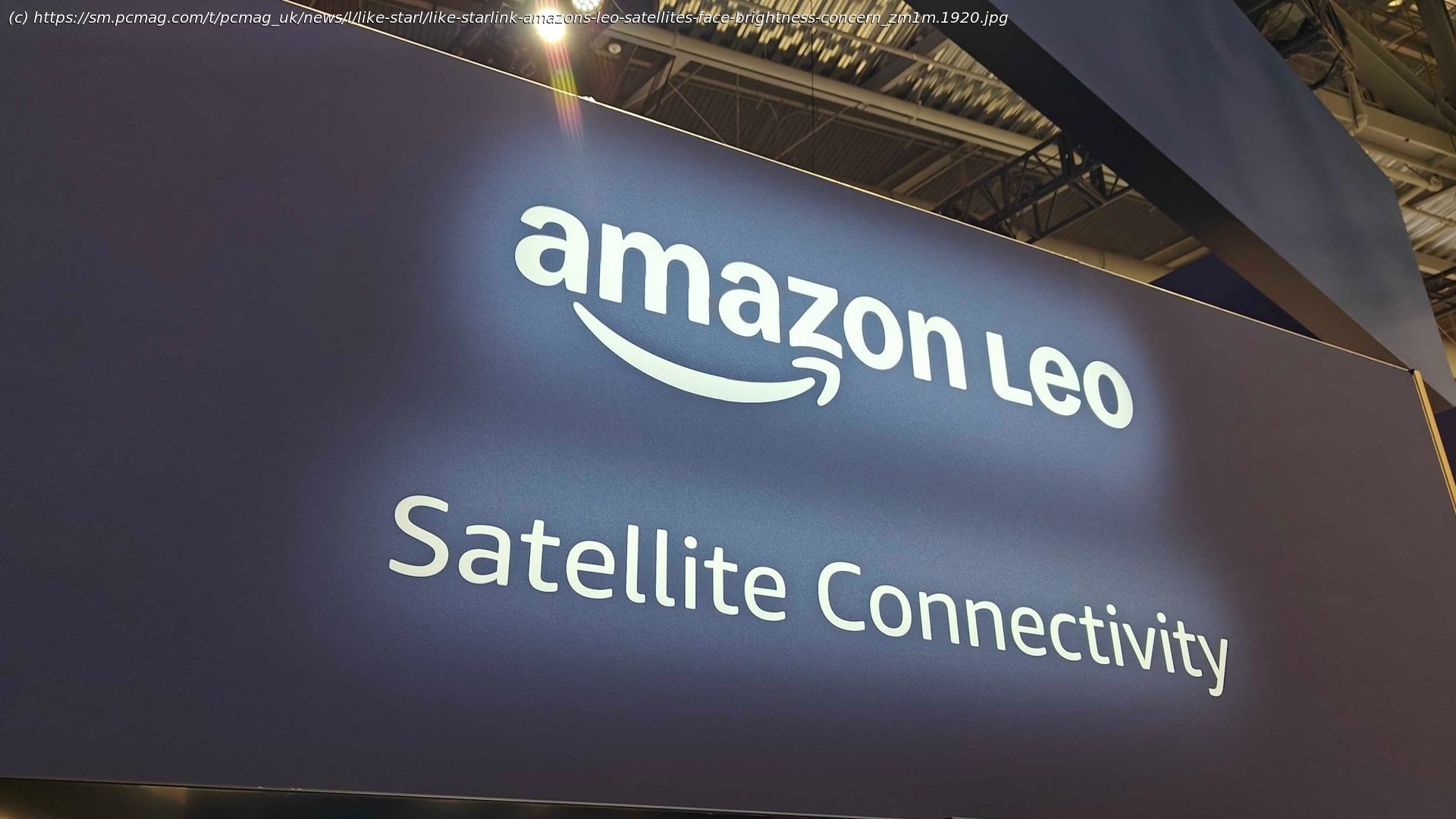
Amazon Leo is following in Starlink’s footsteps, but in a way astronomers hoped it would avoid. Many of the Leo satellites appear to be bright enough in the night sky to interfere with astronomical observations, according to new research.
The findings come from a group of astronomers affiliated with the International Astronomical Union that took nearly 2,000 observations of Amazon’s commercial Leo satellites, which the company started launching into Earth’s orbit last year.
Satellites can reflect sunlight to observers on the ground in the hours after dusk and before sunrise. The research found that when Leo satellites have entered operational altitude at around 630 kilometers, 92% of the observations showed the satellites exceeding the recommended brightness guidelines from the astronomical community.
That said, the Leo satellites are still fairly dim in most cases. Only about 25% of the observations found the satellites were vivid enough to be visible to the human eye—or under a 6 on the stellar magnitude scale that astronomers use to classify brightness.
Magnitude 6 represents the “aesthetic limit“ for when a satellite or star becomes visible to the unaided eye.