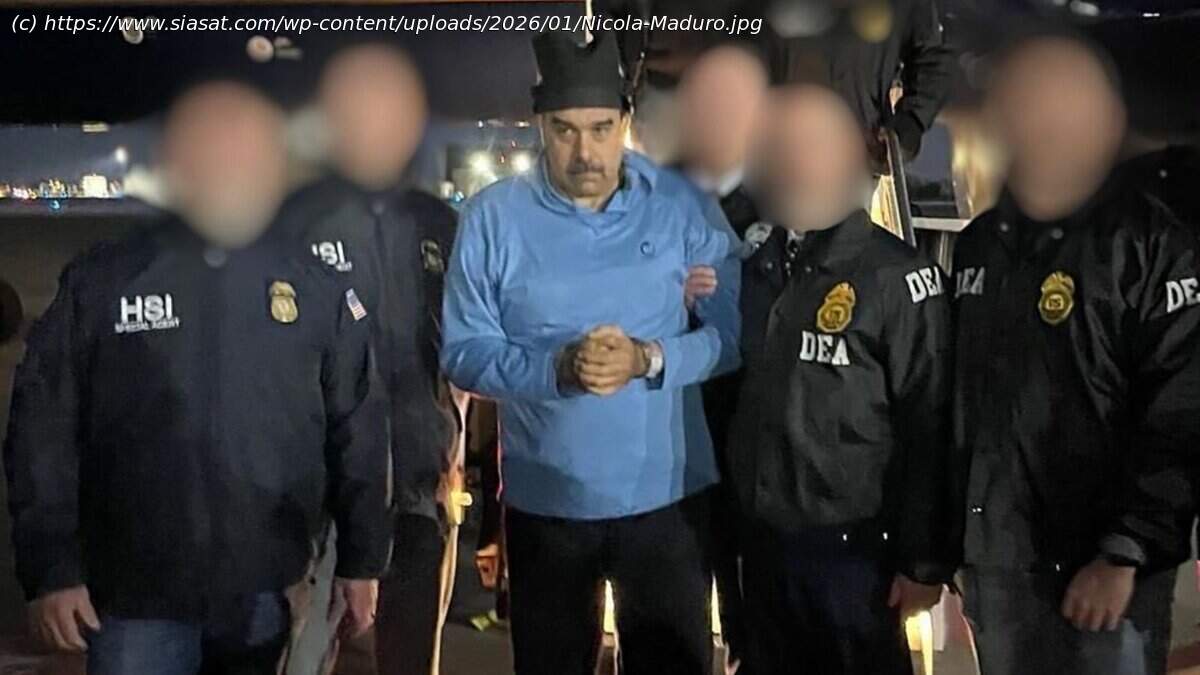
Lawyers of Maduro are likely to contest the legality of his arrest, arguing that he is immune from prosecution as the head of a foreign state.
When deposed Venezuelan leader Nicolás Maduro makes his first appearance in a New York courtroom Monday to face US drug charges, he will likely follow the path taken by another Latin American strongman toppled by US forces: Panama’s Manuel Noriega.
Maduro was captured Saturday, 36 years to the day after Noriega was removed by American forces. And as was the case with the Panamanian leader, lawyers for Maduro are expected to contest the legality of his arrest, arguing that he is immune from prosecution as a sovereign head of foreign state, which is a bedrock principle of international and US law.
It’s an argument that is unlikely to succeed and was largely settled as a matter of law in Noriega’s trial, legal experts said. Although Trump’s ordering of the operation in Venezuela raises constitutional concerns because it wasn’t authorised by Congress, now that Maduro is in the US, courts will likely bless his prosecution because, like Noriega, the US doesn’t recognise him as Venezuela’s legitimate leader.
“There’s no claim to sovereign immunity if we don’t recognise him as head of state,” said Dick Gregorie, a retired federal prosecutor who indicted Noriega and later went on to investigate corruption inside Maduro’s government.
“Several US administrations, both Republican and Democrat, have called his election fraudulent and withheld US recognition. Sadly, for Maduro, it means he’s stuck with it.”
Noriega died in 2017 after nearly three decades in prison, first in the US, then France and finally Panama. In his first trial, his lawyers argued that his arrest as a result of a US invasion was so “shocking to the conscience” that it rendered the government’s case an illegal violation of his due process rights.
In ordering Noriega’s removal, the White House relied on a 1989 legal opinion by then-Assistant Attorney General Bill Barr, issued six months before the invasion. That opinion said the UN Charter’s prohibition on the use of force in international relations does not bar the US from carrying out “forcible abductions” abroad to enforce domestic laws.
Supreme Court decisions dating to the 1800s also have upheld America’s jurisdiction to prosecute foreigners regardless of whether their presence in the United States was lawfully secured.