When a direct path to justice is blocked, states must look for a legal work-around.
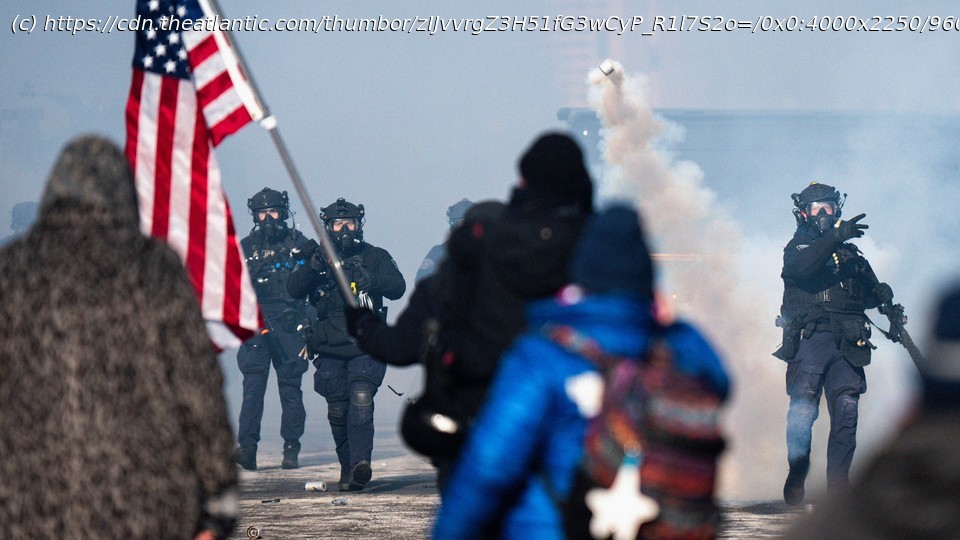
American citizens have been brutalized, pepper-sprayed, and killed on the streets of Minneapolis. For many, one particular breakdown is a final, damning cause for despair: Minnesota’s apparent inability to investigate and potentially prosecute the federal agents responsible. The Department of Homeland Security on Saturday reportedly blocked Minnesota officials from examining the scene of Alex Pretti’s shooting. Access was refused even after state officials got a judicial search warrant. As a result, key forensic evidence was almost certainly lost. This comes after state officials were excluded from the investigation into Renee Good’s death.
Federal obstruction of Minnesota’s criminal investigation merits more creative pushback from the state: Leaving investigations in the hands of DHS alone sends a powerful message to ICE officers. It tells them that even if they effectively execute a U.S. citizen who presents no threat on camera on a public street, they will face no consequences—a recipe for future tragedies. The state’s interest in finding a way to at least create some deterrence to deadly federal lawlessness is not just a matter of justice: It is also a way of keeping its people safe moving forward.
This is not a completely novel situation. Criminality is often shielded by large organizations, and clever lawyers have come up with clever strategies for dealing with it. For example, in the early 20th century, prosecutors resorted to pretextual indictments to go after the mob—the tax-evasion case against Al Capone being the most famous such prosecution. Because prosecutors could not scrape together evidence of his core crimes, Capone was convicted first of contempt of court and then of tax evasion.
Now, as then, when a direct path to justice is blocked, states need to find a work-around. The federal prosecution of the Minneapolis officers responsible for George Floyd’s death offers a model. For example, the officers Tou Thao, Thomas Lane, and Alexander Kueng were held criminally liable for acts beyond the killing. First, all of them failed to provide medical assistance to Floyd as he was dying. Second, Lane and Kueng made misleading omissions, while Kueng also lied to investigators in the immediate aftermath of Floyd’s death. Drilling down on these facts reveals specific paths forward for state prosecutors even when a direct investigation of the killings is blocked.
Evidence of both these two kinds of crimes has already emerged in the two recent ICE killings. After Good was shot, ICE agents blocked a physician from aiding her. Minnesota law not only imposes misdemeanor liability for failures to aid in general, but in shooting cases obligates the person who fired the wounding shot to “render immediate reasonable assistance.” When a shooting victim then dies, penalties in Minnesota for failing to aid the injured person can involve up to two years’ imprisonment.