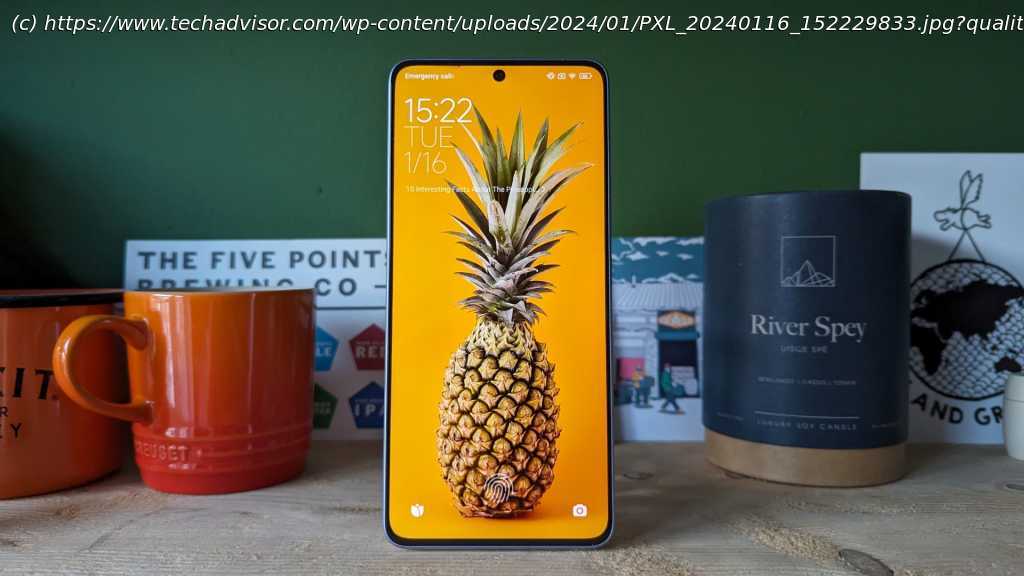
An even better value mid-range smartphone than its predecessor, the Redmi Note 13 Pro ticks a lot of boxes for not much money
Xiaomi is back once again with another set of cheap Redmi phones to tempt budget-conscious buyers.
There are five Redmi Note 13 handsets in total – the 13 4G, 13 5G, 13 Pro 4G, 13 Pro and 13 Pro+ – all of which are available in the UK (but not the US, like usual)/
Overall, it’s more of the same from Xiaomi which means impressive design and specs for budget or mid-range prices.
I’m reviewing the Pro model here which is similar to its predecessor, the Redmi Note 12 Pro, but arrives with a switch from MediaTek to a Qualcomm processor as well as a 200Mp main camera and double the storage.
The phone is yours for £339, so let’s see if it’s worth your money. Design & Build
Similar design
Now IP54
Three colourways
On the design front, it’s more of the same from Xiaomi but that’s no bad thing. Redmi phones have always looked good and the Note 13 Pro is no exception if you ask me.
Sure, it looks remarkably similar to its predecessor but that doesn’t matter to most potential buyers. Despite its samey styling, there are a number of tweaks and upgrades, some of which are invisible to the naked eye.
The first is a jump to Gorilla Glass Victus (up from 5) on the front. It’s also glass on the back, though its type is unspecified. Xiaomi has also implemented various toughness measures, including a shock-absorbing layer and strengthened frame corners.
I haven’t dropped the phone during testing, but it’s certainly stronger than the Redmi Note 12 Pro on paper. The protection is also rated slightly higher at IP54 rather than IP53 meaning it’s a little better at fending off water, though it’s not fully dust or waterproof.
The body is slim at 7.98mm (so we’ll call that 8mm then) and has a nicely balanced weight of 187g, though I wouldn’t complain if it was a little lighter. Flat sides on the frame are all the rage these days, while a small bezel makes the phone comfortable to hold.
At the back, the camera module shouts “look at me” and is more neatly arranged this year into a pleasing square. The two main lenses are big, both in diameter and how far they stick out of the phone, but luckily the supplied case ensures the phone doesn’t wobble on a flat surface.
These bundled cases tend to be transparent but it’s matt black here, which looks nice, but you can’t see the colour of the rear glass.
I’ve got the Aurora Purple option on test which changes as the phone moves and catches. Meanwhile, the camera module is split into pastel shades of blue, green and pink. I personally prefer the Ocean Teal colourway and Midnight black looks far less mirror-like than its predecessor.
I also like the matt finish on the rear glass, largely as it doesn’t attract fingerprints, but it is quite slippery to the touch. Screen & Speakers
Still 6.7in AMOLED
120Hz refresh rate
Slightly higher resolution
Not much has changed about the screen so it’s still a 6.67in AMOLED panel with a 120Hz refresh rate.
Xiaomi calls it CrystalRes and there are some upgrades including a bump to 1.5K resolution (1220 x 2712), resulting in a higher pixel density of 446ppi (up from 395ppi) and the bezel around the screen is smaller, giving it a more premium look and feel.
Peak brightness has supposedly doubled to 1800 nits. The screen is certainly bright, and I measured it a very solid 503 nits with automatic brightness switched off.
It’s nicely crisp and colourful, so my only real complaint is that white can sometimes look off, either shimmering with subtle hints of colour or a green tint. I believe the latter is caused by the factory applied screen protector (which can be removed if you like), but even then, it’s only visible from certain angles.
The refresh rate is set to a dynamic mode by default, so it will automatically switch between 60- and 120Hz depending on what you’re doing. You can fix it to either if you prefer, but there’s no LTPO tech for automatically adjusting down to 1Hz to preserve battery life.
The screen now houses the fingerprint scanner (previously mounted in the power button) and I wish Xiaomi had left it as it was despite it feeling more premium. The scanning area is a little too low down the display for comfort and I didn’t find it the most reliable either.
Stereo speakers on the Redmi Note 13 Pro have Dolby Atmos support, which is on by default. I don’t think it adds much to phones and the speakers sound perfectly fine for general phone usage but are nothing to write home about.
Potentially more exciting, for some users anyway, is the inclusion of a 3.5mm headphone jack. A rarity these days but a boon for those wanting to avoid Bluetooth headphones.