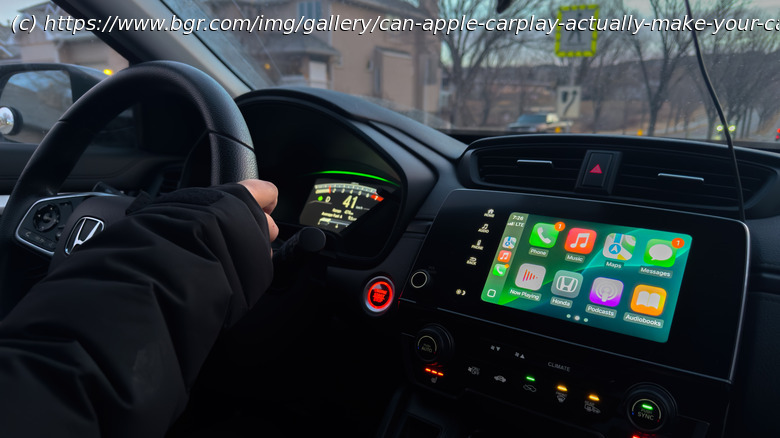
Using Apple CarPlay might make your car safer than using its native infotainment system, but doing so still represents a risk of heightened distracted driving.
Smartphone distractions can be dangerous while driving. That’s why both Apple and Google have come up with features for iPhone and Android to manage communication (texting and calling), navigation, and entertainment (music, radio, and podcasts) while behind the wheel. Researchers have examined the impact of these technologies on drivers, with one 2018 study finding that Apple CarPlay and Android Auto can be less distracting than the default infotainment systems in some cars. However, a different paper in 2020 concluded that using CarPlay and Android Auto may be more dangerous than driving intoxicated, even if they are safer than using native infotainment systems.
The AAA Foundation for Traffic Safety teamed up with University of Utah researchers to compare the three technologies, releasing their results in the summer of 2018. The scientists concluded that drivers using CarPlay and Android Auto were visually and mentally distracted for 15 fewer seconds than default systems when setting up navigation. According to the Foundation, taking your eyes off the road for more than two seconds to perform a different action doubles the likelihood of a crash occurring. Consequences for inattentiveness can be dire, as distractions while driving accounted for 3,500 deaths and over 390,000 injuries a year as of June 2018.
The study involved recruiting 64 drivers between the ages of 21 and 36, all of which had clean driving records. Researchers put the participants behind the wheel of five cars made in 2017 and 2018, all of which supported Apple CarPlay, Android Auto, and a native system. The experiments measured the visual and cognitive demand levels of the various infotainment activities a driver would perform on over a low-traffic stretch of road measuring two miles with a speed limit of 25 mph. Researchers designed their scale so that „low“ cognitive demand was classified as similar to listening to the radio, while „very high“ was like trying to balance your checkbook while driving.