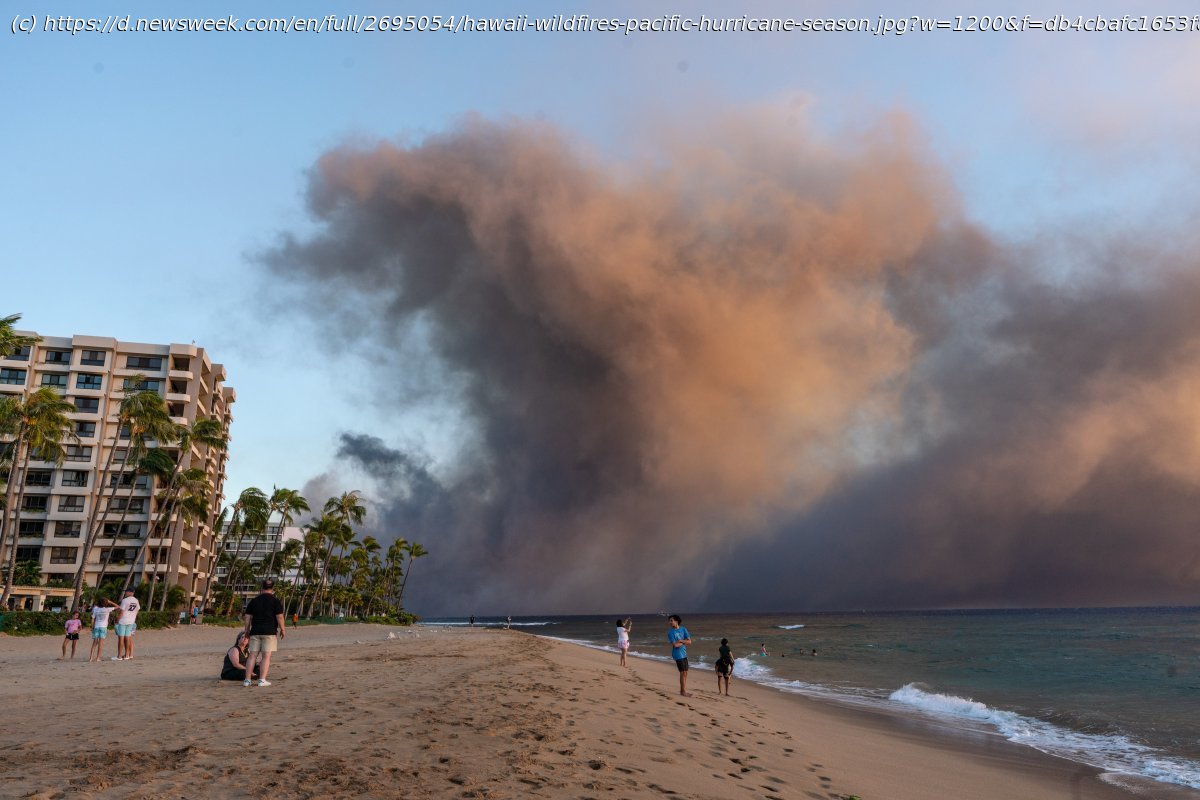
Strong winds were blowing across Hawaii on Friday as the islands saw drought conditions that could lead to quick fire spread.
Meteorologists warned of an increased wildfire threat across Hawaii on Friday as strong winds begin to blow across the state, much of which is battling drought.Why It Matters
Hawaii entered a period of heightened wildfire risk on Friday as the National Weather Service (NWS) issued a red flag warning for all leeward areas and interior sections of the islands. The warning signaled the potential for extreme fire behavior driven by strong winds and low humidity and comes in the middle of the Pacific hurricane season, which has already seen an active start.
Wildfires pose a serious threat to Hawaii’s communities, native ecosystems, drinking water, infrastructure, and cultural resources, as evidenced by the destructive Maui fires in 2023, which were fueled by strong winds.What To Know
The NWS in Honolulu announced a red flag warning for all Hawaiian Islands, effective through 6 p.m. local time on Friday, due to a combination of dry conditions, strong easterly trade winds, and low relative humidity.
The warning covered leeward portions of all islands and interior sections on the Big Island, listing expected wind speeds of 15 to 30 miles per hour with gusts up to 40 mph on Oahu and Kauai, and gusts as high as 50 mph in Maui County and the Big Island. Relative humidity levels were expected to drop as low as 35 to 45 percent in the afternoon, meaning the landscape would be increasingly susceptible to ignition. Residents were urged to avoid outdoor burning, refrain from parking vehicles on dry grass, and delay spark-producing activities until calmer conditions returned.
The NWS’s red flag warning comes as the National Hurricane Center (NHC) monitors four disturbances, including two tropical storms, Iona and Gil. Iona passed well south of Hawaii earlier this week, and although some of the winds in Hawaii were driven by the tropical systems passing south of Hawaii, AccuWeather lead hurricane expert Alex DaSilva told Newsweek an area of high pressure north of the islands is the primary driver behind the winds, similar to what happened in 2023.
“These tropical systems that have gone by, like Iona.they helped a little bit with some of the winds, but it’s a similar situation.to two years ago when they had the wildfires in Maui”, DaSilva said. “Everybody was really jumping on Hurricane Dora.and while [Dora] played some role, [the winds] were caused by high pressure north of the island. Unusually strong trade winds really picked up around that high pressure, and that’s what led to that event two years ago.”
DaSilva added that Hawaii is facing a similar setup now, although the trade winds won’t be as strong.
“We have a similar situation with these storms coming underneath Hawaii and strong high pressure to the north, but it’s not nearly as strong as what happened two years ago”, he said. “But winds are going to be strong enough through the weekend where there definitely can be some wildfire risk because it’s so dry.”What People Are Saying
NWS Honolulu in a red flag warning: “A combination of strong winds, low relative humidity, and dry fuels can contribute to extreme fire behavior. Any fires that develop will likely spread rapidly. A Red Flag Warning does not predict new fire starts.”
It added: “Heat from vehicle exhaust systems can ignite dry grass. Park cars on areas that are paved or where vegetation is trimmed and cleared. High winds contribute to wildfire hazard. Delay activities that could throw off sparks until the wind dies down.”What Happens Next?
Officials and emergency agencies urged Hawaii’s residents and visitors to remain vigilant, continue monitoring official weather updates, and take preventive measures seriously.
DaSilva said strong winds will persist in Hawaii through the weekend before they start to die down early next week.