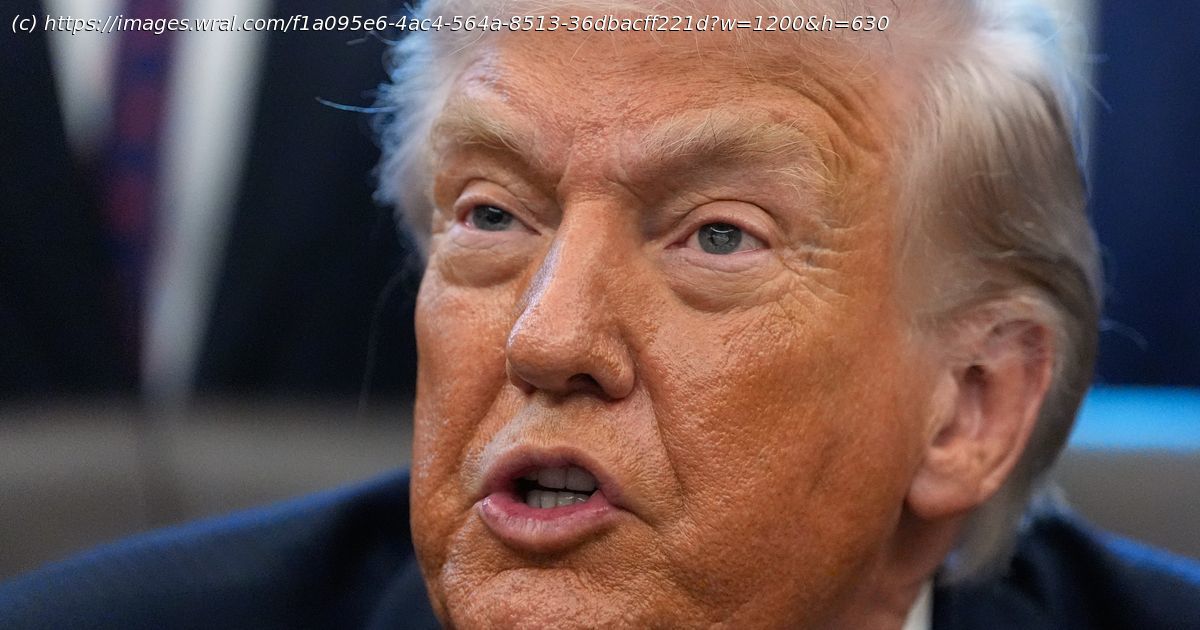
ATLANTA (AP) — Donald Trump would not be the first president to invoke the Insurrection Act, as he has threatened, so that he can send U.S. military forces to Minnesota.
Donald Trump would not be the first president to invoke the Insurrection Act, as he has threatened, so that he can send U.S. military forces to Minnesota.
But he’d be the only commander in chief to use the 19th-century law to send troops to quell protests that started because of federal officers the president already has sent to the area — one of whom shot and killed a U.S. citizen.
Other WRAL Top Stories
The law, which allows presidents to use the military domestically, has been invoked on more than two dozen occasions — but rarely since the 20th Century’s Civil Rights Movement.
Federal forces typically are called to quell widespread violence that has broken out on the local level — before Washington’s involvement and when local authorities ask for help. When presidents acted without local requests, it was usually to enforce the rights of individuals who were being threatened or not protected by state and local governments. A third scenario is an outright insurrection — like the Confederacy during the Civil War.
Experts in constitutional and military law say none of that clearly applies in Minneapolis.
“This would be a flagrant abuse of the Insurrection Act in a way that we’ve never seen,” said Joseph Nunn, an attorney at the Brennan Center for Justice’s Liberty and National Security Program. “None of the criteria have been met.”
William Banks, a Syracuse University professor emeritus who has written extensively on the domestic use of the military, said the situation is “a historical outlier” because the violence Trump wants to end “is being created by the federal civilian officers” he sent there.
But he also cautioned Minnesota officials would have “a tough argument to win” in court, because the judiciary is hesitant to challenge “because the courts are typically going to defer to the president” on his military decisions.
Here is a look at the law, how it’s been used and comparisons to Minneapolis.
George Washington signed the first version in 1792, authorizing him to mobilize state militias — National Guard forerunners — when “laws of the United States shall be opposed, or the execution thereof obstructed.”
He and John Adams used it to quash citizen uprisings against taxes, including liquor levies and property taxes that were deemed essential to the young republic’s survival.
Congress expanded the law in 1807, restating presidential authority to counter “insurrection or obstruction” of laws.