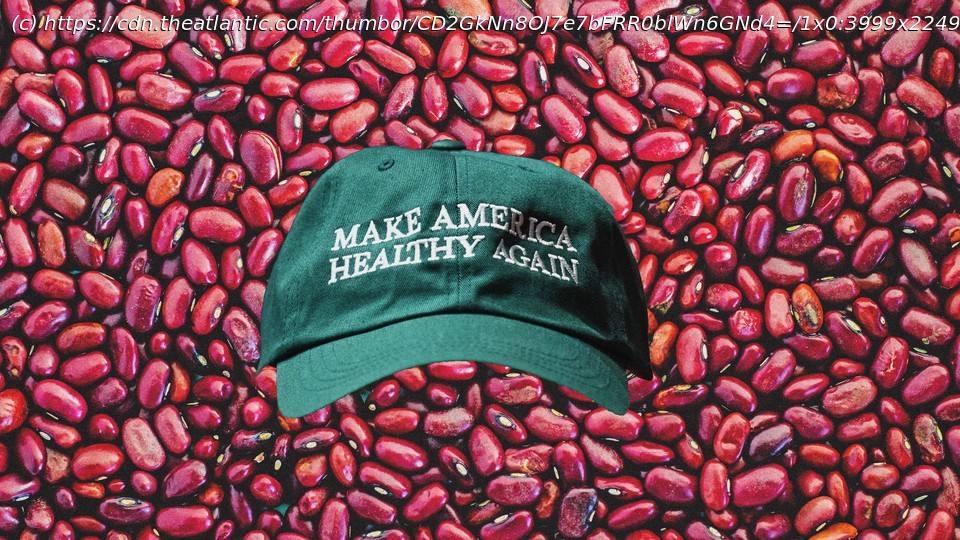
Robert F. Kennedy Jr. has a very different approach to food than to vaccines.
Since he was confirmed as Health and Human Services secretary early last year, Robert F. Kennedy Jr. has previewed big changes to the Dietary Guidelines for Americans—the government’s go-to guide on what to eat, and how much of it. Rewritten only every five years, the dietary guidelines are ubiquitous in American life: The food pyramid, launched in the 1990s, is a result of the document. The guidelines determine what millions of kids eat in school cafeterias every day.
Chief among those supposedly forthcoming changes that Kennedy has promised is a dramatic rethinking of how the United States deals with saturated fat. For decades, the dietary guidelines have recommended that people get no more than 10 percent of their daily calories from these fats because they increase bad cholesterol. But Kennedy is a saturated-fat evangelist. The HHS secretary, who has said that he follows a “carnivore diet,” once famously prepared a Thanksgiving turkey by submerging the raw bird in a vat of beef tallow.
Surprisingly, the new guidelines, which were released earlier today, retain the exact same recommendation about saturated fat that Kennedy seems to loathe. During a press briefing, he declared that the guidelines “end the war on saturated fat.” The guidelines do plug beef tallow as a “healthy fat” and say that Americans should get some of their protein from red meat. (The previous version says that a healthy diet includes “relatively lower consumption of red and processed meats.”) But all of that is hardly a dramatic change in how Americans should approach saturated food.
What happened? Despite all of Kennedy’s bluster, the revisions appear to be built much more around incremental change than around any all-out war on established health wisdom. Kennedy and his staff appear to understand that an embrace of saturated fat is controversial. “It was our goal for this report to not be ‘activist’—and only make statements that are widely accepted by the latest nutritional research,” Andrew Nixon, a spokesperson for the Department of Health and Human Services, told me in a statement.