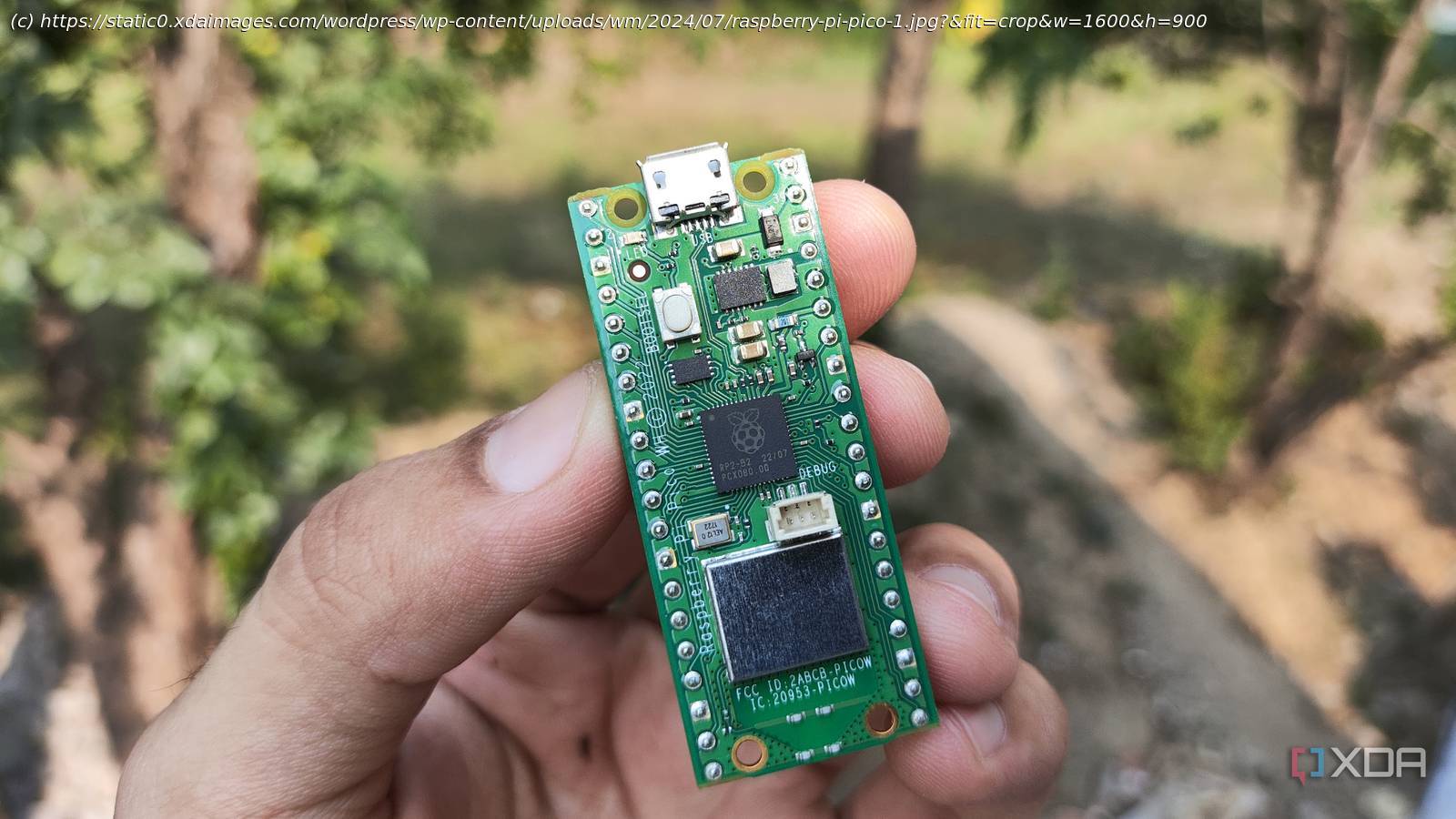
The tiny Pico has some niche advantages over full-fledged Raspberry Pi boards
Ask any tinkerer about their humble origins, and you’ll hear a bunch of folks mention the Raspberry Pi as the primary device that attracted them to DIY projects. However, it’s usually the Raspberry Pi single-board computers that get a lot of traction from hobbyists. Don’t get me wrong, this popularity is well deserved, but there’s another lineup of RPi devices that needs more recognition.
I’m talking about the Pico microcontrollers that have been making the rounds for a couple of years. Although the RPi SBCs knock them out of the park in the performance and OS compatibility fronts, the Pico series is better for security, robotics, and automation projects – to the point where they even include some extra features you wouldn’t find on mainline Raspberry Pi systems.
The Raspberry Pi Pico includes a built-in ADC
Mainline RPi SBCs require an adapter board
If you’re a fan of Home Assistant projects, you’ve probably bought a couple of sensors at some point. When you’ve got a conventional Raspberry Pi SBC, you shouldn’t have any issues pairing it with digital modules. Heck, that’s precisely how I built my first weather station to monitor temperature, pressure, and humidity fluctuations in my surroundings. However, things stop being so smooth when you switch the digital sensors with their analog counterparts.
That’s because Raspberry Pi SBCs can’t read analog inputs directly, meaning you’ll either have to invest in a dedicated sensor HAT or grab an Analog-to-Digital converter just to pair the board with an analog input device. Depending on your precision requirements, this can cost a few bucks and add to the overall budget of your DIY experiment.
On the other hand, the Raspberry Pi Pico microcontroller ships with a 12-bit ADC, allowing it to accept analog inputs from a variety of different modules, including photo-resistors, potentiometers, and weather-related sensors.