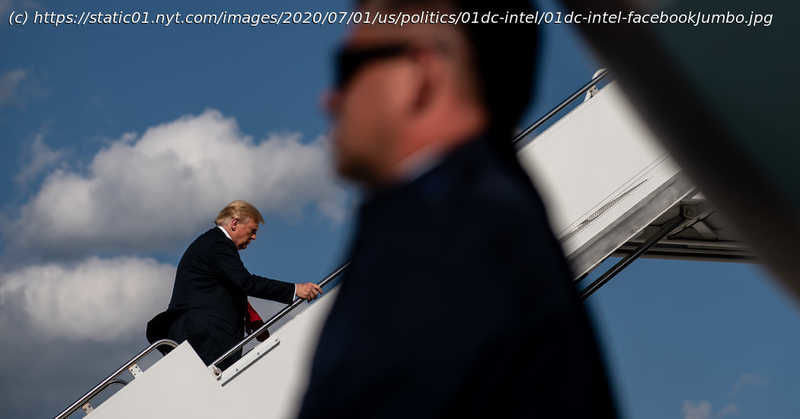
Robert C. O’Brien, the national security adviser, told Fox News that President Trump knew nothing about the reports because the briefer “decided not to” share unverified intelligence with him.
First President Trump denied knowing about it. Then he called it a possible “hoax.” Next, the White House attacked the news media. And now an unnamed intelligence official is to blame.
The one thing Mr. Trump and his top officials have not done is to address the substance of intelligence reports that Russia paid bounties to Taliban-affiliated fighters to kill American soldiers in Afghanistan, or what they might do in response.
Nor has the White House — amid the denials, qualifications and accusations — publicly discussed what that intelligence could mean for Mr. Trump’s efforts to thaw relations with Russia and court President Vladimir V. Putin despite Moscow’s continued aggression toward the United States and its allies.
On Wednesday, Mr. Trump repeated his claim that he was “never briefed” about the intelligence, which his aides called unverified but which many U. S. intelligence officials deemed credible. Officials say it appeared in the president’s daily written intelligence briefing in late February. Writing on Twitter, Mr. Trump called stories about the bounties “a made up Fake News Media Hoax started to slander me & the Republican Party.”
His national security adviser, Robert C. O’Brien, said on Fox News that Mr. Trump’s C. I. A. briefer, the person who delivers an in-person briefing to him every few days, had not brought it to his attention.
“The president was not briefed, because at the time of these allegations, they were uncorroborated,” Mr. O’Brien said. “And as a result, the president’s career C. I. A. briefer decided not to brief him.”
The administration has not publicly acknowledged that the information was provided to Mr. Trump in his written briefing, and has not responded to questions about whether they were saying he simply chose not to read it.
But it would be unusual, if not unprecedented, for intelligence with grave implications to be withheld from the president on the grounds that it lacked definitive consensus. Former Obama administration officials have said that even the intelligence that formed the basis of the May 2011 raid in Pakistan that killed Osama bin Laden was inconclusive and disputed among national security officials.
Mr. O’Brien did not name the C. I. A. briefer but said she was “an outstanding officer.” He added, “I certainly support her decision.”
The person who usually handles that job is Beth Sanner, a C. I. A. analyst with three decades of experience. Ms. Sanner is said to have a good relationship with Mr. Trump, but the White House has cited her briefings before when deflecting responsibility for a crisis.
In May, Mr. Trump conceded that he had been warned about the emerging coronavirus in a late January briefing, but said he was told “it was not a big deal.” Intelligence officials have acknowledged that it was Ms. Sanner who provided that briefing and claimed that she underplayed the threat from the virus.
But in that case, there were many other warnings Mr. Trump ignored from both government officials and health experts, as well as former officials speaking publicly and reports in the news media.