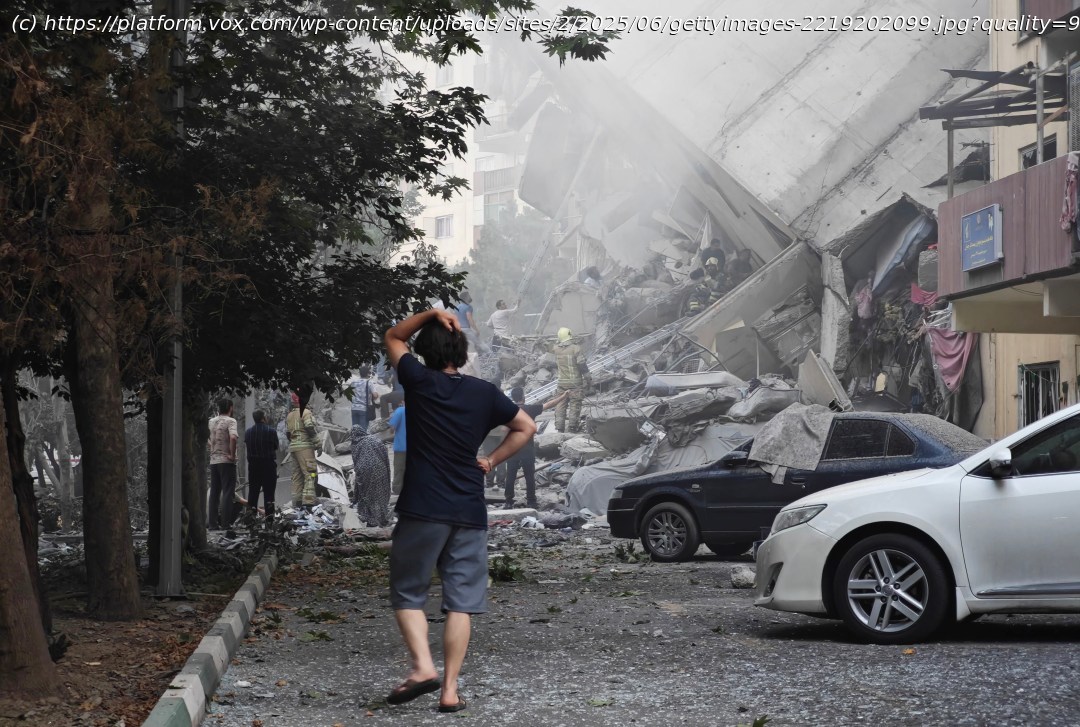
Trump seems to be trying to associate himself with the attacks after the fact.
In announcing Israel’s strikes against Iran’s military leadership and nuclear program last night, Prime Minister Benjamin Netanyahu made the case that Israel had “no choice but to act, and act now” in response to recent advances in Iran’s capabilities that put his country at risk of a “nuclear holocaust.”
It’s far from clear that the Trump administration shared Netanyahu’s sense of urgency. President Donald Trump waved off Israeli plans for a strike in April, amid ongoing efforts to negotiate a new deal over Tehran’s nuclear program. Just hours before the attack was launched, Trump still seemed committed to the diplomatic path, saying he would “rather that [the Israelis] don’t go in in order not to ruin it.”
One of the biggest questions in the days to come — and perhaps the one with the highest stakes for Israel — is whether Trump will come to embrace the war he publicly opposed.
Initially, reporting on the lead-up to the attack suggested that the Trump administration was aware the attack was coming but did little to stop it. The first high-level US response to the strikes, from Secretary of State Marco Rubio, was relatively noncommittal, stating that the Israelis “believe this action was necessary” but that the US was “not involved in strikes against Iran.”
On Friday morning, however, Trump seemed more enthusiastic about the strikes, posting that he had warned Iranian leaders of the consequences of making a deal but that they “couldn’t get it done.” He added, “the United States makes the best and most lethal military equipment anywhere in the World, BY FAR, and that Israel has a lot of it.”
This appears to be a case of Trump associating himself after the fact with what appears to be a remarkably successful military operation.
The hope in the Trump administration seems to be that the Israeli operation will force Iran to make concessions at the negotiating table. Trump urged Iranian leaders to take a deal “BEFORE IT IS TOO LATE,” and US officials reportedly still hoped that planned talks in Oman on Sunday will still go ahead.
A meeting on Sunday, at least, seems unlikely. Iran has threatened retaliation for the strikes and made clear that it doesn’t believe Washington’s disavowals of involvement. Netanyahu’s government is also clearly hoping for a more active US role.
“The president seems to still hope that his preference for a diplomatic solution can be salvaged,” said Nimrod Novik, a former foreign policy adviser to the Israeli government. “Few in the political-security establishment here share that hope.”
He added: “From an Israeli vantage point, it seems that the better the operation looks, the more Trump wants to own it.”
The question in the days to come is just how long the US will stay on the sidelines.How the American role in the conflict could escalate
According to the New York Times, the Israeli attack plan that Trump rejected in April, “would have required U.S. help not just to defend Israel from Iranian retaliation, but also to ensure that an Israeli attack was successful, making the United States a central part of the attack itself.”
The conventional wisdom has long been that a military strike to destroy or seriously degrade Iran’s nuclear enrichment capability would require US involvement: Iran’s key enrichment sites are located in fortified facilities deep underground, and destroying them would require heavy bunker-buster bombs.