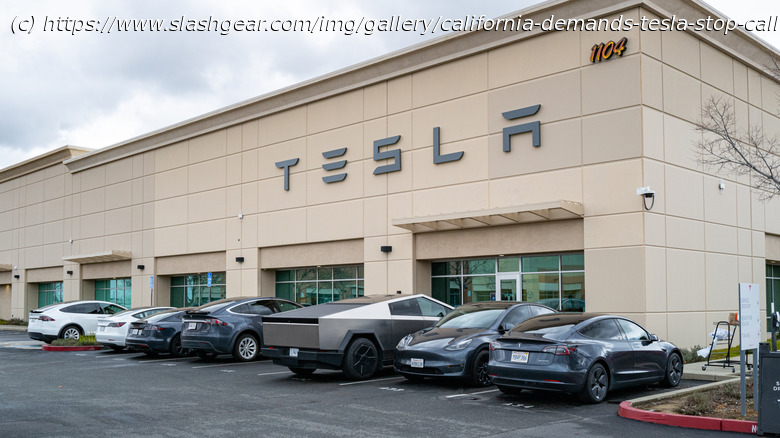
California has stepped in to address Tesla’s recent run of cars, with its DMV issuing a strict order that Tesla drop its « self-driving » term from marketing.
There are autonomous features that drivers are comfortable with, such as the speed-maintaining cruise control that can make longer drives a little less daunting, and those that they just aren’t. Just as some continue to resist the draw of electric cars, the paradigm shift to self-driving cars is another change too far for many. There are six distinct levels of autonomous vehicle, with the sixth and final level indicating that the car can effectively do absolutely everything itself. Vehicle manufacturers around the world are experimenting with progress up that ladder, but, unsurprisingly, there’s a zeal for progress tempered by a reluctance to go too far too soon. Should such technology reach commercial availability too soon and tragic accidents begin to occur, the repercussions for the manufacturers would be catastrophic. However, Elon Musk has never been a CEO afraid to push forward, and this has perhaps put Tesla in something of an unfortunate position.
In December 2025, the California DMV declared that certain messaging in documentation from Tesla production was at odds with what those vehicles were actually capable of doing. In May 2021, according to a DMV press release, Tesla began claiming that some of its cars had « Full Self-Driving Capability » and « Autopilot » functionality. This could imply that the vehicles have no need for a driver in the front seat, which is not the case with any commercially available Tesla model at the time of writing. As such, California has insisted on a change to this messaging, lest Tesla lose the right to sell in the state that buys the most EVs in the country.