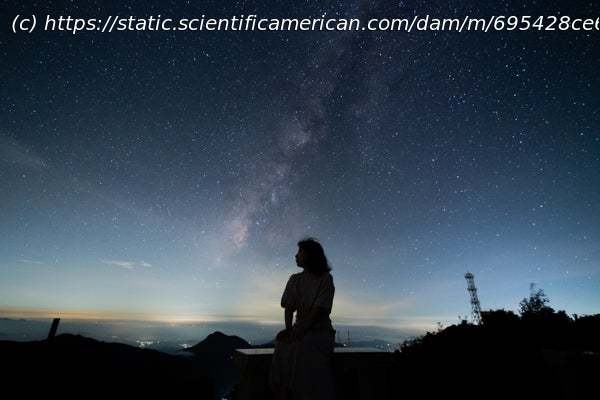
Total eclipses, lunar occultations, planetary conjunctions and meteor showers await stargazers this year
It’s not inaccurate to think of the heavens as a clockwork apparatus above our head. We use our planet’s spin to mark a day and its orbit around the sun to mark a year. That annual orbital reckoning also means the same constellations appear in the same part of the sky on the same calendar dates, providing a sense of regularity. It’s comforting, in its way.
Many astronomical events, such as meteor showers, run by calendrical timings as well. But our moon and the other planets move with the cogs of different celestial gears. So every year, we get a new assortment of fun events to look forward to; 2026 is no exception.
Some are familiar, such as the dozen—or baker’s dozen—of full moons in any given year. Others are unique—or at least obscure to those who don’t pay close attention to the night sky. All are lovely, and worth watching. Below you’ll find the ones that I, in particular, am most looking forward to observing in 2026. I’ll note that this list is, by needs, U.S.-centric. If you want a more complete list of everything going on in the sky over the next 50 or so weeks, take a look at In-The-Sky.org, a website that offers details for events that are visible from across the world (you can enter your location to get local info as well).On supporting science journalism
If you’re enjoying this article, consider supporting our award-winning journalism by subscribing. By purchasing a subscription you are helping to ensure the future of impactful stories about the discoveries and ideas shaping our world today.
January 10: The king of the solar system, the giant planet Jupiter, will reach opposition. That means it will be located opposite to the sun in the sky, with the planet rising at sunset and being visible all night. Because Earth will be almost directly between the sun and Jupiter, the latter planet will be at its closest to us—about 633 million kilometers—so it will appear at its biggest and brightest. Go out after dark and look east to see it gleaming like a jewel near the bright stars Castor and Pollux in the constellation Gemini. Through binoculars, you might catch one or more of Jupiter’s four large moons aligned right next to it. A telescope will reveal the planet’s broad atmospheric stripes and bands as well. It’s one of my favorite objects in the sky to observe, and I’ve withstood many a freezing night to catch a glimpse. And while this day will be the best time to see Jupiter, any time over the next few months will be fine as well.
February 2: In the early evening (shortly before 9 P.M. EST), the waning gibbous moon will pass directly in front of the bright star Regulus in the constellation of Leo. This rare “occultation,” in which the star will suddenly blink out behind the moon, will be visible for most of the eastern U.S. north of Florida. The occultation will last less than an hour, after which Regulus will reappear on the other side of the moon. The exact timing will depend on your location, so see In-The-Sky.org for your local details.
March 3: Very early risers in the U.S. will get a rare treat: a total lunar eclipse, which occurs when the moon passes into Earth’s shadow as it orbits our planet. I wrote about the mechanics of lunar eclipses in my March 7, 2025, The Universe column.