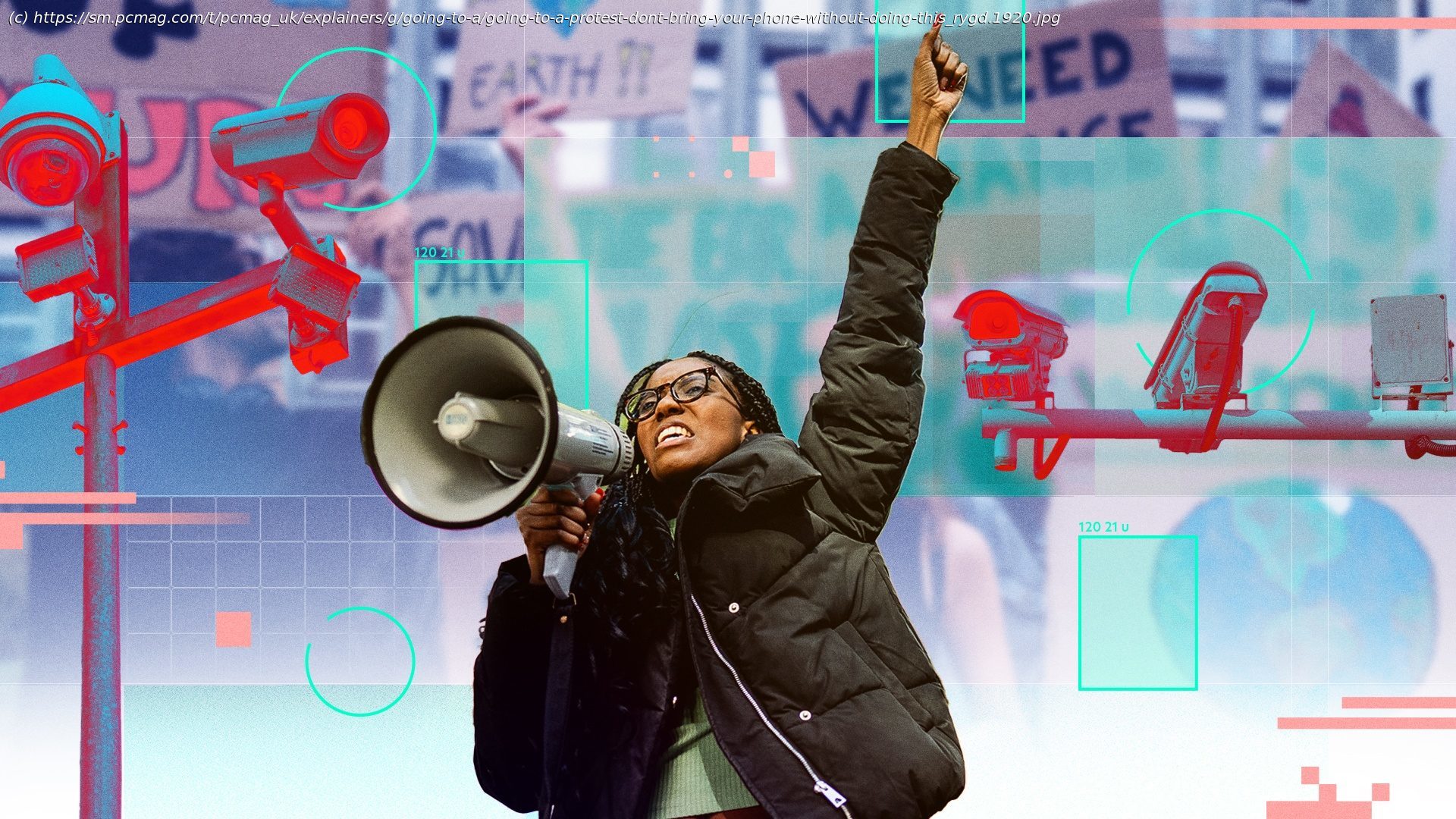
Protesting is your right, but it can be dangerous, especially now. Before you step into the crowd, we show you how to make your phone as protest-proof as possible in minutes.
The right to assemble and protest is enshrined in American law, but it can still be dangerous to hit the streets to make your voice heard. Your devices are a treasure trove of information about you, and you may not always know who’s collecting that data. Take a few minutes before you go to assess your digital and physical safety. Even if you have nothing to hide, you don’t want to accidentally give law enforcement officials any information you didn’t intend to share. Follow these tips to lock down your phone before a protest or other peaceful assembly.Why Your Phone Can Be a Liability at Protests
When we tell people that their best defense at a protest is just to turn off their phones, they always seem disappointed. But it’s true. The best way to avoid being surveilled is to never be on the grid in the first place.
Unfortunately, this isn’t practical advice. For one thing, mobile phones are useful for staying safe and coordinating with your friends and fellow protestors. Furthermore, protesters document events and amplify their message by sharing photos, videos, and live streams in real-time. While shutting your phone off will certainly make you harder to track, it could also leave you without important tools to protect yourself.
Your phone is powerful because it combines cellular, GPS, and Wi-Fi information. That great power is also a weakness: they’re highly trackable. For example, federal and local law enforcement use Stingrays and other IMSI catchers to track and identify protestors. These devices can trick your phone into connecting with them instead of a cell tower, then intercept information (such as SMS messages) without you necessarily being aware of it. They can also extract information from your phone and track your movements.
Even without sophisticated devices, however, law enforcement may still be able to obtain information on your movements and activities from your wireless provider. Even Apple and Google may be willing to give up information about you. The companies have cooperated with law enforcement by handing over customer data in the past, though both companies typically challenge or reject information requests that are legally objectionable.
Keep in mind that you probably won’t know that you’re being monitored or tracked until much later, if at all. Intercepting and processing individual messages from hundreds of thousands of people is doable, but not easy. Law enforcement or government agencies want to know who is at an event, who they are with, and what information can be extracted to monitor them later.
Many smart devices track your location through multiple means. This is useful for getting directions and finding things nearby, but it can also allow law enforcement to extract your movements after the fact. For example, pictures you take with a smartphone frequently include their physical locations, and Google Maps maintains records of your movements in its Your Timeline section.
With that in mind, here are four simple steps you can take to reduce mobile tracking:
Shut off Wi-Fi.
Disable location services and Bluetooth until you absolutely need them.
If you don’t need to use your data connection, switch it off (note this may hamper your ability to use encrypted communications).
Again, if you can, leave your phone at home—if not, at least turn it off.How Law Enforcement Can Track You Without a Phone
You can also be tracked without your phone, even in a large crowd. Facial-recognition technology coupled with AI-powered detection can pick out and track individuals in groups.