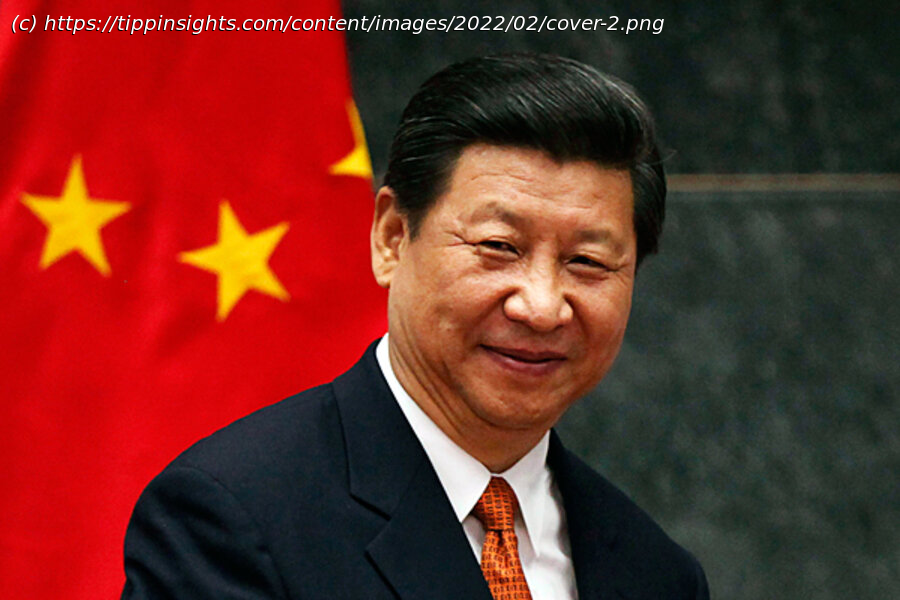
It keeps the country from becoming a superpower.
China likes to think of itself as a rising power and a future world leader. While it is the world’s largest manufacturer and market, many factors hold the country back from realizing its aspirations. Irrespective of political ideologies and forms of government, certain intrinsic characteristics are necessary to earn and maintain credibility among global peers. On the world stage, diplomacy, respect for international laws and borders, human rights protection, transparency of governance, civil liberties, and sheer courtesy are not merely desirable but essential. On that score, China falls woefully short. Beijing has been meticulously trying to earn the ‘benevolent’ or ‘generous’ label. To spruce up its image, the country has opened its purse to the less developed nations. Some reports suggest that in 2019 alone, China gave over nearly $6 billion in foreign aid and grants. Since the beginning of the pandemic, it has pledged over a billion doses of COVID vaccines to Africa alone. Besides this, China has shipped huge volumes of personal protection equipment and nearly 450 million doses of medicine worldwide. While Beijing’s willingness to help those in dire need is appreciated, the Chinese regime’s inherent bullying tactics tarnish the generous acts. Beijing has been accused of instigating vaccine diplomacy. It must be noted that the country’s ambitious Belt and Road Initiative (which aims to link Chinese ports and roads to those flung far and wide) is already facing stiff criticism for trapping under-developed countries in staggering debt. Many have pointed out that China’s largesse is often just for a photo-op. The country funds mega-projects that are of little use to the community, like the Olympic stadium in Ivory Coast. As part of these foreign aid projects, Beijing is also said to have asked for rights to strategic places and facilities, like ports and airstrips. The lack of transparency in Beijing’s dealings with the international community and its near-complete opacity in domestic policies erodes confidence in the country. China’s continued aggression towards its neighbors further cements its image as a bully. The gross human rights violations that occur daily in the country, the oppression and genocide of the Uyghur Muslim population, and the gagged media all point to a regime that is anything but benevolent. Beijing rules its people with an iron hand. The regime wants to be perceived as strong and tough. The single-party government extends the same hard-line attitude towards enterprises and individuals who wish to conduct business with China. In many instances, multinational giants, airlines, and even clothing stores and snack food companies have had to toe the line or risk losing access to one of the world’s largest markets. The Chinese Communist Party and the government are adept at propaganda and censorship. The world population has been paying the price for Beijing’s muzzling of Wuhan doctors and health workers who first sounded the alarm about a possible coronavirus pandemic. China’s belligerent stance towards inhibiting an independent inquiry into the origins of the Covid-19 virus has vastly damaged its reputation. Now, with President Xi Jinping having paved the way for unlimited time in office, China is likely morphing from a one-party state to a one-person state, like in the time of Mao. President Xi’s aggression and ambitions have undermined peace and stability along China’s borders. Beijing’s interference and autocratic handling of Tibet, Xijiang province, Taiwan, and Hong Kong are a cause for concern. The crackdown on pro-democracy activists and the curbs on social media indicate that President Xi, who is considered a pragmatic, flexible problem-solver, has no real intention of reforming his state. China’s bullying tactics and disregard for international censure result in the very thing that Beijing has been trying to avoid: rising anti-Chinese sentiment. Many nations, big and small, are coming together and voicing their protests. The EU is taking Beijing to court over its treatment of Lithuania. The G7 countries have proposed a Build Back Better World (B3W) initiative to counter China’s Belt and Road Initiative, saving many underdeveloped countries from a debt trap. The diplomatic boycott of the Winter Games being held in Beijing has hurt Chinese pride. Despite all this, China seems unfazed. The regime appears to believe that state propaganda and controlled media will forever hide the truth. Giving aid, while acceptable, will not cancel other nefarious acts. Credibility cannot be bought; it must be earned through respect given and received. The Queen’s long reign means that she has three direct living heirs, her son, Prince Charles, the Prince of Wales; her grandson Prince William, the Duke of Cambridge; and her great-grandson, Prince George of Cambridge. Following George in the order of succession are his younger sister and brother, Princess Charlotte and Prince Louis of Cambridge, then William’s brother Prince Harry, the Duke of Sussex, and his children, Archie and Lilibet Mountbatten-Windsor. Lilibet’s birth in June 2021 moved the Queen’s second son, Prince Andrew, who was born second in line in 1960, down to the ninth place. Diplomatic sources said Saturday that the United States has urged Japan to consider imposing economic sanctions on Moscow if Russian troops invade Ukraine. Japan, however, has deferred its response to the U.S. request, fearing the possible ramifications on relations with Russia and bilateral issues, including a long-standing territorial dispute that Tokyo is seeking a breakthrough on, the sources said. On Saturday, U.N. Secretary-General Antonio Guterres told Chinese leaders that he expected authorities to allow U.N. human rights chief Michelle Bachelet to make a « credible visit » to the country, including Xinjiang, the United Nations said. Bachelet has long sought access to Xinjiang to investigate accusations of abuse against ethnic Uyghurs. The issue has soured relations between Beijing and the West, sparking accusations of genocide from Washington and a U.S.-led diplomatic boycott of the Winter Olympics by some countries. Rights groups accuse China of widescale abuses against Uyghurs and other minority groups, including torture, forced labor, and detention of 1 million people in internment camps. Guterres also discussed Afghanistan and climate change – among other issues – during his meetings with Xi and Wang. They say the two organizations have raised awareness of China’s abuses against Uyghurs. In a rebuke to China, two U.S. lawmakers nominated two Uyghur rights organizations for this year’s Nobel Peace Prize just as the 2022 Beijing Winter Olympics got underway. Reps. Tom Suozzi of New York and Chris Smith of New Jersey, co-chairs of the bipartisan Congressional Uyghur Caucus, wrote a letter to the Norwegian Nobel Committee saying that the Uyghur Human Rights Project (UHRP) and Campaign for Uyghurs, both based in Washington, D.C., have brought attention to the Chinese government’s abuses against Uyghurs and other Turkic minorities in Xinjiang. Both organizations have strongly condemned China for its violence against the Uyghurs and other Turkic minorities. They have lobbied the U.S. and other countries to stop the genocide of the mostly Muslim people. GOING UP? A return to US$100 a barrel is becoming increasingly likely, and options markets have for months been abuzz with trading of contracts above that mark. West Texas Intermediate (WTI) rocketed to a fresh seven-year high above US$92 a barrel, and almost every indicator is pointing to the rally extending. The market’s structure is trading at its strongest level in years, indicating scarce supply, while diesel — the fuel that helps power the global economy — is also surging as a cold snap hits the U.S. and demand soars. In the U.S., retail gasoline prices surged to the highest since 2014, climbing to US$3.42 a gallon, according to AAA. This poses a political challenge to President Joe Biden as he tries to combat surging fuel costs. « The rally in crude prices is showing no signs of slowing down, as both supply and demand drivers remain very bullish, » Oanda Corp senior market analyst Edward Moya said. « Geopolitical risks that include Russia-Ukraine tensions and Iran nuclear talks are also wild cards for oil prices as they seem more likely to lead to a tighter market over the short-term. » All of that is coming as OPEC+ struggles to lift output by the 400,000 barrels a day it has pledged each month. Brent crude for March delivery increased 2.37 percent to US$93.27 a barrel, up 3.6 percent from a week earlier. Claims over the ship’s identification in which British explorer Captain James Cook sailed to Australia in 1768 on his first voyage of discovery have sparked a furious row between U.S. and Australian experts. The Australian National Maritime Museum (ANMM) claims that the wreck known as RI 2394 in Newport Harbour, Rhode Island, belongs to the Endeavour. But the U.S. partners from the Rhode Island Marine Archaeology Project (RIMAP) say the claim is « premature » and a « breach of contract. » The Australian museum says the structural details and shape of the remains « closely match » historic plans of Endeavour and that its timber samples strongly suggested it was built in Europe and not America. But the RIMAP says that « many unanswered questions » remained. The British-built coal ship famously landed in eastern Australia in 1770. The Endeavour, then known as Lord Sandwich II, was sunk in 1778 with 12 other ships off Rhode Island, U.S., but no one was sure of the location. The year that was in numbers. President Biden Sees Climate Change As A National Security Issue, But What Do Americans Think?