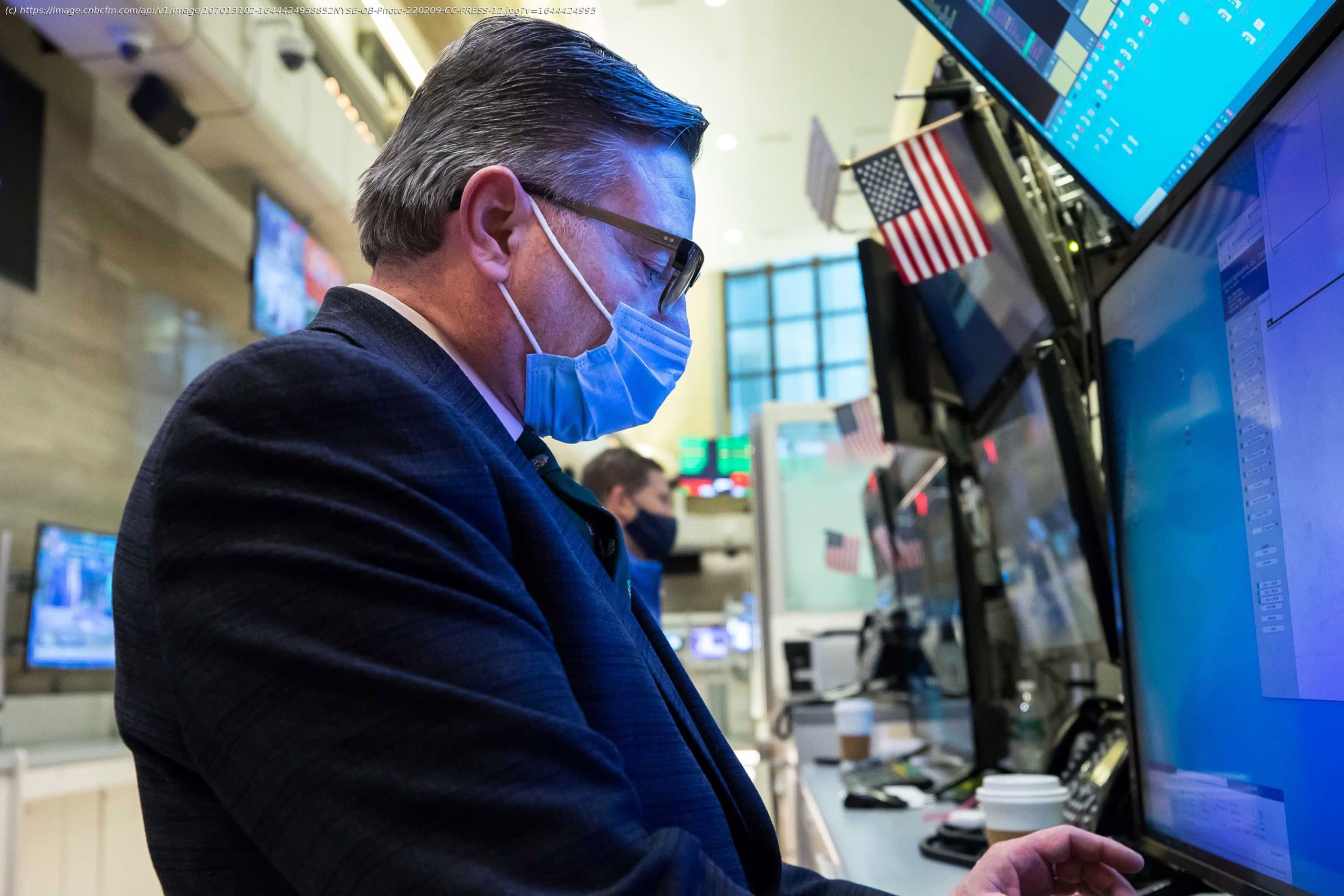
U.S. stock index futures were flat during overnight trading Tuesday.
U.S. stock market futures were modestly higher in overnight trading Tuesday after the S&P 500 closed in correction territory amid escalating tensions between Russia and Ukraine. Futures contracts tied to the Dow Jones Industrial Average advanced 85 points. S&P 500 futures gained 0.35%, while Nasdaq 100 futures rose 0.5%. During regular trading the Dow fell 483 points, or 1.42%, for its fourth straight negative session. At one point the 30-stock benchmark had been down more than 700 points. The S&P 500 shed 1.01%, and is now 10.25% below its Jan.3 record close, putting the broad market index in correction territory. The Nasdaq Composite declined 1.23% for its fourth straight negative session. On Tuesday afternoon President Joe Biden announced a first tranche of sanctions against Russia. The measures target Russian banks, the country’s sovereign debt and three individuals. « While uncertainties remain, our work shows that historically military/crisis events tend to inject volatility into markets and often cause a short-term dip, but stocks tend to eventually rebound unless the event pushes the economy into recession, » Eylem Senyuz, senior global macro strategist at Truist wrote in a note to clients. « Investor sentiment also suggests the bar for positive surprises is low, » the firm added. All 11 S&P 500 sectors declined on Tuesday, led to the downside by consumer discretionary stocks, which fell 3%. Energy stocks moved lower despite a jump in oil prices. International benchmark Brent crude traded as high as $99.50 per barrel. West Texas Intermediate crude futures, the U.S. oil benchmark, hit a session high of $96, a price last seen in August 2014. Conflict playbook: Barclays picks its top stocks to navigate Russia-Ukraine tensions Russia-Ukraine tension is a convenient excuse for the stock sell-off, but it’s about more than that Meta is the worst performing FAANG stock this year. Here’s where Wall Street sees it going next « The contagion risk will completely feed into inflationary pressures as energy costs will skyrocket and that will derail large parts of the economic recovery coming out of Covid, » said Oanda’s Ed Moya. « Geopolitical risks could lead to a slower growth cycle and that could remove the risk of a half-point Fed rate hike at the March 16th FOMC decision, » he added. Wall Street is betting that there’s a 100% chance of a rate hike at the Federal Reserve’s March meeting, according to the CME Group’s FedWatch tool. With inflation running hot, calls for a 50-basis point hike at the March meeting had been accelerating. As tensions build between Russia and Ukraine, yields have retreated, with the yield on the benchmark U.S.10-year Treasury falling below 2% as investors seek out safe-haven assets. As of Friday 78% of S&P 500 companies that have reported have topped earnings estimates, while 78% have exceeded revenue expectations, according to data from FactSet.