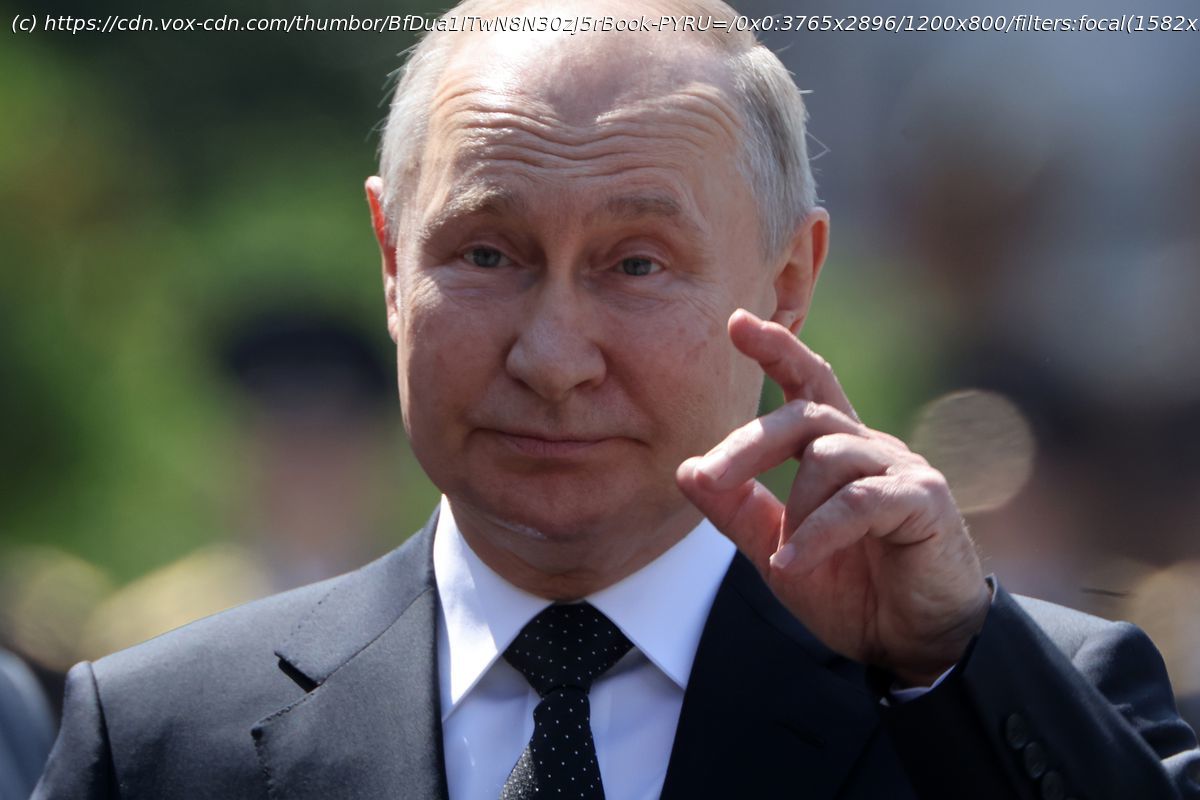
Putin is still very much in power, but Wagner’s uprising showed the cracks in the regime.
Late Monday, Russian President Vladimir Putin publicly addressed the end of a mutiny that threw the country into chaos. Any attempt to create “internal unrest” is doomed to failure, he said, claiming that he could have crushed the rebellion, but wanted to avoid bloodshed.
“They wanted Russians to fight each other,” Putin said in his short remarks. “They rubbed their hands, dreaming of taking revenge for their failures at the front and during the so-called counteroffensive. But they miscalculated.”
It was a glimpse at the official narrative emerging in the aftermath of an armed rebellion led by Yevgeny Prigozhin and the Wagner Group paramilitary. In less than 24 hours, Wagner fighters seized military installations in Russia’s south and marched on Moscow. Then, just as abruptly, Prigozhin halted that movement, claiming this was all part of the plan. The Kremlin later said a deal — apparently brokered by Belarus — had been reached whereby Prigozhin would avoid prosecution in exchange for going into exile in Belarus, though the details of are still very murky.
But Putin’s remarks Monday evening did little to answer the many questions that still swirl around Wagner’s insurrection, including the status of Putin himself.
Prigozhin has since said he wasn’t trying to do a coup; instead, he was trying to stop his Wagner fighters from being absorbed by the Russian military. That is still going to happen, according to Putin, unless those fighters also prefer to go to Belarus or agree to be decommissioned.
And this uprising was perhaps the biggest challenge to the Russian regime in decades. Prigozhin may not have wanted to overthrow Putin, but in 24 hours, it looked possible that Putin could be overthrown. The Russian president showed that he is not the infallible strongman he has sold himself to be.
And yet. It is likely way, way too soon to be declaring this the end of Putin. The mutiny showed the cracks in Putin’s control, and in the autocratic system he created. Those weaknesses, in lots of ways, were already visible in Russia’s failures in Ukraine, just this time, the lack of communication and confusion happened on Russia’s home turf.
“This provides us a lot of information about his ruling style, which we know to be under duress right now, and not necessarily completely rational,” David Szakonyi, assistant professor of political science at The George Washington University, said of Putin. “But he has, at the end of this, eliminated what would have been one of his greatest threats to power.”
Again, there is still a lot of uncertainty about the fallout from Prigozhin’s adventure. The mutiny exposed the vulnerabilities in Putin’s system, and revealed a breakdown in some of the dealing and bargaining that make this kind of autocratic system work. That world witnessed that. But so has Putin, and how he responds may ultimately determine how vulnerable he really remains.What to make of Putin’s response to the Wagner uprising, as best we can
Putin’s Monday remarks were the first since Prigozhin’s mutiny ended on Saturday. The Russian leader had been somewhat absent as the whole Wagner episode unfolded, other than remarks Saturday, in which he called the uprising treasonous, and said anyone who consciously went down the path of betrayal “will be punished inevitably.”
But it was apparently Belarusian President Alexandr Lukashenko who brokered a deal with Prigozhin, though it is likely that Putin endorsed it.