The late guitarist was crucial to shaping the sound of the world’s greatest jam band.
In the summer of 1968, three years into the Grateful Dead’s existence, the band fired singer and rhythm guitarist Bob Weir. Jerry Garcia, the band’s other guitarist and its reluctant leader, and bassist Phil Lesh had decided that Weir and keyboardist Ron “Pigpen” McKernan were dragging the band down musically. Weir was just 20 years old, the youngest member of the group and the least technically accomplished. But Garcia didn’t have the heart to pull the trigger himself, and he made the band’s manager do the deed. Or at least he tried to. “It didn’t take. We fired them, all right, but they just kept coming back,” Garcia remembered later.
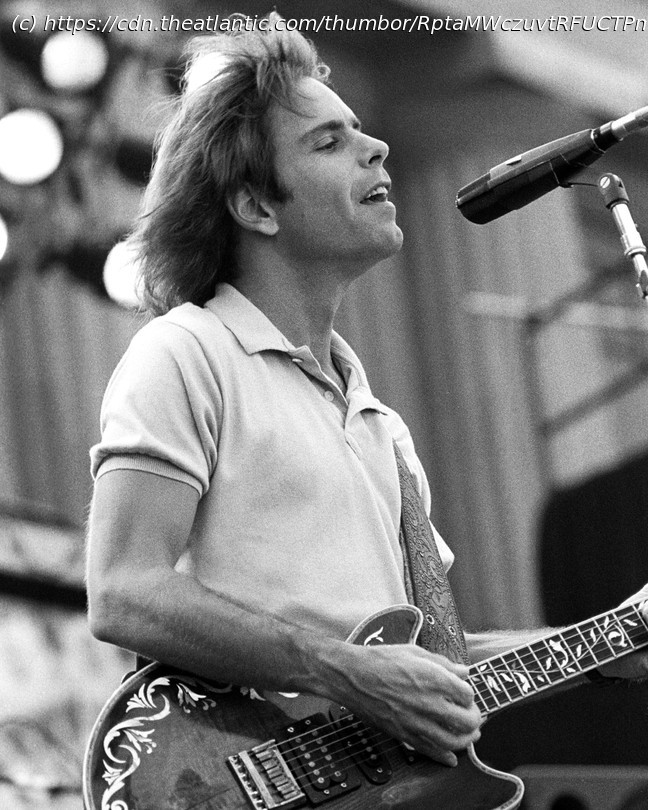
The failure was auspicious. A few months later, the band performed the shows that would be released as Live/Dead, one of the greatest psychedelic albums ever. The first sound heard on the record is Weir’s guitar, which methodically builds “Dark Star” up, sewing together Garcia and Lesh’s riffing. Weir’s place in the Dead was never again in doubt. When the group disbanded after Garcia’s death in 1995, Weir continued to lead or co-lead iterations of the band for another 30 years, culminating in a three-night 60th-anniversary celebration in San Francisco this past August. He died Saturday at 78, from complications of cancer.
Weir lived his entire adult life in the shadow of Garcia, a formidable genius who died too young, but he was more than just a backing musician. Garcia gave the band virtuosity; Lesh, with his avant-garde training, gave it ambition. Weir gave it soul and fun, and his underappreciated guitar playing was the glue that held the whole Dead sound together.
In a group of scruffy hippies, Weir was a bit of a misfit—ironically, by virtue of being normal. He was a prep-school kid, adopted by a well-off family from Palo Alto, California. But he was also perpetually getting kicked out of schools for misconduct—perhaps a side effect of his undiagnosed dyslexia—and his personal struggles helped lead him to Garcia. (It’s also how he met John Perry Barlow, a boarding-school classmate who would become his songwriting partner as well as an internet pioneer.)
Weir’s age made him the band’s little brother, and like many younger siblings, he could be embarrassing. In contrast to Garcia, who was famously impassive onstage, Weir had front-man energy. He sometimes came off as a pretty boy, and had a tendency to hit a helium falsetto in moments of excitement. After Pigpen’s death, he became the band’s standard-bearer for its lecherous blues songs.