We’re about to lose our last nuclear arms control treaty with Russia. What does that mean?
Barring a major unforeseen announcement from Washington or Moscow, the last remaining nuclear arms control treaty between the United States and Russia will expire on Wednesday.
It’s been a long, slow death for the New Strategic Arms Reduction Treaty (New START), which went into force in 2011 to replace the earlier post-Cold War START treaty and place limits on both countries’ arsenals of deployed nuclear warheads and launchers. Originally slated to expire in 2021, it was extended for five years after an agreement between Presidents Joe Biden and Vladimir Putin, with just two days left before the deadline.
That proved to be one of the last moments of productive diplomacy between the two countries before Russia’s full-scale invasion of Ukraine in 2022. In February 2023, Putin announced that Russia was suspending its participation in the verification measures under the treaty, but would continue to abide by its numerical limits. Now, neither side is bound by those limits, raising concerns of a return to the era of arms races.
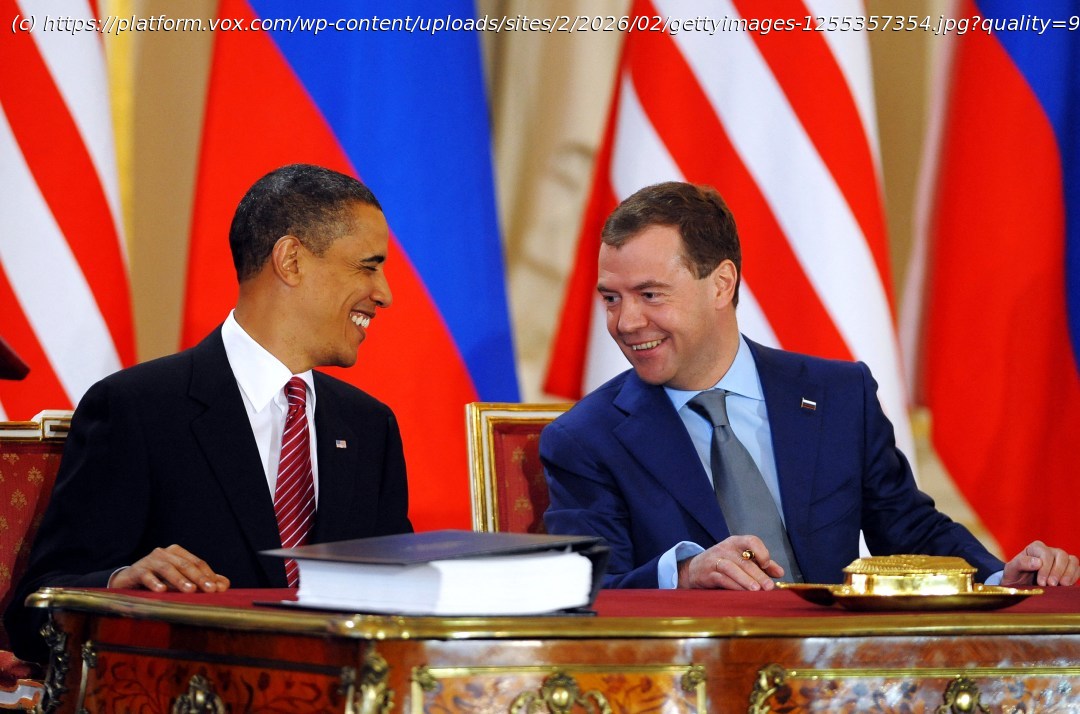
The world today is a much different place than it was in 2010, when New START was negotiated. The treaty was a product of the short-lived “reset” in US-Russian relations, during the President Barack Obama and Dmitry Medvedev presidencies, as well the optimistic era for arms control that followed Obama’s landmark 2009 Prague speech calling for a world without nuclear weapons.
Now, the world is on the precipice of what some call a new nuclear age, one in which these weapons are returning to the center of global politics after a post-Cold War lull. Russia has routinely threatened to use nuclear weapons in Ukraine; Trump has called for a resumption of nuclear testing in the United States; and US allies, concerned about the reliability of American security guarantees, are more openly discussing developing their own nuclear capabilities. Meanwhile, the US and Russia still possess the overwhelming majority of the world’s nukes — but that could change. China’s rapid nuclear build-up is threatening to create a complex “three-body problem” for arms control. And the integration of new technologies like artificial intelligence into nuclear systems could lead to destabilizing new dynamics for deterrence.
It’s a pretty bleak picture overall, and the disappearance of the last major arms control agreement binding the world’s two nuclear superpowers only makes it bleaker. Still, for all his bluster, and the antipathy he showed to arms control agreements in his first term, President Donald Trump has suggested in the past that he’s open to “denuclearization” talks. And compared to other presidents, he’s certainly not averse to cutting a deal with the Russians. “When you take off nuclear restrictions, that’s a big problem,” Trump told reporters in July, and he hasn’t made clear what he’s actually going to do once the deal expires.
So, is there any hope for getting nuclear talks back on track, or are doomed to a new arms race? To get some perspective on that question, Vox spoke with Rose Gottemoeller, who, as assistant secretary of state for arms control in the Obama administration, was the chief US negotiator in the talks that led to New START. Gottemoeller later served as deputy secretary general of NATO from 2016 to 2019 and is now a lecturer at the Stanford University Freeman Spogli Institute and a fellow at the Hoover Institution.
The interview has been edited for length and clarity.
What does New START actually do?
Well, the New START Treaty limited the strategic offensive nuclear forces of the United States and Russia to 1,550 deployed warheads and 700 delivery vehicles — those are missiles and bombers that are used to deliver nuclear weapons. Those basic limits have held now for about 15 years.
As of Wednesday, unless something else happens, and there’s no agreement by President Trump and his administration to extend the limits of the treaty, then we will be in a situation where there will be no limits.
Is there any chance of it being extended?
People have been talking kind of loosely about this, but the treaty cannot be extended. It’s a legally binding document, and it goes out of force next Wednesday. But what President Putin proposed back in September was to extend the limits of the treaty for another year in order, as he said, to prepare time for further negotiations.
That’s a political handshake. We’ve done that before. Indeed, when I was negotiating the New START Treaty, START went out of force in December of 2009, and we — on the basis of a political handshake with Moscow — agreed to extend the limits of START for what turned out to be another year plus.