The case concerns a program from rural communities that do not have their own public high schools.
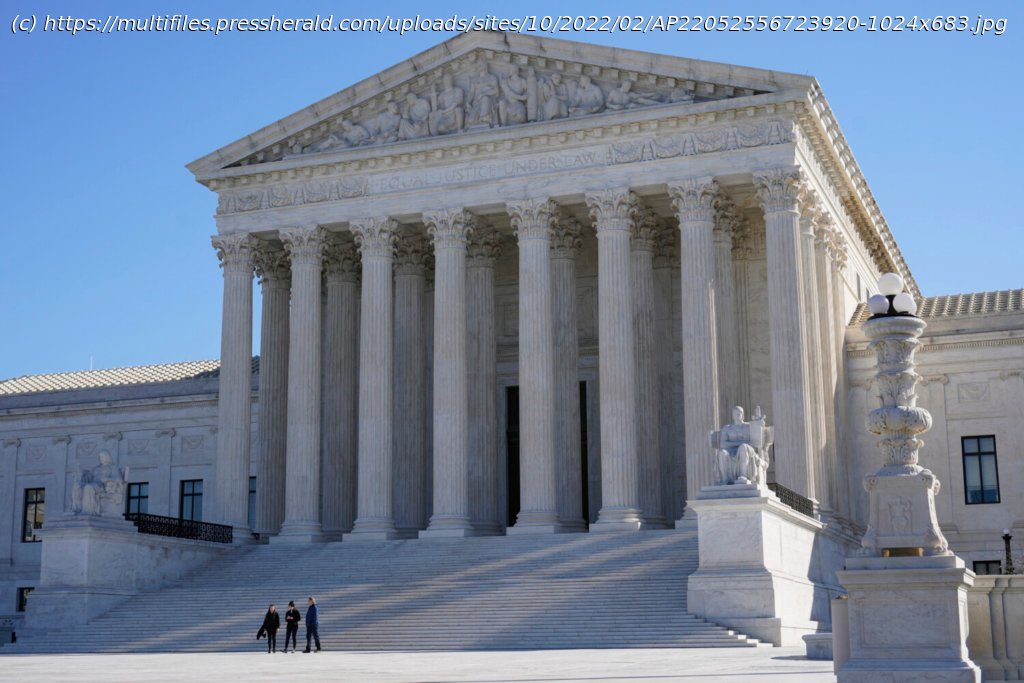
The U.S. Supreme Court has ruled against a Maine law that bars the use of public dollars for tuition at religious schools. Maine allows students in towns with no public high schools to put taxpayer money toward the cost of an outside school, public or private. But the law bars them from using those funds at religious schools. The families who filed this lawsuit want to do away with that rule. The law in question impacts only a small number of students in Maine, but the case has attracted national attention. The plaintiffs are represented by the Institute for Justice, a national law firm that takes cases on religious liberty and school choice, and the Supreme Court received more than three dozen amicus briefs on both sides of the issue. The two Maine families suing the state in the case, Carson v. Makin, were eligible for the program but unable to spend tuition money on the religious school of their choice. When the Supreme Court heard arguments for the case in December, a majority of justices already seemed to side with the parents in the questions they asked attorneys. On Tuesday, the court ruled 6-3 that the state’s ban on using public funds for any schools that are not nonsectarian is unconstitutional. Chief Justice John Roberts, who wrote the majority opinion, said the state’s law promotes “stricter separation of church and state than the Federal Constitution requires.”
Maine has 260 school administrative units serving nearly 180,000 students from kindergarten to 12th grade. More than half do not have their own secondary schools, and many sign contracts or make agreements with other schools to provide those services. The law says SAUs that do not have public high schools can pay outside public or private schools to accept their students, so long as those schools aren’t “sectarian.”
An SAU can pay up to the statewide average tuition rate – $11,275 in 2020 — and the balance is the parents’ responsibility. The Maine Attorney General’s Office argued that this program helps the state meet its obligation to provide free public education to all students. The state also said the First Amendment doesn’t require the government to subsidize religious education.
“While typically a public education would be provided through public schools, the lack of public schools in some parts of Maine means that this (is) not always possible,” Attorney General Aaron Frey wrote in the state’s brief. “So, a small number of children are eligible to attend an approved private school of their choosing at public expense. This is not a voucher, scholarship, or subsidy program. Rather, it is simply a method to deliver a free public education. And because Maine is using private schools as part of its public education system, schools that promote a particular religion or present material through a religious lens are not eligible. The education provided in such sectarian schools is simply not comparable to a public education.”
Success. Please wait for the page to reload. If the page does not reload within 5 seconds, please refresh the page. Enter your email and password to access comments. Forgot Password? Don’t have a Talk profile? Create one. Hi, to comment on stories you must create a commenting profile. This profile is in addition to your subscription and website login. Already have one? Login. Invalid username/password. Please check your email to confirm and complete your registration. Create a commenting profile by providing an email address, password and display name. You will receive an email to complete the registration. Please note the display name will appear on screen when you participate. Already registered? Log in to join the discussion. Only subscribers are eligible to post comments. Please subscribe or login to participate in the conversation. Here’s why. Use the form below to reset your password. When you’ve submitted your account email, we will send an email with a reset code. Send questions/comments to the editors. « Previous