Gaming tech, foldables and AI gadgets dominated the first day of CES 2026.
CES 2026’s first official show day kept the pace up with a mix of near-term gaming upgrades, ambitious new form factors and a few reminders that not every gadget needs to do everything. NVIDIA announced important gaming news, we caught up with Samsung’s tri-fold phone and Lenovo marched out an army of impressive looking gaming laptops and concept tech. Here are the biggest stories from January 6.NVIDIA
NVIDIA’s gaming updates focused on making motion look cleaner and boosting performance without forcing developers to rebuild everything from scratch.
The company introduced G-Sync Pulsar, a new display tech designed to reduce monitor-based motion blur by pulsing a screen’s backlight in sections rather than leaving it on continuously. NVIDIA says the approach gives pixels time to stabilize before they’re illuminated, which should make fast movement easier to track, particularly in esports.
The first Pulsar monitors are expected to come out starting January 7 from Acer, AOC, ASUS and MSI, all which are 27-inch 1440p IPS panels with a 360Hz refresh rate and up to 500 nits peak HDR brightness. Pulsar models also support Ambient Adaptive Technology for automatic color temperature and brightness adjustment based on room lighting.
On the software side, NVIDIA announced DLSS 4.5, which adds a second-generation Transformer-based Super Resolution model the company says improves temporal stability, reduces ghosting and improves anti-aliasing. DLSS 4.5 also introduces Dynamic Multi Frame Generation, intended to push performance toward your display’s refresh rate, with NVIDIA positioning it around high-end targets like 4K 240Hz path tracing. The 2nd Gen Super Resolution Transformer model is available now for RTX GPUs, while Dynamic 6x Frame Generation is expected in spring 2026 for RTX 50-series cards, with support rolling out across hundreds of games via the NVIDIA app.Samsung
Samsung’s Galaxy Z TriFold was unveiled in Asia before the show, but this was our first opportunity to see the superphone in person. It looked, at first glance, like the kind of idea that comes with obvious compromises: more weight, more thickness and a bigger price tag. In person, the pitch becomes easier to understand.
The main draw is the 10-inch AMOLED display, which is a meaningful leap from the 8-inch inner screen on Samsung’s current book-style foldables. That extra real estate makes multitasking feel less cramped, and when paired with DeX, it starts to resemble a travel-friendly laptop alternative if you’re comfortable carrying a small keyboard and mouse. The TriFold’s 4:3 aspect ratio also helps for video and general productivity, with fewer awkward tradeoffs than the squarer inner screens Samsung has leaned on in recent generations.
Samsung appears to have put real effort into the mechanics, too. The device uses two hinges and a magnet system designed to make opening and closing feel intuitive, with built-in warnings if you try to unfold it the wrong way. The obvious downsides are still there, including the bulk and cost, and it’s not clear how much thinner future versions can get when the USB-C port is effectively the limiting factor. For now, the TriFold is on sale in South Korea, with US and broader North American availability and pricing still pending.Lenovo
Lenovo arrived with a stack of concepts and a few more concrete products, making it clear that the company is still treating CES as its main playground for experimental form factors.
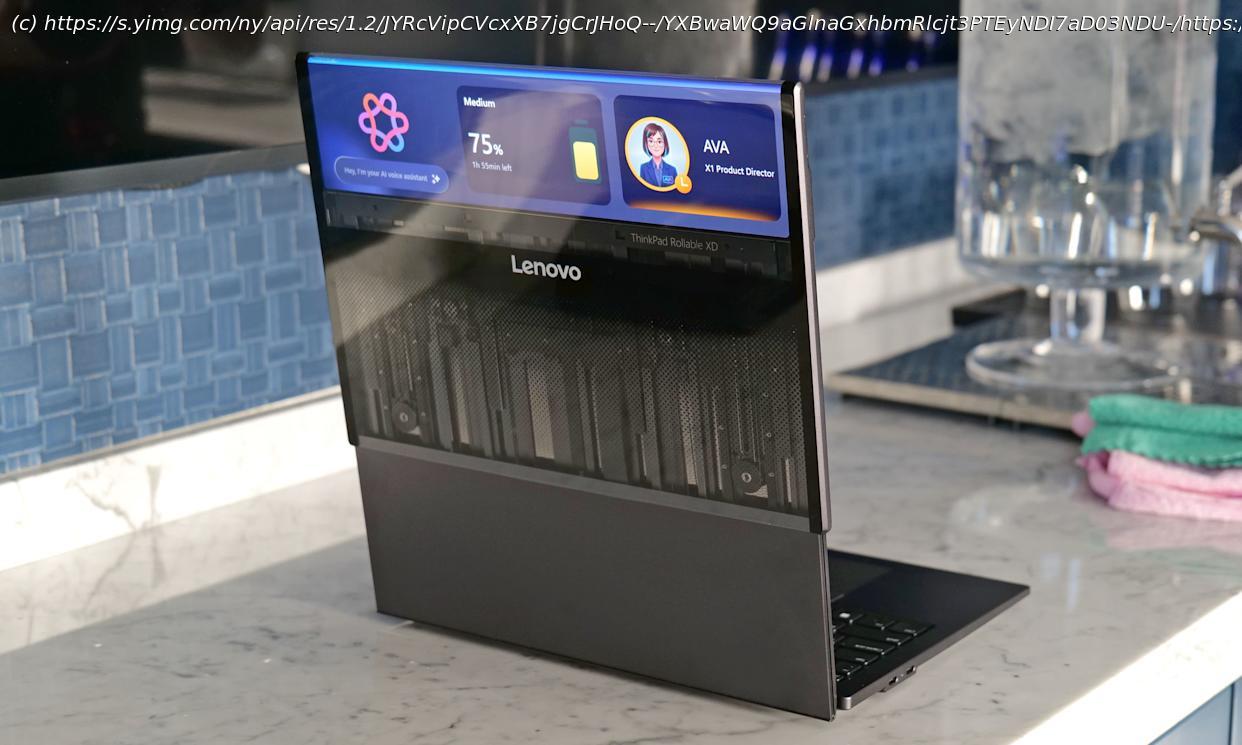
The most striking concept was the Legion Pro Rollable, a gaming laptop built around a flexible OLED panel that expands sideways from a standard 16-inch footprint to 21.5 inches or 23.8 inches, shifting aspect ratios from 16:10 to 21:9 or even 24:9.