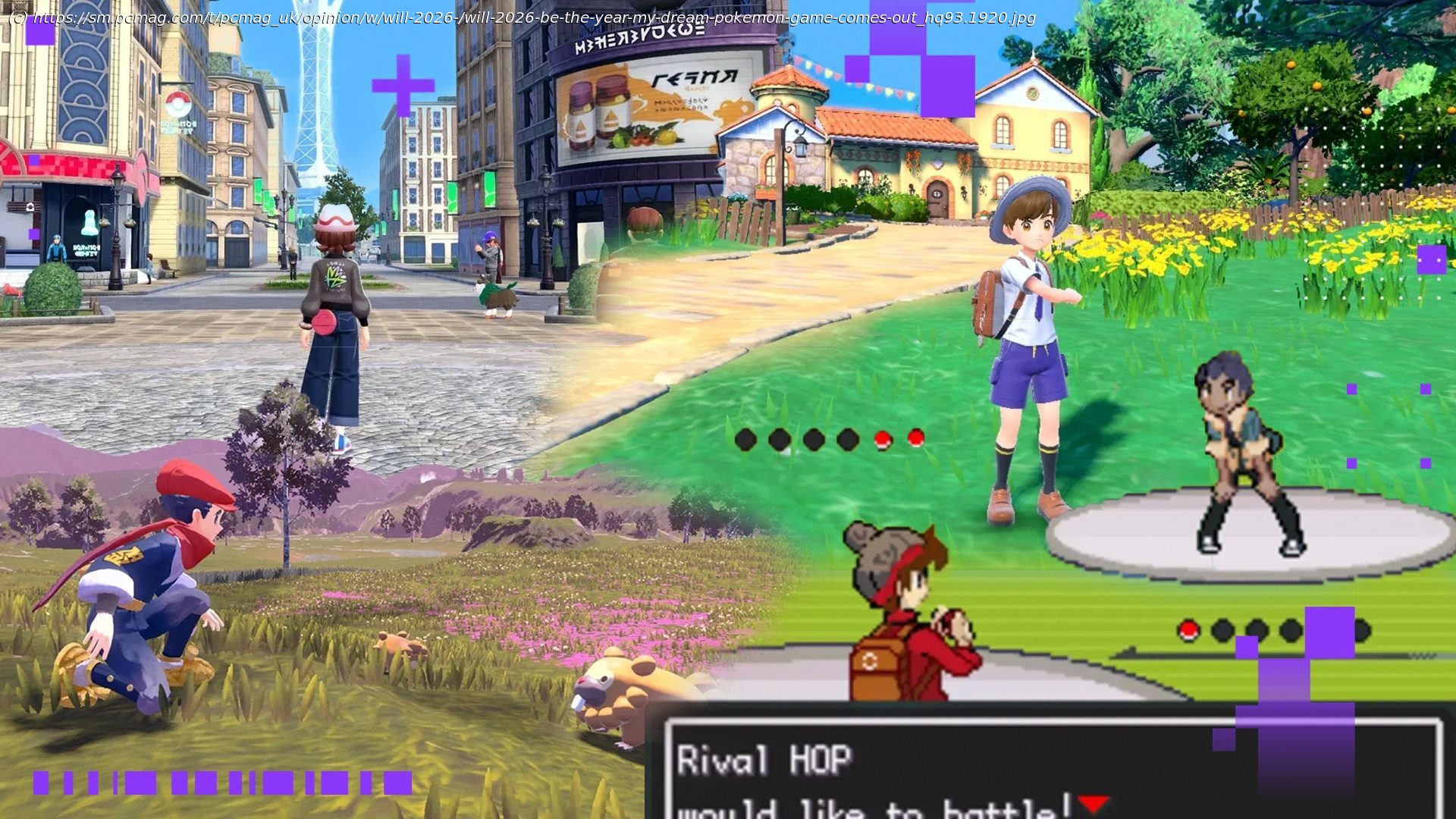
Pokémon turns 30 this year. To celebrate, developer Game Freak should merge the many piecemeal changes from the Switch era into the ultimate monster-battling game.
For a franchise that unleashed such childhood freedom and imagination, Pokémon games are notoriously conservative in their design. I’m a big series fan, but even I regularly skip entire Pokémon generations because playing the titles in quick succession reveals just how similarly they play. After all, the Pokémon game I played in college wasn’t that different from the Pokémon game I played in elementary school. However, in the Nintendo Switch era, as the series leapt from handheld devices onto a full-fledged handheld-console hybrid, something funny happened to the beloved monster-catching RPG: Pokémon evolved at last.
Don’t start cheering yet; this evolution is still incomplete. The Pokémon games released over the past few years contain some of the franchise’s most ambitious highs and its most baffling lows. But over these modern entries, beleaguered developer Game Freak has shown that it at least knows what individual innovations are required to make the epic and immersive Pokémon game I’ve always dreamed of. The latest attempt, Pokémon Legends: Z-A, even managed to sneak its way onto my top 10 games of the year list, flaws and all. With the tenth generation presumably coming to Nintendo Switch 2, no doubt to celebrate Pokémon’s 30th anniversary in 2026, the time has come to finally bring all those innovations together.The First Glimpse of a Bigger World
Ironically, the first Pokémon game on Switch was also its most modest. Pokémon: Let’s Go Pikachu and Eevee were pleasant enough remakes of the original Kanto-era Pokémon titles that had already been remade before, now with added connection to the wildly popular Pokémon Go. In retrospect, their small scope allowed for some of the most polished visuals in a Pokémon game. They were fun, but they didn’t exactly promise a bold future.
But in 2019, that future started to peek through with Pokémon Sword and Shield. Again, the bulk of the gameplay was very familiar, this time building off the style of the previous generation Pokémon Sun and Moon. However, one of its biggest changes (besides the Pokémon themselves growing to kaiju size) provided a tantalizing tease of how these games could level up. Between gym battles, Sword and Shield let you explore the Wild Area, a little open world full of creatures both cute and dangerous for you to freely encounter. Although the game was still rooted in handheld design, here was a Pokémon experience that truly belonged on a console. For the first time, you could even move the camera.
Unfortunately, the Wild Area was riddled with issues. It felt like the game was only tepidly committed to this experimental proof of concept. The performance was bad, with pop-in and primitive textures. It seemed empty, unfinished, and cheap. But I still got excited realizing that Game Freak saw the vision for what Pokémon needed to become, even if this attempt was underbaked. It was a crude version of the ultimate Pokémon fantasy: just you as a trainer out in the untamed wilderness, dealing with monsters however you choose. The game’s DLC doubled down on this even further, introducing new campaigns that took place entirely within new Wild Areas, and I remember them far more fondly than the straightforward main game.
With this promise, it finally seemed like the dream of a blockbuster, uncompromised open-world Pokémon title would finally come true.