mmsm
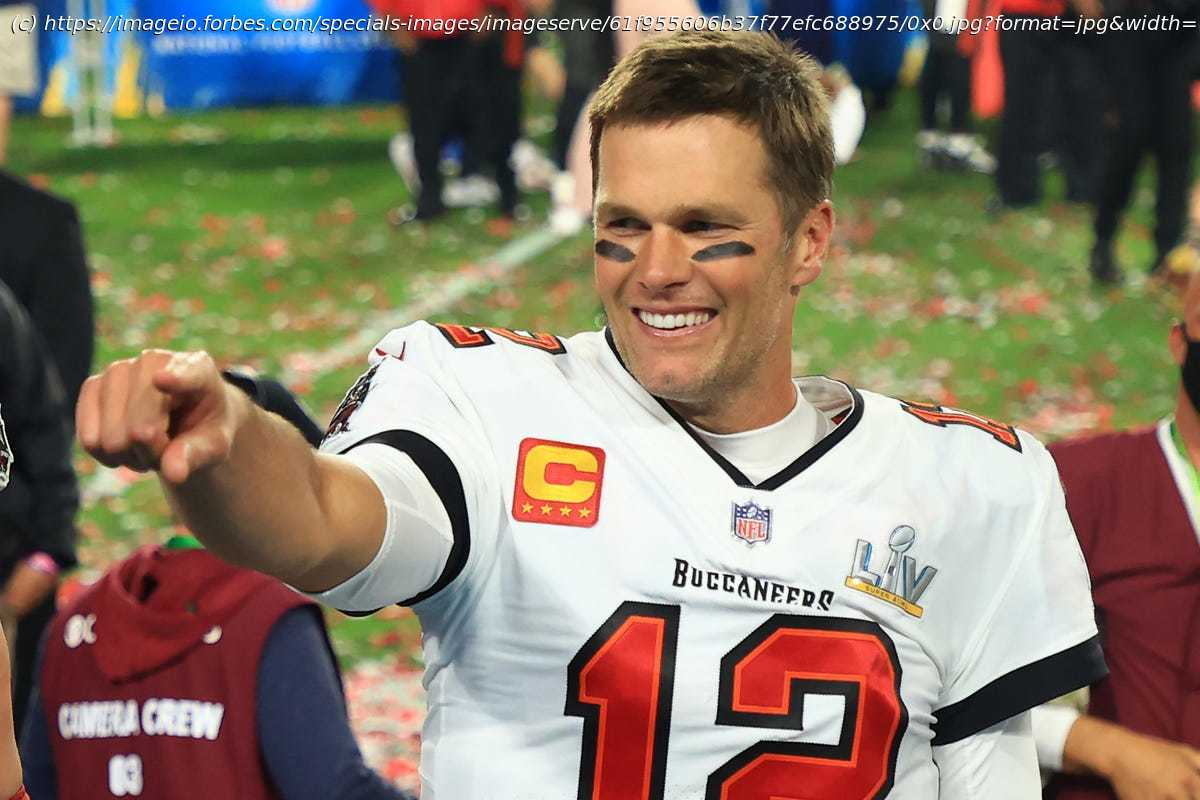
NFL quarterback legend Tom Brady may have had one of the shortest known planned retirements. Only 40 days after saying he would retire following a stellar 22-year career, he announced on Sunday that he would play for another season after all. “I’ve realized my place is still on the field and not in the stands,” Brady,44, tweeted, “That time will come. But it’s not now.… I’m coming back for my 23rd season in Tampa.” Adam H. Brill is a crisis reputation management expert and strategic communications counselor at the Harrison Edwards PR & Marketing agency in New York. He said that, once again, “Tom Brady has eclipsed those typical ‘penalty flags’ and continues to perform much to the happiness of adoring fans, coaches and owners. So, while some armchair quarterbacks may roll their eyes at Brady’s decision reversal, the majority of football fans are probably excited to see his return and how that will play out during the regular season. “Yet, the pressure is on. If he suffers in the next season and doesn’t live up to the fans and his own personal expectations, his decision will be re-examined with more critical analysis by the fans, not Brady, and it will be they who will throw the final pass on his career,” he predicted. Brady’s decision to return to the playing field will likely hit a responsive chord with many business leaders who find themselves weighing when to retire from the corporate playing field—and if, how and when they would ever return to the business world. In the corporate world, some business leaders retire from one company, only to join another organization months or a few years later. Fortune reported last December that, “Carol Tomé says she was ‘full-on retired at my farm in northwest Georgia’ when UPS CEO David Abney announced that he was going to retire. Tomé had moved out of The Home Depot’s C-suite in 2019, where she had been CFO since 2001. “But Tomé had in no way stepped completely away from corporate life. She was still on the board at several companies, including UPS. When the leadership at UPS began succession planning, they focused, Tomé says, ‘long and hard on the persona… the skills and experience that person needed to possess.” “Turned out Tomé was their perfect match… Over time, she decided that as much as she was a good fit for UPS, the company was a good fit for her. She would have the chance to help develop the company’s 543,000 employees, a role she loves.” Attorney Juan Dominguez, CEO of The Dominguez Firm, said that, “Ideally, CEOs should be thinking about their retirement decades before it looms over them. But this is not true for the majority of cases. When you’re doing something you’re so passionate about, it’s so easy to think that you’re never going to retire. But you will. “And when that time comes, you should be able to answer the question, ‘Have I done enough?’ In reality, only you, the CEO, can answer that question. I bet Tom Brady asked that question himself and soon found the answer to be ‘no’ at the moment.” Mark Nadler of Nadler Advisory Services where he counsels CEOs, boards of directors, and senior teams about executive leadership, corporate governance, and organizational performance. Nadler observed that very few of the 45 CEOs he’s worked with “have decided it was time to retire without aggressive nudgin—or pushin—from their board of directors or their spouse. “They face the same dynamics that Tom Brady did: Retirement is an acknowledgement of mortality. A CEO’s personal identity (like many professional athletes) becomes inseparable from their professional identity The power and perks are great. For successful CEOs there [is] often a belief that no one else could do the job as well.” Nadler said that, “The distinct minority of CEOs with deep self-awareness on the top of retirement begin to sense that they no longer have the energy or enthusiasm for the job that they once did, and there are things they’d rather be doing with their lives, involving family, or philanthropy, or politics—or they just want to start something new. “More frequently, they realize their company is entering a new stage where a different set of capabilities or experiences are required—for example, moving from a period of mergers and acquisitions to a focus on organic growth, or a strategic shift into markedly different technologies or markets. “But the realization never comes easily; it is complicated, even painful, and more often than not, requires the firm but gentle persuasion from leaders on the board of directors to help the CEO face up to the realization that it’s time,” Nadler concluded. Adam Rossi, CEO of Total Shield, thought that, “ CEOs should come out of retirement under a few circumstances—if your finances require you to do so, if your company’s new leadership is proven unsuccessful and needs your assistance, or if you are looking to spend your time working for a company whose morals align with yours. “Retirement is all about listening to yourself and your own wants and needs, and if your inner self is telling you to get back to work, by all means listen. Tom Brady took his family’s thoughts into consideration, which is a great example to lead by!”