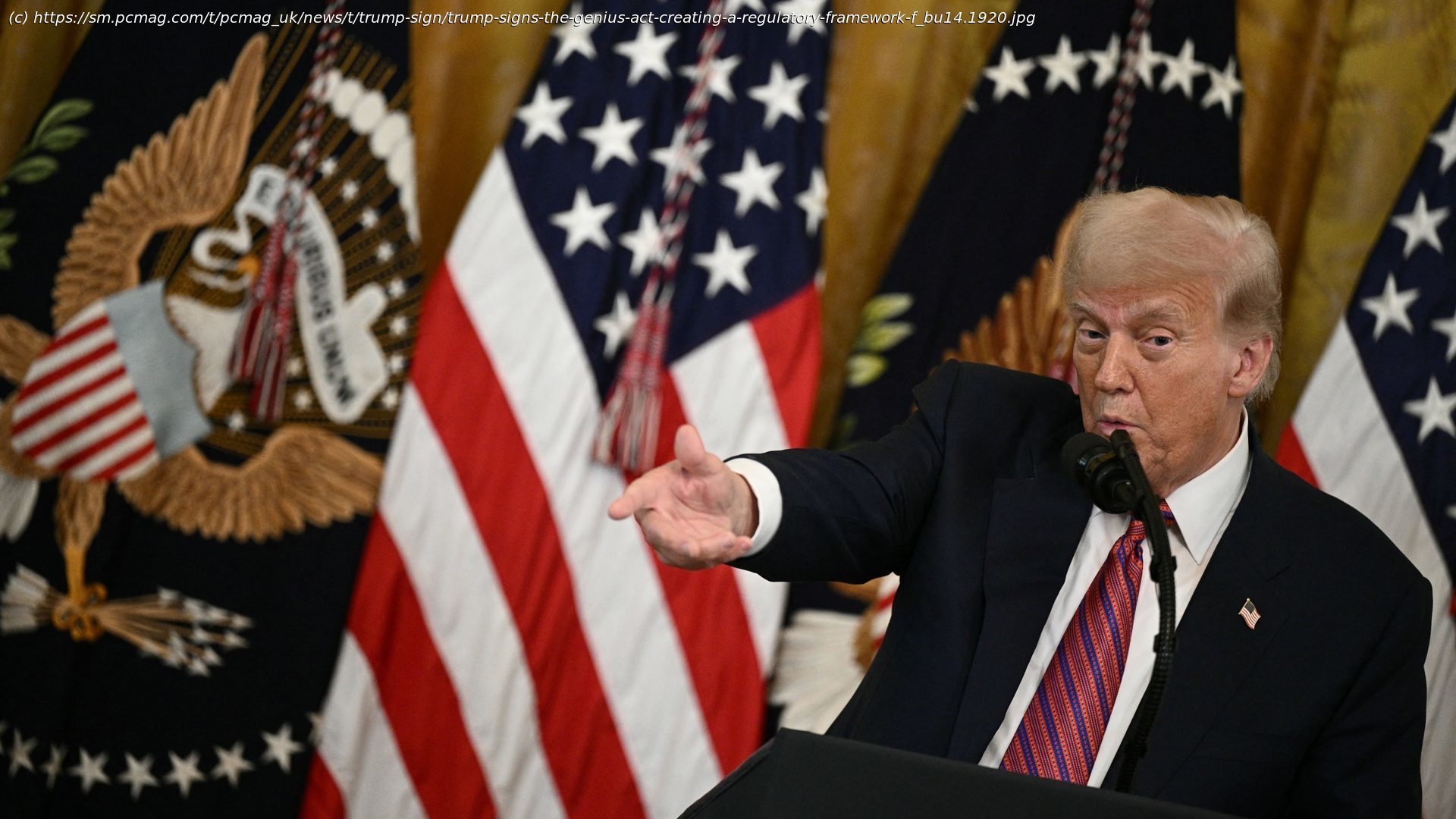
Bipartisan majorities back the first federal cryptocurrency measure to reach a president’s desk. It restricts the issuance of stablecoins to a set of authorized firms.
The first federal statute covering cryptocurrencies, a bill setting up a regulatory framework for « stablecoins » tied to tangible assets, now has President Trump’s signature.
The House passed the Genius Act—short for « Guiding and Establishing National Innovation for US Stablecoins »—on Thursday in a bipartisan 308-122 vote, a month after the Senate approved the bill by a 68-30 margin. Trump signed it at the White House on Friday afternoon.
The measure restricts the issuance of stablecoins to a set of authorized firms: subsidiaries of existing banks, non-bank firms permitted by federal or state regulators (the latter option is limited to firms issuing under $10 billion in stablecoins), or foreign firms that the Treasury Department determines are subject to comparable regulations in their home countries.
All of these firms must hold reserves—US currency, short-term US government debt, or funds or investments secured by those asset classes—backing their issued stablecoins on « an at least 1 to 1 basis. » And they must disclose their redemption policies, publish their reserve balances each month, and undergo monthly audits.
The law also prohibits stablecoin issuers from paying any interest on stablecoin balances and provides for no federal backstop for customers: « Payment stablecoins shall not be backed by the full faith and credit of the United States, guaranteed by the United States Government, subject to deposit insurance by the Federal Deposit Insurance Corporation, or subject to share insurance by the National Credit Union Administration.