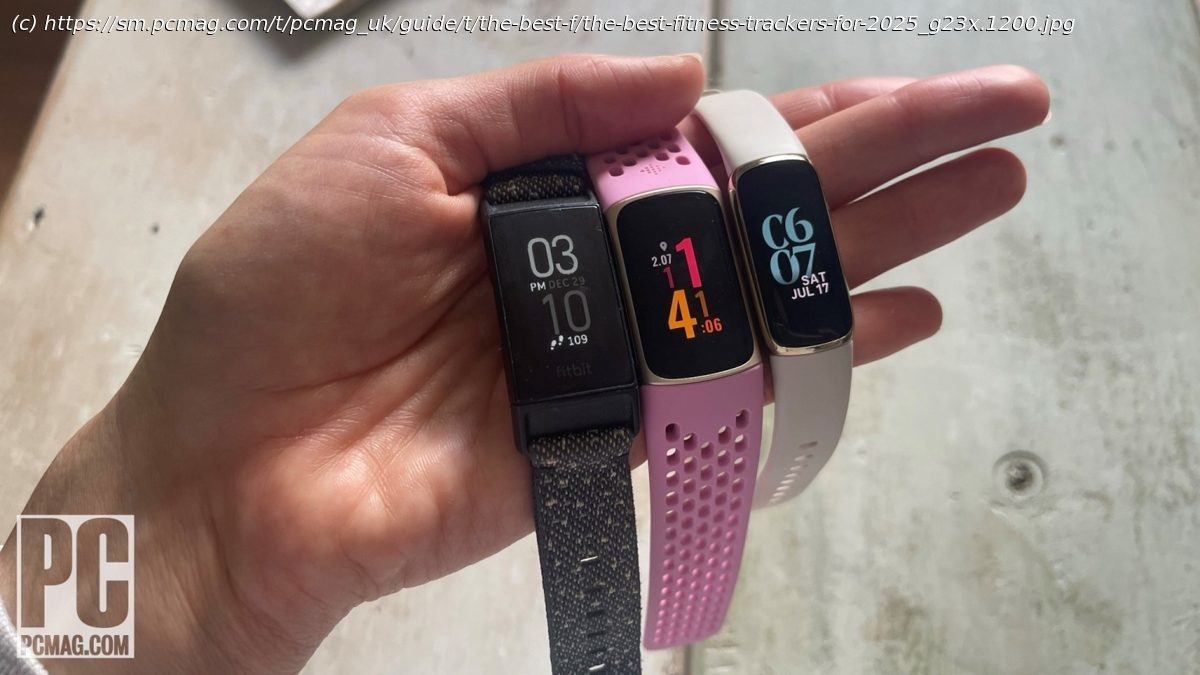
Fitness wearables can help you move more, sleep better, and stay healthy. Here’s how to pick the right one for you, along with the best fitness trackers we’ve tested.
There has never been a better selection of fitness trackers, but with choice comes confusion. We’re here to help you narrow your options and find the best fitness tracker for your needs and budget. We’ve been reviewing fitness trackers for more than a decade and have tested each model below, considering factors such as accuracy, battery life, ease of setup and use, features, specs, and style before recommending it to you. The Fitbit Charge 6 is our top pick, thanks to its cross-platform support, long battery life, and robust activity-tracking capabilities. However, it isn’t the only model we recommend. Whether you’re an avid exerciser or you’re just starting out, our list of the best fitness trackers has options for everyone looking to improve their health. What Is the Best Fitness Tracker for the Money?
Fitness trackers range from $25 to over $400. The simplest and least expensive trackers often lack a display, so you can’t check your step count without looking at your smartphone.
More expensive trackers usually include built-in optical heart rate monitors and GPS. Often, these features are meant to tempt athletes and exercise enthusiasts. Don’t get suckered into buying an expensive tracker if your primary activity is walking. If you walk and don’t do much else, there are compelling options in the $25 to $99 range. If you work out frequently and want comprehensive fitness-tracking features, we recommend spending at least $99 to access the tools you may need or want.
With most fitness trackers, you pay one price for the device and can access all or most of its accompanying software features at no additional cost. Some, like the Whoop, have a different pricing model. Whoop offers its tracker for free with the purchase of a membership, which unlocks access to its app. The Whoop MG didn’t make the cut for this list due to its high annual cost ($359) and the lack of detail it provides when recording workouts. What Are the Different Types of Fitness Trackers?
One important question to ask yourself before choosing a fitness tracker is the type of design you want. Most trackers are wrist-based, although there are also clip-on options and fitness-tracking smart rings, with the latter category gaining popularity recently. Bracelets and watches are typically hard to lose. That said, they can interfere with some daily activities, such as sleep and computer work, for example.
A clip-on is another option, although this style is no longer as popular. Fitbit sells a clip for the Inspire 3 that can be helpful if the included bands don’t fit, but it prevents the measurement of heart rate and sleep score. Clip-on devices, moreover, can fall off or accidentally end up in the wash.
The Oura Ring, meanwhile, brings health tracking to your fingers. The Oura’s ability to track workouts is relatively basic compared with a wrist-worn model, but it provides comprehensive sleep and stress tracking, and is more comfortable to wear to bed than a watch or wristband. Samsung’s Galaxy Ring has similar features, but its accuracy fell short of the more affordable Oura Ring 4 in our testing.
There are also trackers for children, like the Fitbit Ace 3. And don’t forget about Fido. That’s right, there are even trackers specifically for pets.The Best Fitness Tracker for Monitoring Your Heart Rate
Training intelligently means using heart rate data to guide your workouts. Sometimes, you might want to keep your heart rate relatively low to burn fat or pace yourself for a longer workout. At other times, you may want to push it higher for different health benefits, such as building stamina.
Chest straps are slightly more accurate than wrist-based wearables for heart rate tracking because they are worn closer to the heart and measure its activity directly. For comparison, the optical heart rate sensors in wrist-based fitness trackers calculate your heart rate by shining light into your skin and measuring blood flow. So, for the most precise heart rate readings, consider a dedicated chest strap. Not all smart home gym machines work seamlessly with fitness trackers, but most support chest straps.
The primary benefit of a wrist-based heart rate tracker is that it can be worn comfortably all day long. They’re more convenient than chest straps and provide a continuous view of your heart rate.
If you’re simply interested in knowing your resting heart rate, you don’t necessarily need a heart rate-tracking device to find it. Many smartphone apps allow you to take your heart rate in about 15 seconds using your phone’s camera. The Best Fitness Tracker for Sleep
Many fitness trackers record your sleep. When they do, they generally watch for movement using a three-axis accelerometer to a more sensitive degree than they do during the day. Most devices provide graphs in their companion app that show the duration of your light, deep, and REM sleep. Some also track your overnight respiration (the number of breaths you take per minute), a feature that is available on the Apple Watch. Samsung Galaxy Watches can even track your snoring. Recommended by Our Editors
Some dedicated sleep trackers attach to your mattress, but we haven’t found them to deliver an appreciable advantage over wrist-based trackers. Wearable trackers can do a lot more than simply track your sleep. However, if you’re not fond of wearing something on your wrist to bed, you can opt for the Sleep Number 360 Smart Bed or the Eight Sleep Pod Pro Cover smart mattress topper instead. As a more affordable option, the second-generation Nest Hub can track your sleep from the bedside table without being in contact with your body. The Best Sport-Specific Fitness Tracker
Swimmers who want a waterproof tracker need to keep in mind that not all water-safe trackers actually record swimming data. Runners should probably choose a watch that displays at least time, distance, pace, and lap time. If you want good accuracy for those metrics without also carrying a smartphone, you need a runner’s watch with built-in GPS.
You also need to consider the display. If you want to view your stats at all times or simply use your tracker as a wristwatch, look for one with an always-on display. How you control the tracker is also important. If you like to run in the cold or wear gloves, you might want to steer clear of devices that use touch-screen controls.
Cyclists have even more to consider. There’s a difference between tracking how many miles you pedal and the calories you burn versus monitoring your power and cadence. If all you want is the former, a few fitness trackers support bicycling as an activity. More serious cyclists should opt for a device that pairs with additional bike equipment, such as a cadence sensor, and consider devices from sport-specific companies like Garmin and Polar.Which Fitness Tracker Has the Best App?
A fitness tracker’s app (or website) matters because it is where you view and process the information the tracker collects. Fitbit has one of the best apps we’ve tested. It allows you to record various types of data, including your weight, menstrual cycles, calories and water intake, and stress levels.
The Fitbit app now lets you choose a Focus, with options like improving heart health, getting more active, sleeping better, managing weight, or managing stress. The metrics highlighted at the top of the app’s Today section reflect your selection. If your goal is to manage your weight, for instance, the app displays your weight (synced from a connected scale or manually entered), calories logged, calories burned, and steps taken.
If you want a total body analysis, look for a system that incorporates a smart bathroom scale. The Fitbit Aria Air sends your weight directly to your account, so you can’t cheat the system by entering a lower number. What’s the Difference Between Fitness Trackers and Smartwatches?
Most fitness trackers incorporate some smartwatch functionality, and many smartwatches today provide a wide range of fitness and health-tracking features. Generally speaking, if you want a wearable with calling and texting capabilities, a wide selection of third-party apps, and fitness-tracking features, get a smartwatch. If you just want a device to track your daily activity, health, and workouts, a dedicated fitness tracker should suit you just fine.
The Apple Watch and the Samsung Galaxy Watch place a greater emphasis on health and fitness tracking than any other smartwatches we’ve seen. The Google Pixel Watch 4 is another compelling option, with full Fitbit integration and personalized workout recommendations tailored to your recovery status.
Keep in mind that most true fitness trackers are compatible with both iOS and Android smartphones. Still, many popular smartwatches, including the Apple Watch, the Galaxy Watch, and the Pixel Watch, are platform-specific. Naturally, compatibility is the first thing to consider before purchasing a wearable device. We include these details in our reviews of each product.
For more, check out our roundups of the best Apple Watches, the best Samsung watches, and the best Android watches. We regularly update this article, so check back for our latest recommendations and consult our most recent fitness tracker coverage.