Photos and documents show heavy reliance on biometric surveillance and vast databases at the heart of the Trump administration’s immigration crackdown.
Photos and documents show heavy reliance on biometric surveillance and vast databases at the heart of the Trump administration’s immigration crackdown.
Luis Martinez was on his way to work on a frigid Minneapolis morning when federal agents suddenly boxed him in, forcing the SUV he was driving to a dead stop in the middle of the street.
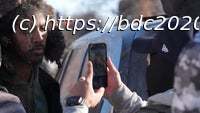
Masked agents rapped on the window, demanding Martinez produce his ID. Then one held his cellphone inches from Martinez’s face and scanned his features, capturing the shape of his eyes, the curves of his lips, the exact quadrants of his cheeks.
All the while, the agent kept asking: Are you a U.S. citizen?
The encounter in a Minneapolis suburb this week captures the tactics on display in the Trump administration’s immigration crackdown in Minnesota, which it describes as the largest of its kind and one that has drawn national scrutiny after federal agents shot and killed two U.S. citizens this month.
Across Minnesota and other states where the Department of Homeland Security has surged personnel, officials say enforcement efforts are targeted and focused on serious offenders. But photographs, videos and internal documents paint a different picture, showing agents leaning heavily on biometric surveillance and vast, interconnected databases — highlighting how a sprawling digital surveillance apparatus has become central to the Trump administration’s immigration crackdown.
Civil liberties experts warn the expanding use of those systems risks sweeping up citizens and noncitizens alike, often with little transparency or meaningful oversight.
Over the past year, Homeland Security and other federal agencies have dramatically expanded their ability to collect, share and analyze people’s personal data, thanks to a web of agreements with local, state, federal and international agencies, plus contracts with technology companies and data brokers. The databases include immigration and travel records, facial images and information drawn from vehicle databases.
In Martinez’s case, the face scan didn’t find a match and it wasn’t until he produced his U.S. passport, which he said he carried for fear of such an encounter, that federal agents let him go.
“I had been telling people that here in Minnesota it’s like a paradise for everybody, all the cultures are free here,” he said. “But now people are running out of the state because of everything that is happening. It’s terrifying. It’s not safe anymore.”
Together with other government surveillance data and systems, federal authorities can now monitor American cities at a scale that would have been difficult to imagine just a few years ago, advocates say.