Preparing for the worst: How to escape Kim Jong Un

 People are milling around calmly, clutching hot coffees, making small talk. Kids are chasing each other around an air hangar.
It’s hard to believe they are practicing a high-stakes emergency evacuation that simulates what would happen if North Korea invaded.
« In real life, everyone would be wearing masks, rushing through places, » says mom of two Nicholle Martinez. « There would be chaos everywhere. It would be scarier. »
Nicholle met Nick Martinez when they were both stationed with the US military in Seoul. They’ve now been married for nine years and have two beautiful, energetic and charismatic children. Briannah, 6, is in first grade, and Alannah, 8, is in third.
In many respects they’re very typical. They go to church on Sundays and have lunch together afterward. They like to play sports — mom and dad want the girls to grow into healthy, strong young ladies.
Briannah wants to be a teacher, Alannah wants to be president.
But, because the whole family is now living on post in Seoul, the Martinez family lives with the ever-present danger of a very noisy and unpredictable neighbor — Kim Jong Un.
In the face of escalating tension, the Martinez women are practicing their path to safety.
In a military-led exercise, they traveled by bus, helicopter and military plane from South Korea all the way to the Pacific island of Okinawa, Japan.
In a CNN exclusive, we went along with them for the ride.
All those taking part in the drill are volunteers — relations of US soldiers stationed in Seoul. Unlike in a real scenario, they’ve had the opportunity to plan a little for this event.
There are a number of reasons why an order like this could be enacted, says Justin Sturn, a non-combatant evacuation planner. He uses the 2011 earthquake in Japan or the recent evacuation of non-combatants from Turkey as examples.
However, for all the claims this is a routine practice run, Kim’s threats loom over the exercise.
In September, North Korea said it had hit the button on its fifth and potentially most powerful nuclear test. International condemnation and aggressive sanctions have done little to impede the regime’s nuclear ambitions.
In a New Year’s address, Kim said that his country is close to testing an intercontinental ballistic missile.
« He’s said publicly that we’re the enemy, » says Sturn.
« With all the rhetoric that comes out of North Korea, of course we have to prepare for the worst case scenario. »
Military families stationed in South Korea are encouraged to have a bag ready to go at all times. « I have a duffel bag that is always packed with sleeping bags and canned food, » says Nicholle.
According to Sturn, the decision to get soldiers’ families out of the country would come right from the top. A non-combatant evacuation order (NEO) is a political decision, not a military one.
« We would conduct the mission, but the execution is still a Department of State decision, » says Sturn.
The Army is trying to make the environment as realistic as possible.
Family members are permitted to bring along 60 pounds of personal stuff each. Military representatives urge the group to only bring the bare essentials.
I ask the Martinez family what went into their bags first.
« My cellphone! » says Nicholle in a heartbeat.
« My blanket, » says 8-year old Alannah. She wraps her comfort around herself like a cape.
Briannah pauses, shyly. Mom and sister exclaim they know exactly what went into her rucksack first.
The 6-year-old takes a moment to rummage in her bag and produces her must-have item with a flourish — a military issue doll given to the girls when Nick went on his first tour.
« Daddy doll! »
The girls are carrying their must-have items, but one lesson Nicholle says she’s already learned from the exercise is to pack a little lighter. Although she’s a strong fitness instructor, she’s weighed down with over 150 pounds of luggage and it’s slowing her down.
A string of tents is pitched at Yongsan Garrison military base. There’s an icy wind and a trace of nervous anticipation in the air as families slowly gather.
This is the first time since 2010 the evacuation simulation has gone all the way to Okinawa. Most people aren’t really sure what to expect — they’ve just been told, « it’s not going to be comfortable. »
The group are issued with identity bracelets that will track their progress from South Korea to Okinawa. If this were a genuine evacuation, the families would then be flown back to the United States from Japan.
There is a security screening and the opportunity to register any pets traveling. The Martinez family joke that the fish didn’t make the cut.
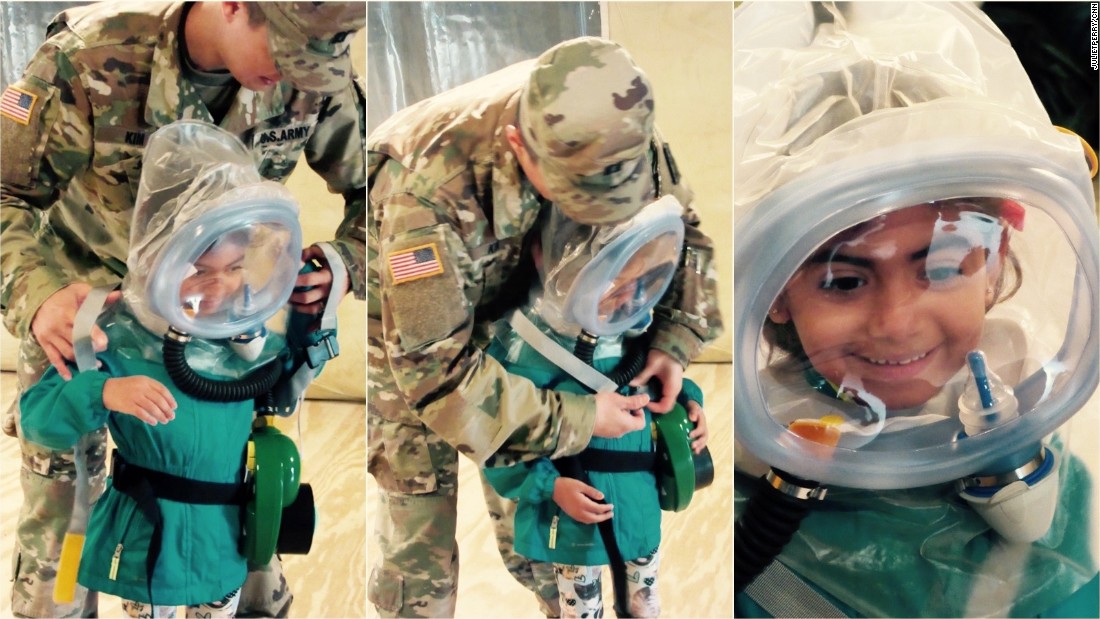
One stage of the registration process also includes instructions on the ICAPS mask — or Infant Chemical Agent Protective System — that protects against the effects of biological attacks for up to 12 hours.
There’s a lot of nervous laughter and « Ghostbusters » references abound. Briannah gets into the spirit of things.
But for all the smiles and calm instruction, the vision of a 6 year-old preparing for a chemical or biological attack isn’t a comfortable one.
Nicholle, who herself was in the military police, says that as well as being a great life experience, it’s a good opportunity for the girls to get some insight into what dad does for a living. « They only have five more years until dad retires, » she says. « So being here has opened their eyes as to what military life is. »
Alannah is already showing signs of logistical aptitude. She tells me she’s not sure why they’d take so many steps to evacuate the country, if it really was an emergency.
I suggest it might seem easier just to get families onto a commercial flight in Seoul.
« That’s what I would do! » she says. « Just get outta there. »
I put Alannah’s question to Sturn, who says the movement south would be in response to hostile maneuverings from the north and the « need to move people out of that hotspot. »
« If it was a natural disaster, or something like that, we would absolutely fly them out of Seoul, » says Sturn.
« But this is the worst-case scenario. And the worst-case scenario is North Korea is coming across the border, and we need to get people out of harm’s way. »
After about an hour’s drive in convoy from the registration point in Seoul, we arrive at Camp Humphreys, further south in Pyeongtaek.
We’re taken through a hangar full of military hardware towards two US Army CH-47s, or Chinook helicopters, sitting on the tarmac.
We’re given a safety orientation, issued earplugs and escorted on to the machine.
This is the first time most of the civilians have flown in a military helicopter. The roar, heat and pure force from the blades is overwhelming as we get on board.
If they had to evacuate by helicopter, this is a fair enactment of how it would go, says Col. Lance Calvert, commander of the 2nd Combat Aviation Brigade. However, with the increased numbers a real-life scenario would entail, he says there would be more practical ways to transport people out of Pyeongtaek.
It’s estimated that — if this were a genuine evacuation of non-combatants from South Korea — the order could be for tens of thousands of civilians to leave over a period of five to seven days. « Trains, buses or commercial transportation systems are much more efficient, » he says.
The aim of the drill isn’t only to try to give relatives a realistic practice run. The military also considers the « mental aptitude » of a soldier in a crisis and believes exercising this process builds confidence. It shows acting service members that, in a dangerous situation, their family members would be cared for.
« In a natural disaster or hostile scenario, the last thing you want is your soldier thinking about his family,' » says Capt. Jimmy Sheehan.
The helicopters land in Daegu. After a mess dinner, we spend a chilly night in the dormitories on the US military base, Camp Walker. The next morning, we’re up at 5 a.m.
Despite the intensity and length of the journey so far, all the kids in the group are still in good spirits. A trip to Okinawa aquarium is nearly within grasp.
A convoy through the spectacular mountainous south takes us to Gimhae Republic of Korea Air Force (ROKAF) base where we’re escorted on to a US Air Force C-130 Hercules transport plane for the drill’s final leg — onwards to Japan.
The Hercules is an impressive beast, and the « non-combatants » run into it in anticipation of arriving in warmer southern climes.
Earplugs at the ready, we’re strapped in. Most of the children curl up and nod off — an oddly peaceful scene in such a stark environment.
Landing in Japan is the highlight for the Martinez girls, who tell me with great enthusiasm how much they like exploring new places.
« For some reason, I thought we were going to go on a secret subway tunnel! » says Alannah. Her younger sister interjects wistfully: « I wish we could go through a tunnel to a magical place. »
« Just close your eyes and imagine it, » laughs mom.
She says they seize these kinds of opportunities because, as a military family that’s often on the move, they try to make the best of it everywhere they go.
« You adapt and you will succeed, or you will be miserable if you don’t, » she says. « We embrace these kinds of events because we help our spouses. My husband benefits from us enjoying our time here. If we’re happy, he’s happy. »
For Nicholle, the experience has also made her reflect on how an emergency evacuation would really feel. The idea of leaving all the material things behind isn’t difficult.
« The most important thing is that I get my girls to a safe place, »‘ she says.
But it has driven home what, for her, would be the most painful part of the process.
« Knowing that I would be leaving my husband behind… that would be the hardest thing. «
© Source: http://rss.cnn.com/~r/rss/edition_world/~3/lZ87qsuVUX4/index.html
All rights are reserved and belongs to a source media.

 Xinhua, China’s state news media outlet, is striking back at President-elect Trump for his Twitter barbs against Beijing.
 China recently opened the world’s highest bridge — a marvel that stands 1,854 feet above a river and connects two mountainous regions in the country.
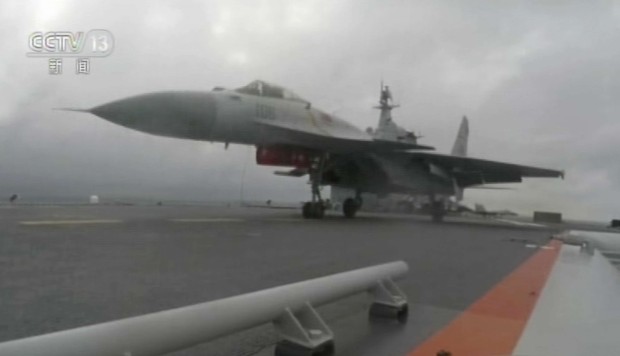 PLA warships led by China’s sole aircraft carrier are testing weapons and equipment in exercises this week in the South China Sea, the foreign ministry said on Wednesday. Exercises by PLA ships, in particular the aircraft carrier Liaoning, since last month have unnerved China’s neighbours, especially at a time of heightened strain with self-ruled Taiwan, which Beijing claims as its own, and given long-running territorial disputes in the South China Sea. China says the Soviet-built Liaoning and other ships conduct routine exercises that comply with international law. “The Liaoning aircraft carrier group in the South China Sea is carrying out scientific research and training, in accordance with plans,” Chinese foreign ministry spokesman Geng Shuang said. “The purpose is to test the performance of weapons and equipment,” he said. The PLA Navy said on its official microblog this week that the aircraft carrier conducted drills in the South China Sea with its fighters and helicopters. US warships have also been conducting what they call freedom of navigation patrols through the South China Sea over the past year as concern grows about Chinese construction of air strips and docks on disputed reefs and islands. PLA warships sailed through waters south of Japan and then rounded east and south of Taiwan late last month on their way to the southern mainland province of Hainan. Taiwan’s defence minister warned at the time that “the threat of our enemies is growing day by day”. Taiwanese media have reported that the Liaoning could sail north up the median line of the Taiwan Strait on its way to its home port of Qingdao. Taiwan’s defence ministry said the talk about the timing and northward route of the Liaoning was speculation, and it would make preparations based on the situation and “maintain its grasp of the movements” of the ship. Business relations between Taiwan and the mainland have grown significantly over the past decade but tension has increased since the island elected a president from an independence-leaning party last year. Beijing distrusts President Tsai Ing-wen and has stepped up pressure on her following a protocol-breaking phone discussion between her and US president-elect Donald Trump last month. Beijing suspects Tsai wants to push for the island’s formal independence, a red line for the mainland. Tsai says she wants to maintain peace across the strait.
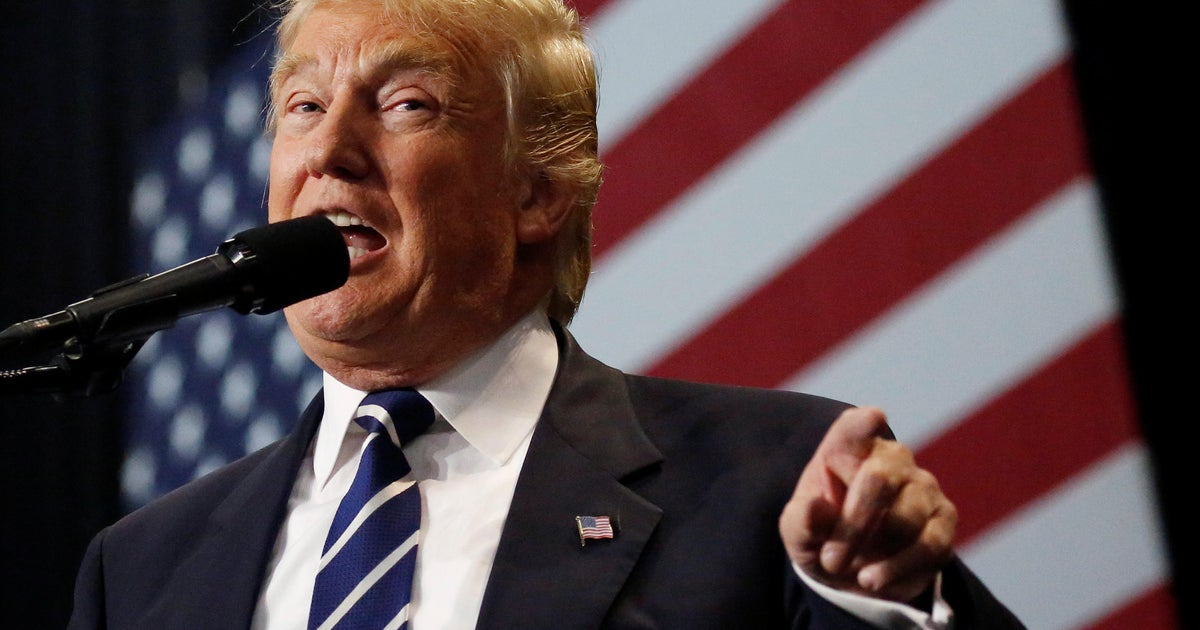 President-elect Donald Trump has taken to Twitter recently to sound off on foreign policy issues.
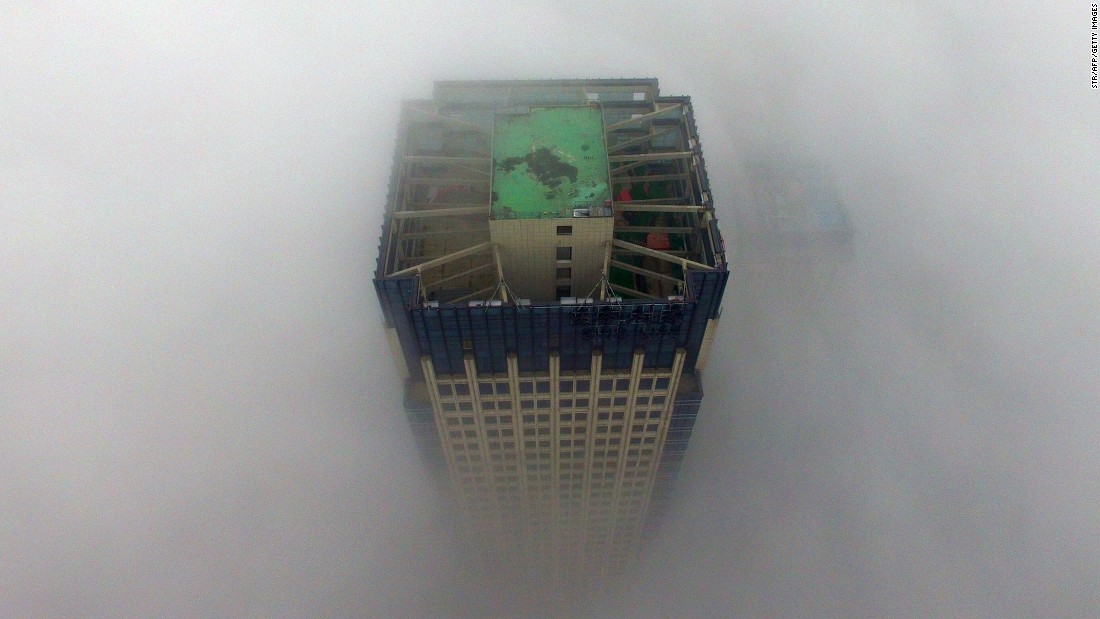 China’s national observatory issued the fog alert Tuesday in a number of northern and eastern regions.
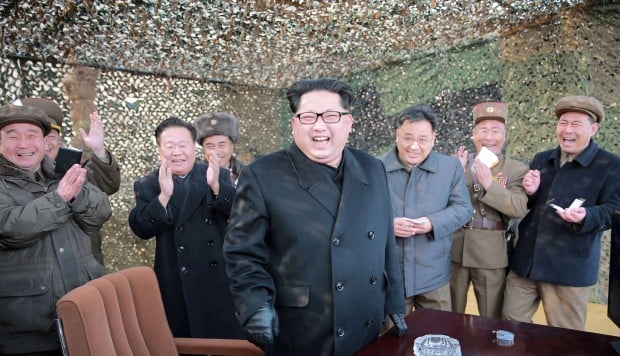 North Korea continues to pursue nuclear and ballistic missile technologies but the United States does not believe it is in a position to “tip” one of them with a nuclear warhead, State Department spokesman John Kirby said on Tuesday. North Korea’s leader, Kim Jong-un, said on Sunday , raising the prospect of putting parts of the United States within range. “We do not believe that at this point in time he has the capability to tip one of these with a nuclear warhead … but we do know that he continues to want to have those capabilities and the programmes continue to march in that direction,” Kirby told reporters. Asked whether he would agree with president-elect Donald Trump’s assessment that China was not helping to contain North Korea’s nuclear ambitions, Kirby said: “We would not agree with that assessment.” Trump, who will take office on January 20, that North Korea would not be allowed to complete a nuclear weapon capable of reaching the United States, although he did not say how he would stop it. “It won’t happen!” he said on Twitter. Trump’s transition spokesman, Sean Spicer, said the tweet spoke for itself but added that it meant, “Under his watch he’s going to make sure that that doesn’t happen.” Pyongyang’s action will be discussed at a meeting in Washington on Thursday between the United States, Japan and South Korea, led by Deputy Secretary of State Antony Blinken, Kirby said. “No question that tensions on the Korean peninsula will be a topic of discussion [but] where that is going to take us, especially in light of Kim Jong-un’s speech, I don’t know,” Kirby said. Asked about the possibility of more sanctions against Pyongyang, he added: “We haven’t ruled out the possibility of additional sanctions.”
 Sungtae (Jacky) Park is research associate at the Council on Foreign Relations.
 China has hit back at Donald Trump’s claim that Beijing isn’t doing enough to rein in rogue state North Korea, cautioning the U. S. President-elect not to “escalate” an already tense situation on the Korean Peninsula through his liberal use of social media.
 WASHINGTON: U. S. President-elect Donald Trump plans to pick William Hagerty as the next U. S. ambassador to Japan, an adviser to Trump’s transition team told Reuters on Wednesday.