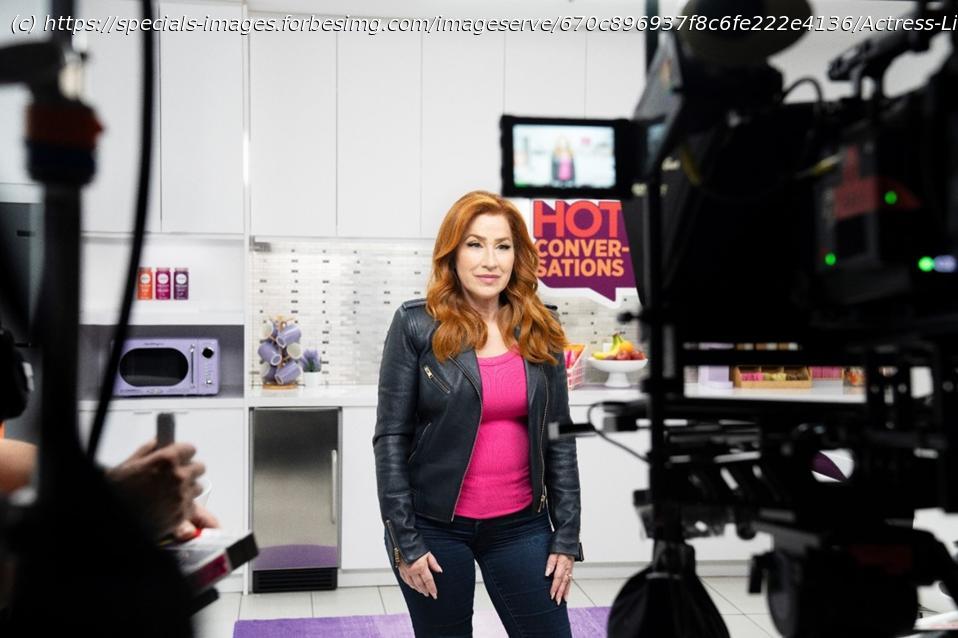
On National Menopause Day, Centrum and «Abbott Elementary» star Lisa Ann Walter talk about «Hot Conversations»: their new joint campaign about menopause in the workplace.
“Listen up, meno-pals,” actress Lisa Ann Walter proclaims in the training video for Centrum’s new “Hot Conversations” campaign. “Together, we’ve got this.”
He also noted, “As someone who has personally gone through menopause and is candid about her experience, [Ms. Walter] understands the changes and challenges women face during this time”.
In fact, Ms. Walter has been talking about her own personal experiences with “the changes and challenges” of being a woman for years. Her first son was born in 1987 and, 18 months later, she hit the stage as a stand-up comedian. At the time, few — if any comics — were consistently talking about her current stage in life. Joan Rivers, who had one child, had made a joke or two, and Bill Cosby, who was the father of five children, had some material himself, but he was, obviously, a man who didn’t have first-hand experience with pregnancy, childbirth, or postpartum.
Ms. Walter’s material, in contrast, represented her point of view: that of a woman. “I talked about the stage of life I was in,” she explained. “The things we [as women] own, our experiences: it’s important to me”. It turns out that those very same things that “mattered” to her and that she was sharing on stage also “resonated with people”.
In the process, her stand-up material broke the trend of centering men: in comedy, in health, and otherwise. Today, about 73.3% of comedians are male and 88.7% of stand-up comedians specifically are male. As of October 15, 2024, Netflix has premiered 37 comedy specials this year alone, and only nine were headlined by women.
This gender inequality is also prevalent in healthcare. According to the most recent Census, women make up 50.9% of the United States population. But, as of 2018, only 4% of all research and development for healthcare products and services went to women-specific conditions. In 2020, only 10.8% of the National Institutes of Health (NIH)’s funding was allocated to women’s research. And, in 2021, only 1% of healthcare research and innovation was invested in female-specific conditions beyond oncology.
For menopause in particular, only 31.3% of 99 surveyed U.S obstetrics and gynecology (OB/GYN) residency programs reported that they even had a menopause curriculum in their program. That same study found that 29% of the programs with a menopause curriculum had a maximum of five lectures on menopause per year. The remaining 71% had a maximum of only two lectures per year.
As a result, in 2019, less than 7% resident physicians in family medicine, internal medicine, and OB/GYN together expressed that they felt adequately prepared to manage women experiencing menopause – even though women spend about one-third of their lives in perimenopause, menopause, and post-menopause collectively.
“None of it is intentional,” Ms. Walter said about this lack of education, research, and understanding around women’s health generally and menopause specifically. “But there’s an intentional avoidance of the things that only affect women. All health matters.”
And so, for Ms. Walter, this partnership with Centrum breaks “trends that center men”: like comedy and like healthcare. As part of the “Hot Conversations” campaign, Centrum released Centrum Menopause Support: a new line of supplements designed to help relieve common symptoms of menopause, such as hot flashes (Complete Multivitamin + Hot Flash Support), sleep disturbances (Restful Sleep), and lack of mental alertness (Clear Mind & Calm Mood).
Importantly, though, Centrum also gives women a space to talk about menopause and what they’re experiencing: something that women have historically lacked. Due to “sexism and ageism,” as Ms. Walter noted, society has viewed menopausal and postmenopausal women as lacking sex appeal, relevance, and usefulness, since they can no longer reproduce. Women who are connected with menopause are thus connected to this source of shame and to a condition, that, in the past, has been “the butt of frat boy humor” as Ms. Walter described. As a result, “everything connected to [menopause] is scary.”
Carrot Fertility’s Menopause in the Workplace 2023 report only highlighted that fear and shame. Out of the 2,000 U.S and U.K working women surveyed, 72% of respondents felt ashamed or embarrassed dealing with menopause symptoms at work. When these women took time off work for reasons relating to menopause symptoms, 79% concealed the real reason for that break at least some of the time.
60% of respondents believed that having significant support (such as coverage for counseling or medical care, workplace support groups, help in finding doctors who specialize in menopause, and flexible hours) would have increased their job satisfaction. But only 24% reported having a primary employer that offered menopause healthcare benefits and only 9% thought the offered benefits were indeed significant.
“Hot Conversations” aims to start breaking down these barriers and provide helpful products and resources for women. After all, because of menopause, 25% of women have considered leaving or have left the workforce completely. Mayo Clinic, moreover, has estimated that the cost of worker productivity losses due to menopausal symptoms are about $1.8 billion while healthcare costs related to menopause are over $24 billion.
“These conversations are super important. We shouldn’t be afraid to talk about [menopause],” Ms. Walter summarized, noting that, “Everyone’s different and symptoms can be anything”. She personally didn’t have any trouble sleeping: one of the most common side effects of menopause. But she did experience hot flashes — including one during an audition callback — and her shoulder went “weirdly numb”. After her first missed period, she visited her cardiologist, thinking the change in her shoulder might be a symptom of a heart attack — only to be told that there was nothing wrong with her heart. The cardiologist “didn’t even connect my symptoms to menopause,” she remembered. Only years later did she research and learn for herself that a frozen shoulder can be linked to menopause – and she’s not the only one. As of 2024, 60% of women in 2024 said that they are entirely self-taught when it comes to menopause knowledge.
“Hot Conversations” allows Centrum and Ms. Walter to challenge that status quo and spread the word about menopause. The campaign has already “driven impressive preliminary results”, according to Mr. Gabriele; its earned media coverage, for instance, has garnered over 2.5 billion impressions, and Centrum is currently the number three brand for menopause support in the United States – just six months after the launch of its menopause supplement line. HotConversations.com additionally offers other resources to fill in the current menopause knowledge gap; they include an online quiz to access a free personalized menopause support guide and recommendations for articles, audio guides, expert advice, products, science-based education, and more.
Mr. Gabriele added that the Centrum team “believes the [“Hot Conversations”] campaign has positioned Centrum as a forward-thinking leader in the category, setting a new benchmark for how Centrum connects with our community on both an emotional and functional level”. Going forward, Centrum aim to continue supporting women at every stage of their health journeys with similarly “impactful and relevant initiatives.”
Together, she and Centrum hope to bring this same empowerment to other women. “Hot Conversations” can help guide them through their individual menopause journeys and start dismantling the once-dominant societal narrative that — Ms. Walter explained — categorized menopausal and postmenopausal women as “worthless, sexless, done.”
“I’m here to tell you that’s not the case,” she concluded.