Start Blog Seite 21060

Кулеба заявив, що не вважає Орбана і Сіярто проросійськими політиками

0

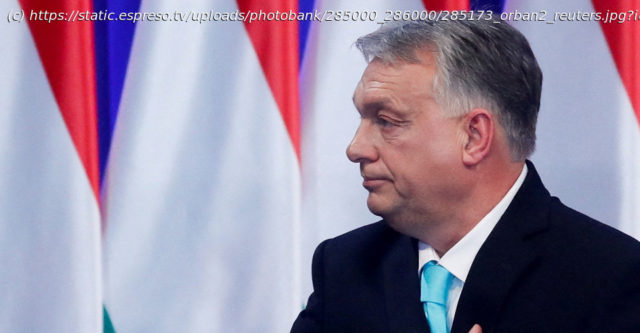
Міністр закордонних справ України Дмитро Кулеба переконаний, що Віктор Орбан та Петер Сіярто – це не проросійські, а проугорські політики. Деталі читайте тут
Міністр закордонних справ України Дмитро Кулеба переконаний, що прем’єр-міністр Угорщини Віктор Орбан та очільник МЗС Петер Сіярто – це не проросійські, а проугорські політики
Про це повідомляє угорський портал Telex.
Дмитра Кулебу попросили прокоментувати наратив про проросійські погляди Петера Сіярто та Віктора Орбана.
„Якби це підтвердилося, це означало б великі проблеми як для ЄС, так і для Угорщини. Але я думаю, що вони налаштовані проугорськи. Якби вони були проросійськими, то Петер не заявив би на нинішній зустрічі, що поважає територіальну цілісність і суверенітет України“, – сказав очільник МЗС України.

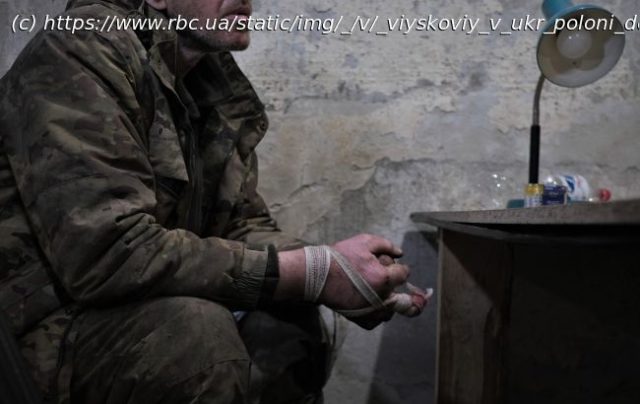
Трьом полоненим окупантам оголосили підозру в держзраді. Серед них командир десантників

0

ЗСУ на Запорізькому напрямку взяли в полон трьох окупантів, серед них виявився командир десантників. Їм оголосили підозри в держзраді.
Про це повідомляє РБК-Україна з посиланням на Службу безпеки України і Офіс генерального прокурора.Командир відділення
Зазначається, що в полон до ЗСУ потрапив командир відділення 108-го десантно-штурмового полку збройних сил РФ.
Зловмисник до 2014 року проживав у тимчасово окупованій Жданівці Донецької області, а потім переїхав до Краснодарського краю.
У жовтні 2023 року він уклав контракт із Міноборони РФ і пройшов підготовку на одному з полігонів на тимчасово окупованій території Луганської області.
Після „курсів“ фігуранта призначили командиром ворожого підрозділу, у складі якого перекинули на південний фронт.Другий окупант будував оборону
СБУ вказала, що ще одним зрадником виявився уродженець Макіївки Донецької області. Наприкінці вересня минулого року він „записався“ до лав 234-го десантно-штурмового полку РФ.
„У лавах загарбників він облаштовував ворожі укріпрайони, зокрема так звані „зуби дракона“, та обстрілював позиції ЗСУ в Запорізькій області“, – повідомила спецслужба.Бойовики розповіли про воєнні злочини РФ
Ще одним фігурантом виявився житель тимчасово окупованої Горлівки. У серпні минулого року добровільно вступив до 71-го мотострілецького полку російських військ.
У складі ворожого угруповання зрадник неодноразово штурмував опорні пункти Сил оборони під час боїв під Роботиним.
Під час слідчих дій бойовики дали свідчення про воєнні злочини своїх спільників, які розстрілювали українських військовополонених.Що їм загрожує
У листопаді та наприкінці грудня минулого року зловмисники потрапили в полон до українських захисників під час жорстоких боїв у районах Роботиного та Вербового.
На підставі зібраних доказів слідчі повідомили трьом затриманим про підозру за фактом державної зради, вчиненої в умовах воєнного стану. Зловмисники перебувають під вартою, їм загрожує довічне ув’язнення.ЗСУ беруть у полон росіян
Нещодавно командувач ОСУВ „Таврія“ Олександр Тарнавський заявив, що на Таврійському напрямку українські військові взяли в полон майже 30 російських окупантів.

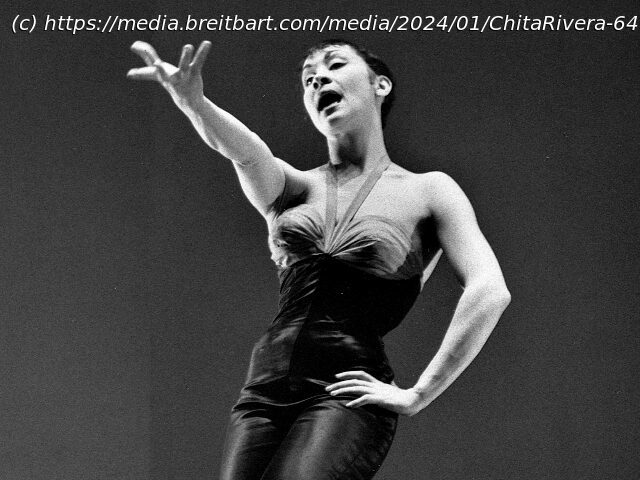
Tony Award-Winner Chita Rivera dies at 91

0

Three-time Tony Award winner Chita Rivera died Tuesday. Rivera’s daughter, Lisa Mordente, confirmed to The Washington Post, Deadline and The Guardian via Rivera’s publicist.
Rivera was 91. The statement said she died peacefully in New York,
Rivera originated the roles of Anita in West Side Story and Velma in Chicago. The 2002 Chicago movie gave Rivera the role of Nickie.
But it was her roles in Kiss of the Spider Woman and The Rink that won Rivera Tony Awards. The Tonys gave her a Lifetime Achievement Award in 2018. She was nominated eight additional times.
Rivera last appeared on stage in a 2015 Broadway production of The Visit. Past stage credits include 1953’s Guys and Dolls, 1960’s Bye Bye Birdie and 2003’s Nine.
On film, Lin-Manuel Miranda cast Rivera among other Broadway legends for a sequence in tick, tick… BOOM!

Вслед за улицей: в Харькове переименуют станцию метро "Пушкинская", – Терехов

0

Мэр Харькова Игорь Терехов анонсировал переименование станции метро Пушкинская после ударов ВС РФ по городу.
По словам городского главы, пока преждевременно говорить о новом названии станции, так как по этому поводу идет „большая дискуссия“. Мэр также анонсировал переименование всех остальных топонимов, связанных с Россией.
В 2024 году Харьковский городской совет переименует одну из центральных станций метро „Пушкинская“. Об этом сказал мэр Харькова Игорь Терехов в комментарии корреспонденту портала „Думка“ 30 января.
„Если мы переименовали улицу Пушкинскую, как можно оставить станцию „Пушкинскую“?“ – заявил Терехов.
По словам Терехова, пока преждевременно говорить о том, как будет называться станция.
„Большая дискуссия. Будем общаться с жителями, будем рассматривать“, — сказал городской глава.
Кроме того, в эфире телемарафона Терехов анонсировал переименование всех топонимов в Харькове, связанных с Россией. По его словам, это должно произойти в течение 3-4 месяцев.
„Это очень скрупулезная работа, которая проводится каждый день“, — сказал он.
Чиновник также подчеркнул, что переименование топонимов осуществляется с учетом мнения харьковчан. Так, на сайте горсовета регулярно проводятся соответствующие опросы.Переименование топонимов в Харькове: что известно
„На бывшей улице Пушкинской были прилеты, имеем там колоссальные разрушения, пострадали люди. Теперь она будет носить имя Григория Сковороды. Я благодарен, что депутатский корпус поддержал мое предложение“, — сообщил Терехов.
По данным мэра города, в результате атак на Харьков 23 января погибли 11 человек, в том числе ребенок.
Терехов подчеркнул, что российские ракетные удары 23 января привели к одной из самых масштабных по количеству жертв трагедий в Харькове за все время полномасштабной войны, в связи с чем в городе был объявлен траур.

kikaLeiner lagert Teil der Logistik an JCL aus, 67 Jobs wackeln

0

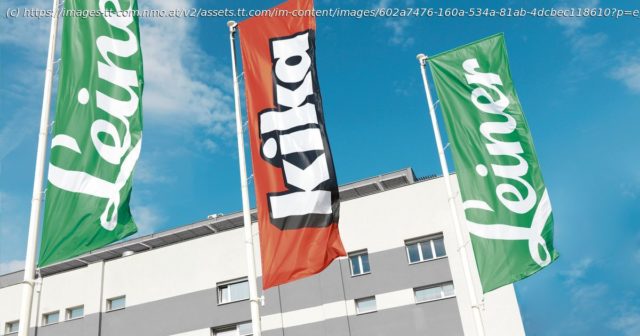
Der Schrumpfkurs der Möbelkette kikaLeiner geht weiter. Das Unternehmen wird einen Teil der Logistik an JCL Logistics Austria auslagern.
Wien, St. Pölten – Der Schrumpfkurs der Möbelkette kikaLeiner geht weiter. Das Unternehmen wird einen Teil der Logistik an JCL Logistics Austria auslagern. Dadurch würden 67 von insgesamt 431 Beschäftigten in diesem Bereich gekündigt, teilte der Möbelhändler am Dienstag mit. Ein Teil dieser Mitarbeiterinnen und Mitarbeiter werde vom Logistiker JCL übernommen. JCL soll den Fuhrpark und Teile der Lagerlogistik mit März übernehmen.
Die beiden kikaLeiner-Logistikstandorte in St. Pölten und Vösendorf blieben im Unternehmen erhalten, hieß es. Das Möbelunternehmen beschäftigte per 1. Jänner 2024 in den 17 Möbelhäusern, den Logistikstandorten, den Restaurants und in der Zentralverwaltung 1867 Mitarbeiterinnen und Mitarbeiter.
Kurz nach dem Verkauf des operativen Kika/Leiner-Geschäfts durch die Immobiliengruppe Signa an den österreichischen Handelsmanager und Investor Hermann Wieser hatte die Möbelkette Mitte Juni 2023 Insolvenz angemeldet. Die Einrichtungshäuser-Immobilien kaufte die Grazer Supernova-Gruppe. Im Rahmen des Insolvenzverfahrens wurden von den 40 Filialen insgesamt 23 Standorte per Ende Juli geschlossen und über 1600 Stellen abgebaut. (APA)

ВСУ успешно атаковали радиолокационную станцию российской системы ПВО в Крыму

0

В Раздольном в Крыму ВСУ нанесли успешный удар по радиолокационной станции российской системы противовоздушной обороны (ПВО) — подробнее на Фактах ICTV
В Раздольном в оккупированном Крыму Силы обороны Украины нанесли успешный удар по радиолокационной станции российской системы противовоздушной обороны.
Об этом говорится в сообщении Управления стратегических коммуникаций ВСУ. Отмечается, что поражение произошло утром 30 января.
Утром 30 января Вооруженные силы Украины успешно поразили радиолокационную станцию российской системы ПВО вблизи поселка Раздольное во временно оккупированном Крыму, — отмечают в СтратКом ВСУ.
Украина может достичь сразу трех целей, когда наносит атаки по российским системам ПВО во временно оккупированном Крыму.
Руководитель Главного управления разведки Министерства обороны Украины Кирилл Буданов объяснил, что это создает пробелы в ПВО и истощает запасы ракет, из-за чего РФ становится неспособной к военной защите.
По его словам, системы ПВО — это очень дорогое оборудование, на производство которого необходимо потратить много времени.

ЗСУ успішно атакували радіолокаційну станцію російської системи ППО в Криму

0

У Роздольному в Криму ЗСУ завдали успішного удару по радіолокаційній станції російської системи протиповітряної оборони (ППО) – детальніше на Фактах ICTV
У Роздольному в окупованому Криму Сили оборони України завдали успішного удару по радіолокаційній станції російської системи протиповітряної оборони.
Про це йдеться в повідомленні Управління стратегічних комунікацій ЗСУ. Зазначається, що ураження відбулося вранці 30 січня.
– Вранці 30 січня Збройні сили України успішно уразили радіолокаційну станцію російської системи ППО поблизу селища Роздольне в тимчасово окупованому Криму, – зазначають в СтратКом ЗСУ.
Україна може досягнути одразу трьох цілей, коли завдає атаки по російських системах ППО у тимчасово окупованому Криму.
Керівник Головного управління розвідки Міністерства оборони України Кирило Буданов пояснив, що це створює прогалини в ППО і виснажує запаси ракет, через що РФ стає неспроможною до військового захисту.
За його словами, системи ППО – це дуже дороге обладнання, на виробництво якої необхідно витратити багато часу.

Microsoft profit soars 33% on AI, cloud-computing investments

0

Microsoft Corp. said Tuesday that net profit for the October-December quarter soared 33%, powered by its significant investments in artificial intelligence technology
Microsoft Corp. said Tuesday that net profit for the October-December quarter soared 33%, powered by its significant investments in artificial intelligence technology. The increase owed a great deal to growth in the company’s cloud-computing unit, where Microsoft focuses most of its AI investments.
The company reported net income for the quarter of $21.87 billion, or $2.93 per diluted share, which beat Wall Street expectations of $2.79 per share.
The Redmond, Washington-based software maker posted revenue of $62.02 billion in the quarter, up 18% from last year, also beating expectations.
Analysts polled by FactSet Research expected Microsoft to earn $2.77 per share on revenue of $61.14 billion. Analysts are currently projecting that Microsoft will generate revenue of $60.97 billion for the January-March quarter.

Präsidentschaftsbewerber gibt auf – und wirbt für Putin

0

Am 17. März findet in Russland die nächste Präsidentenwahl statt. Abgesehen von Putin gelten andere Bewerber als chancenlos. Nach der Aufgabe von Baburin liegt die Hoffnung noch auf einem Kandidaten.
Stand: 30.01.2024, 16:40 Uhr
KommentareDruckenTeilen
Am 17. März findet in Russland die nächste Präsidentenwahl statt. Abgesehen von Putin gelten andere Bewerber als chancenlos. Nach der Aufgabe von Baburin liegt die Hoffnung noch auf einem Kandidaten.
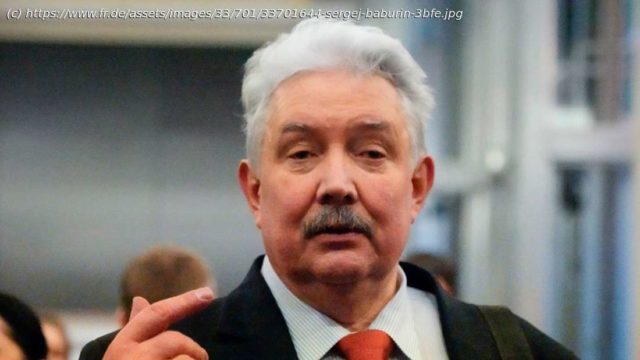
Moskau – Anderthalb Monate vor der Präsidentenwahl in Russland hat ein Bewerber noch vor seiner offiziellen Registrierung aufgegeben und wirbt stattdessen für eine Wiederwahl von Kremlchef Wladimir Putin. Sergej Baburin (64) von der Partei Gesamtrussische Volksunion brachte heute bei der zentralen Wahlkommission zuerst noch mehrere Kartons vorbei, die angeblich die für eine Kandidatur benötigten rund 100.000 Bürgerunterschriften enthielten. Wenig später erklärte er aber, seine Bewerbung zurückzuziehen.
Baburin begründete seinen plötzlichen Sinneswandel offiziell mit dem Krieg in der Ukraine. „In dieser für die Heimat schwierigen Stunde ist es nicht an der Zeit, die Kräfte des Volks zu spalten“, sagte Baburin laut der staatlichen Nachrichtenagentur Tass. Warum er dann aber überhaupt erst eine Kandidatur angekündigt und Unterschriften hatte sammeln lassen, erklärte der nationalistische Politiker nicht.
Der prominente Journalist Alexej Wenediktow vermutete, dass Baburin aus dem Machtapparat eine Aufforderung zum Aufgeben bekommen habe. „Ihm wurde sanft davon abgeraten, dem Präsidenten auch nur ein Prozent wegzunehmen“, schrieb Wenediktow, der frühere Chefredakteur des mittlerweile geschlossenen kremlkritischen Radiosenders Echo Moskwy, auf Telegram.
Die russische Präsidentenwahl am 17. März ist schon jetzt von Manipulationsvorwürfen überschattet und dient aus Kremlsicht vor allem dazu, Putin eine fünfte Amtszeit zu sichern. Außerdem soll sie die vermeintlich ungebrochene gesellschaftliche Unterstützung für Putins Angriffskrieg in der Ukraine demonstrieren. Andere Bewerber gelten als chancenlos oder unterstützen Putin sogar. Sie sollen Beobachtern zufolge vor allem eine Wahlmöglichkeit suggerieren, die es in Wirklichkeit so gar nicht gibt.
Mit Spannung wird lediglich erwartet, was mit Boris Nadeschdin passiert – dem einzigen Bewerber, der sich offen gegen den Krieg ausspricht. In den vergangenen Tagen hatten zwar in vielen russischen Städten Menschen Schlange gestanden, um für Nadeschdins Kandidatur zu unterschreiben. Viele befürchten aber, dass die russische Wahlkommission den Kriegsgegner unter einem Vorwand aus dem Rennen werfen wird. dpa

Elon Musk’s Neuralink has Implanted its First Chip in a Human Brain. What’s Next?

0

The wealthiest person on Earth has taken the next step toward a commercial brain interface
Billionaire technologist Elon Musk announced this week that his company Neuralink has implanted its brain-computer interface into a human for the first time. The recipient was “recovering well,” Musk wrote on his social media platform X (formerly Twitter) on Monday evening, adding that initial results showed “promising neuron spike detection”—a reference to brain cells’ electrical activity.
Each wireless Neuralink device contains a chip and electrode arrays of more than 1,000 superthin, flexible conductors that a surgical robot threads into the cerebral cortex. There the electrodes are designed to register thoughts related to motion. In Musk’s vision, an app will eventually translate these signals to move a cursor or produce text—in short, it will enable computer control by thinking. “Imagine if Stephen Hawking could communicate faster than a speed typist or auctioneer. That is the goal,” Musk wrote of the first Neuralink product, which he said is named Telepathy.
The U.S. Food and Drug Administration had approved human clinical trials for Neuralink in May 2023. And last September the company announced it was opening enrollment in its first study to people with quadriplegia.On supporting science journalism
If you’re enjoying this article, consider supporting our award-winning journalism by subscribing. By purchasing a subscription you are helping to ensure the future of impactful stories about the discoveries and ideas shaping our world today.
Monday’s announcement did not take neuroscientists by surprise. Musk, the world’s richest man, “said he was going to do it,” says John Donoghue, an expert in brain-computer interfaces at Brown University. “He had done the preliminary work, built on the shoulders of others, including what we did starting in the early 2000s.”
Neuralink’s original ambitions, which Musk outlined when he founded the company in 2016, included meshing human brains with artificial intelligence. Its more immediate aims seem in line with the neural keyboards and other devices that people with paralysis already use to operate computers. The methods and speed with which Neuralink pursued those goals, however, have resulted in federal investigations into dead study animals and the transportation of hazardous material.
Musk has a habit of suggesting big things but providing little detail, notes Ryan Merkley, director of research advocacy at the Physicians Committee for Responsible Medicine. “This is maybe the biggest example of that” because there’s no information available about the person who received the implant or their medical condition, Merkley points out. “Depending on the patient’s disease or disorder, success can look very different.”
Scientific American spoke with Donoghue to understand what the latest step signifies for Neuralink—and whether the company might ever achieve Musk’s more extreme goals.
[An edited transcript of the interview follows.]
In describing the first results, Musk used the phrase “promising neuron spike detection.” What might that mean?
I have to preface this by saying that, as a scientist, you can’t comment on anything until you have a paper in hand. But what that generally means is: there are action potentials [the electrical impulses that nerve cells create], and there’s a probe in the brain, and it’s picking up signals that are there.
But I have to remain open to what that actually means. I have to see the data. And commercial entities do this piecemeal-feeding things. The danger with that, of course, is: tomorrow it may stop working.
Are you concerned by how the recent information on this trial was drip fed on a social media platform or anything else about how the research has been communicated to scientists or the public?
I don’t particularly like it, but I don’t want to overstate that…. It’s legitimate to say you implanted someone. I don’t think they want to say much about what it means or what it does.
From where you’re sitting, what can Neuralink bring to the table beyond the research that you and others have done—for instance, your work on enabling a participant to move a computer cursor on a screen by thought? Does Neuralink have the opportunity to do something different?
They’re a commercial entity, right? They want a product. When I started, I had a company called Cyberkinetics, which was too early. [Cyberkinetics was acquired in 2008 by what is now Blackrock Neurotech.] One of the differences is something on the order of $100 million. In those days, we lacked all the money and the knowledge. Now we have the knowledge. [Musk has] put in the money.
What he’s done is taken in investments, taken all that knowledge that the field has created. Certainly [that means research done by] not just us but [also] lots of [other] people, basic scientists who have figured out how the motor cortex works, including us but definitely not exclusively us, [as well as neuroscientists] Apostolos Georgopoulos, Andy Schwartz—all those people built a foundation. He could take all that knowledge and put the money in to create the kind of product that could potentially be commercial, though that’s yet to be determined.
I’m really happy to see that there will be (likely, we’ll see what happens with this particular version) a commercial product that will someday reach people and help them.
In terms of Neuralink’s approach, what’s novel about having a chip talk wirelessly to a device versus other proof-of-principle lab demonstrations? Previous implants have captured signals from individual neurons, but this may require cables to transmit the large amount of data involved.
That’s an important step to get everything inside. The problem has been that it’s a lot of information. And they came up with a solution that was more practical than I was thinking. I was hoping to get [a] full-bandwidth, high rate of information. They’re using Bluetooth, which is a much reduced version…. But they get enough information to be able to control things.
With the information they take out, they’re not able to pull apart every single neuron out of the whole mess. They mix things together a little bit, because the bandwidth doesn’t allow them to sort out everything. But it works.
After this announcement, are we any closer to Musk’s loftier goals? He has talked about restoring eyesight to people who are blind and mobility to those who are disabled and even about this wild AI-merging scenario.
Somebody asked [bioengineer] Ed Maynard, who was my graduate student in 1999, exactly that kind of question. He said, “We have modest goals: we want to make blind people see, paralyzed people move and deaf people hear again.” So that’s an old line that’s been kicking around for 25 years. And of course, everything we do toward improving the ability for people to have these things makes us a step closer to helping paralyzed people communicate and move again in a practical way, [with a] commercial device.
The thing is, you’ve got to be careful. The whole nature of restoring sensory inputs, like vision, involves electrical stimulation in the brain. It’s a whole different ball game. It’s not recording from single cells—that’s one thing–it’s stimulation.
And as far as I know, there’s not one scintilla of evidence of using that device to create sensory systems in any way. It’s a whole other project. You could say, “You’ve got a car. Do you think [a boat] will work?” Who knows? Yeah, it could, but it’s not a car.
They would need to outline what they think are the steps. Can you put electrodes in the brain? Yes. Can they stay in there? Yes. Can you stimulate them? I don’t know—they’re supposed to be able to. Can you stimulate them in the right way? Vision has been very complicated in terms of putting electrodes into the brain and trying to restore a meaningful image.
Are there limits to what a brain-computer interface can offer? Is it beyond the motivation that Musk has stated? Do we still have that dream of what folks were talking about 25 years ago?
The nature of science is: you never know what’s around the corner. I’m sure you saw Oppenheimer.
Yeah.
There were two potential outcomes of that [first detonation of an atomic bomb]: you’d get a really big boom, or you’d destroy Earth if it didn’t stop. They didn’t know. We don’t know! There are lots of things that have happened that I wouldn’t have ever predicted. The use of communication is much better than I thought it would ever be.
The engineering stuff is: Will we get a low-power amplifier that’s much smaller, that will have more bandwidth? Almost certainly, but you’re not talking to an expert in that area. It looks to me like we’re getting better and better with the capabilities of electronics. The engineers can tell us, “These are not insurmountable problems.” We have the technology already. And then there are other things that are going to be hard to do. They’re scientific questions [for which] I have no idea what the answer will be until we do the experiments.
Timeline words data