China's Xi offers populist message in New Year's Eve address

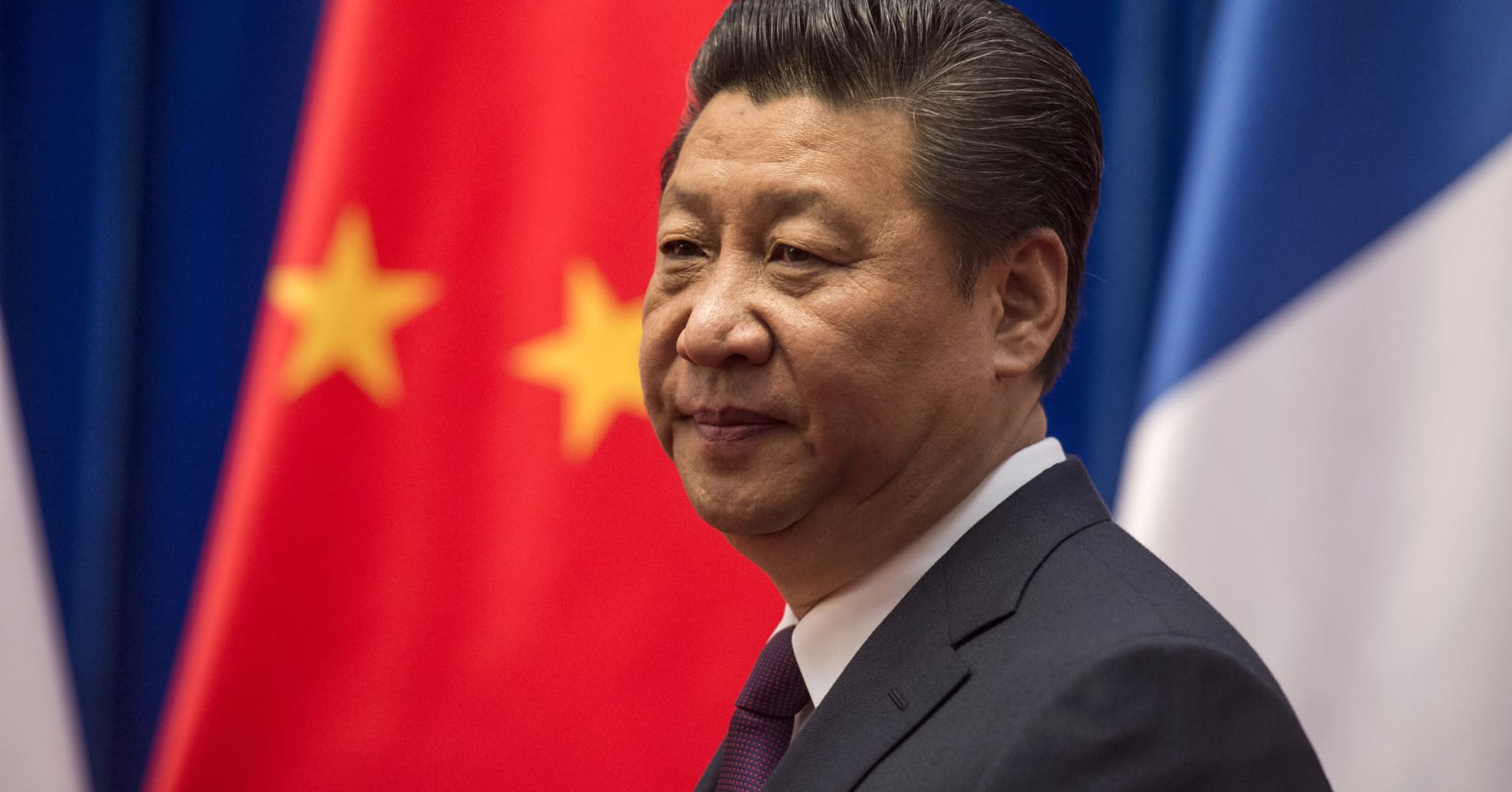 Chinese President Xi Jinping said Saturday that his government would continue to focus on poverty alleviation at home and resolutely defending China’s territorial rights on the foreign front.
Xi made the televised remarks in his annual New Year’s Eve address, in which he touted China’s scientific accomplishments, highlighting its large new radio telescope and space missions, and the country’s growing role as a leader in global affairs.
Standing before a mural of the Great Wall, Xi said his administration successfully hosted a G-20 summit, pushed forward with China’s „One Belt One Road“ pan-Eurasian infrastructure project and established the Asian Infrastructure Investment Bank.
China has upheld its peaceful development while resolutely defending its territorial sovereignty and maritime rights, Xi said, making a reference to an international tribunal ruling last summer against China’s claims in the contested South China Sea.
„If anyone makes this an issue of question, the Chinese people will never agree! “ he said, one of the few points in his 10-minute address when his voice rose noticeably.
For most of his address, Xi struck a populist tone, saying he was above all concerned about the living conditions of the people and vowed that improving employment, education, housing and health care would be a responsibility that his ruling Communist Party would never shirk from. China lifted 10 million people out of poverty in 2016, Xi said.
„On this new year, I am most concerned about the difficulties of the masses: how they eat, how they live, whether they can have a good New Year, or a good Spring Festival,“ Xi said, as the television broadcast cut to footage of his visits this year to impoverished rural areas.
Xi also promised to shore up Communist Party discipline and „unwaveringly“ maintain his anticorruption campaign against high- and low-ranking officials alike. He said that „supply-side“ economic reforms were making progress and that the party would continue to push reform and rule by law during the 19th National Congress, scheduled for late 2017.
© Source: http://www.cnbc.com/2016/12/31/chinas-xi-offers-populist-message-in-new-years-eve-address.html
All rights are reserved and belongs to a source media.

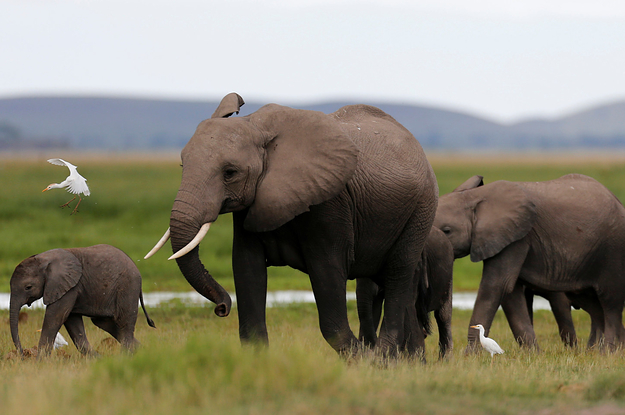 China will ban all domestic ivory trade within the country by the end of 2017, the country’s announced Friday, in a “game-changing” move that wildlife campaigners say may help protect the species against poachers. This move is significant for the world’s elephant population, as conservationists estimate that are killed by poachers each year, mostly to satisfy the demand for ivory products in Asia —. A published in September showed that the savannah elephant population has declined 30% in the past seven years, mostly due to poaching. The survey placed the number of wild elephants on the continent at just less than 400,000. The first phase of China’s ivory trade ban will be implemented by the end of March, when the government begins the process of shutting down the country’s 34 processing facilities and 143 designated ivory trading venues. In , an official with the State Forestry Administration said that “dozens” of these organizations will be closed by April 1, 2017. The Chinese Ministry of Culture will assist employees of the ivory trade in finding new occupations that utilize their carving skills, likely in antique restoration and maintenance. Per the directive, China will also step up its enforcement of illegal ivory sales and set up a system to regulate the transfers or sales of those ivory goods currently owned by citizens. All domestic processing and trading of ivory will be shut down by Dec. 31, 2017. Animal welfare and conservation groups worldwide are applauding China’s decision. president and CEO Carter Roberts called it “a game changer for elephant conservation”. In a press release, the Asia Director, Aili Kang wrote, “This is great news that will shut down the world’s largest market for elephant ivory. I am very proud of my country for showing this leadership that will help ensure that elephants have a fighting chance to beat extinction.” The Chinese government also plans to launch a public awareness campaign about the brutalities of the ivory trade to discourage consumers, a move through which conservation groups have seen success in China in the past. A four-year anti-ivory campaign by the International Fund for Animal Welfare — which depicted a young elephant excited about his new tusks walking with his mother — reached 75% of the urban Chinese population. showed that this specific PSA had reduced the number of Chinese people likely to purchase ivory from 54% of the population to 26%.