I get a lighter, more flexible travel setup than a laptop for writing, tinkering, and offline work.
Travel usually turns my “I’ll be productive” fantasies into a parade of compromises. A laptop is powerful, sure, but it also demands a lot from the bag, the table, and the outlet. When I started traveling with a Raspberry Pi and a portable monitor instead, the whole setup felt more intentional. It stopped being a smaller laptop dream and became a purpose-built little workstation.
This idea isn’t about proving a point or pretending a Raspberry Pi replaces my MacBook Pro. It’s about building a travel kit that fits how travel actually works, with weird Wi-Fi, tiny hotel desks, and time you didn’t plan for. A Raspberry Pi with a portable monitor is modular, low-stakes, and easier to tailor to the moment. And it still lets you do real work when you need to.
The travel argument starts simple
You want control without extra baggage
A Raspberry Pi travel kit works because it has a clear purpose: it optimizes for flexibility over brute force. I don’t need a whole laptop for every travel task, and hauling one around “just in case” is the part that grates on me. With a Raspberry Pi, the cost and risk feel lower, which makes me more willing to actually use it on the road. I’m more likely to pull it out, set it up, and tinker because it doesn’t feel precious.
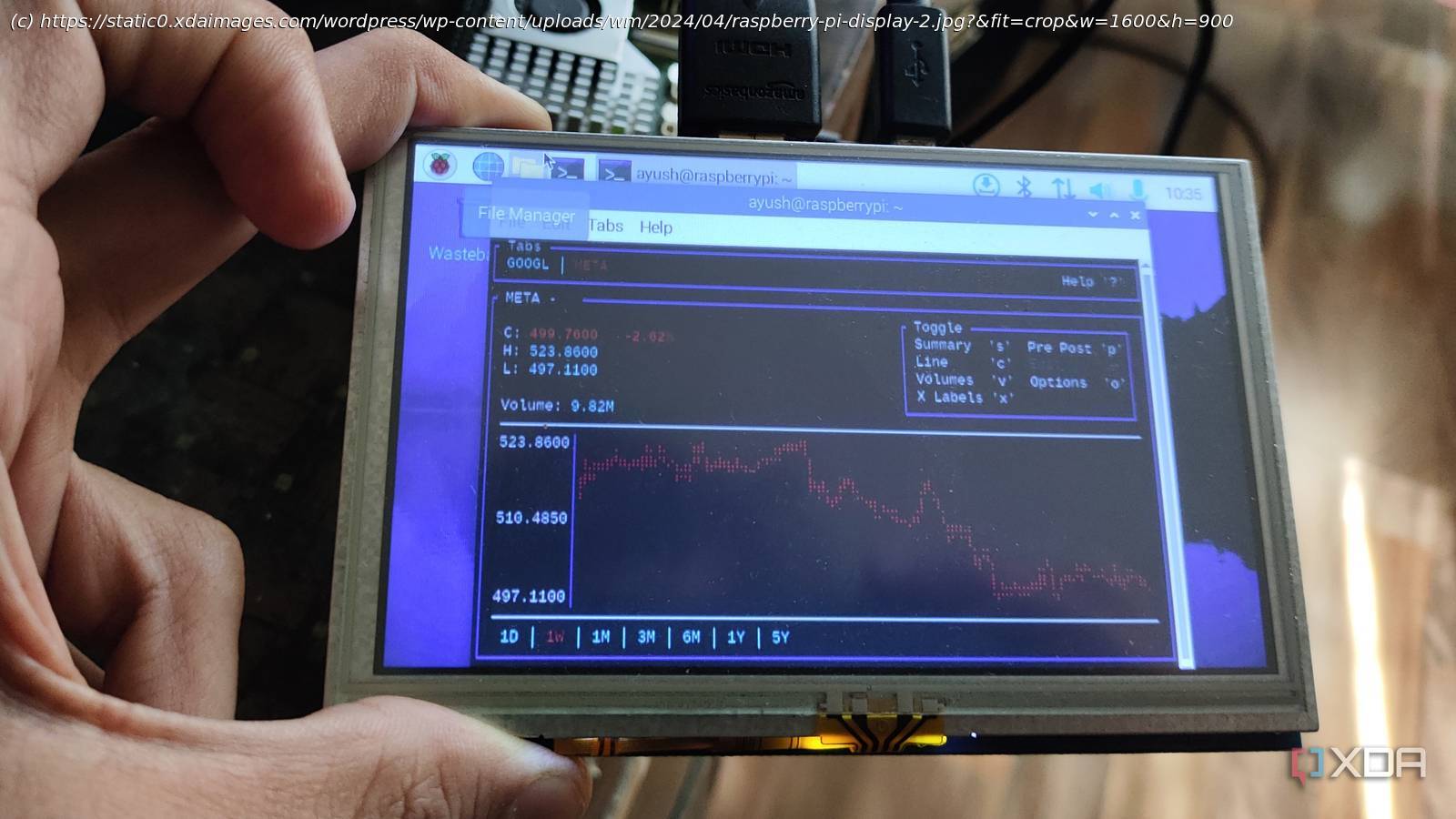
The portable monitor is the secret sauce, not the Raspberry Pi. A monitor turns the Raspberry Pi from a novelty into something you can comfortably stare at for an hour without regretting your life choices. It also means the display can outlive the computer, which is the opposite of the laptop bargain. If you decide next year you want a different board, the monitor still earns its slot in the bag.
Most travel computing failures are friction problems, not performance problems. You get to the hotel, you’re tired, and you need the fastest path to “working enough.” A Raspberry Pi kit can be pre-configured to boot straight into what you need, with no updates waiting to ambush you. When the workflow is predictable, you use it more, and that’s the whole point.
It’s better for cramped surfaces
A modular setup adapts to tight spaces
Hotel desks are often a chair, a lamp, and a wobbly surface pretending to be furniture. A laptop needs that whole space to itself, plus room for your hands and the power brick. A Raspberry Pi and portable monitor can split up, stack, or tuck into corners, and that matters more than you’d think. You can even place the monitor closer and the Raspberry Pi farther away if cable routing is awkward.
There’s also the “what if I don’t want to sit here” problem. Sometimes the only decent spot is the edge of a bed, a small table, or a random chair near an outlet.